The arrival of the autumn climbing season in the Himalayas has signaled a new chapter of exploration, as a cohort of elite mountaineers touches down in Kathmandu, Nepal, with sights set on the most challenging, unclimbed terrain in the world. Among these ambitious expeditions, Japanese climbers Hidesuke Taneishi and Tetsu Hashimoto have announced their intention to tackle one of the region’s most stubborn prizes: the 7,140-meter Gangapurna West. Located deep within the Annapurna massif, this peak represents a formidable technical challenge that has repelled previous attempts from world-class climbers.
The Geography of a Remote Objective
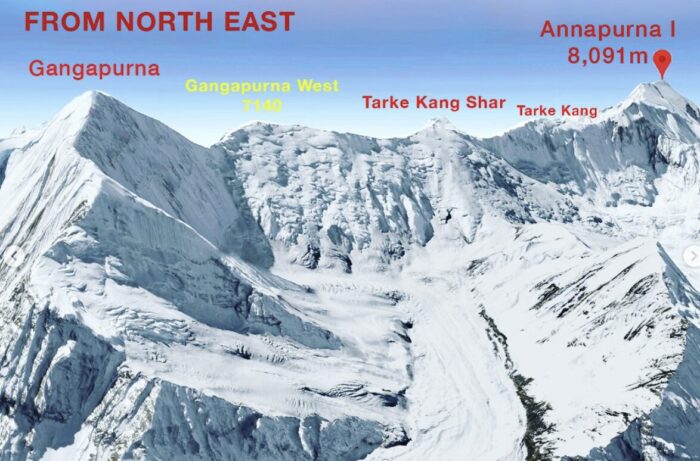
Gangapurna West serves as the western sentinel of the larger Gangapurna mountain, a 7,455-meter giant situated along the central spine of the Annapurna ridge. Geographically, it occupies a strategic position between the notorious Annapurna I—the world’s tenth-highest peak—and Annapurna III. While the main massif is frequently trafficked by commercial expeditions, the western shoulder remains a bastion of solitude.
In 2014, the Nepalese government officially opened the peak for commercial and alpine permits, simultaneously renaming it Lachenal Peak. The name honors Louis Lachenal, the French mountaineer who, alongside Maurice Herzog, achieved the historic first ascent of Annapurna I in 1950, marking the first time humans ever stood atop an 8,000-meter peak. Despite this recognition, the mountain remains a "ghost" summit in the mountaineering community, having resisted all efforts to reach its highest point.
A Chronology of Previous Attempts
The history of attempts on Lachenal Peak is defined by the technical severity of its faces. The mountain is characterized by steep, unstable ice and rock, requiring a high degree of proficiency in mixed climbing.
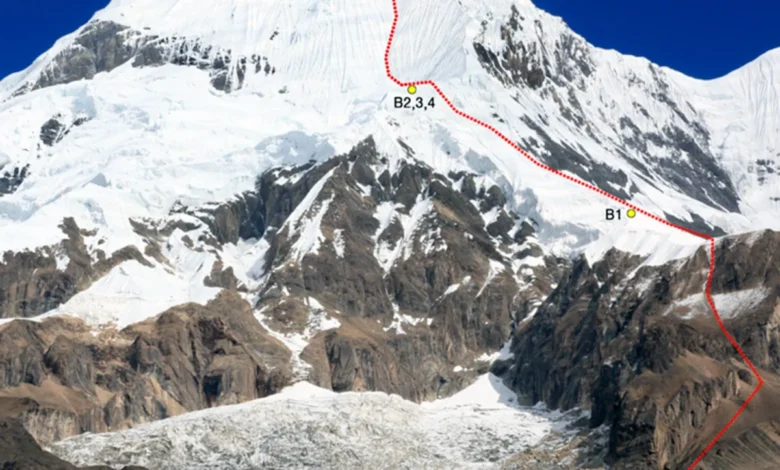
In 2016, a highly experienced South Korean team, led by the late, legendary mountaineer Kim Chang-ho, launched an ambitious bid to scale the mountain via its South Face. Kim, who was widely respected for his minimalist, fast-and-light style, pushed the team into high-altitude, technical terrain. Despite their profound expertise and determination, the objective hazards—specifically the risk of objective rockfall and the sheer verticality of the face—forced the team to retreat just shy of the summit. The attempt underscored the extreme difficulty of the route, which remains largely unclimbed to this day.

The following year, in 2017, the focus shifted to the North Face. Italian climbers Simon Messner and Phillip Pruenster arrived with the goal of securing the first ascent. Their attempt garnered significant attention in the alpine world due to the pair’s reputation for technical agility. However, the North Face presented a distinct set of challenges, characterized by complex route-finding and deteriorating weather windows. Ultimately, the team decided to bail, prioritizing safety over the summit in an environment where rescue logistics are virtually non-existent.
Profiles in Alpine Excellence
The current expedition is spearheaded by Hidesuke Taneishi, an athlete who has steadily risen through the ranks of the global alpine community. Taneishi’s reputation was solidified last year when he was nominated for the prestigious Piolet d’Or—often referred to as the "Oscars of Mountaineering"—for his groundbreaking work on 6,652-meter Pholesobi Peak.
Taneishi’s success on Pholesobi, achieved alongside partner Hiroki Yamamoto, involved a direct ascent of the mountain’s North Face. The route was noted for its vertical exposure and the high level of commitment required to navigate such an uncompromising wall. His decision to partner with Tetsu Hashimoto for the Gangapurna West expedition suggests a continuation of this "fast and light" philosophy. By avoiding the heavy infrastructure of large, fixed-rope expeditions, the duo aims to climb in a pure, alpine style, where the climbers carry all necessary equipment and rely solely on their own strength to navigate the mountain.
Technical Challenges and Environmental Factors
The challenge posed by Gangapurna West is twofold: the technical difficulty of the climbing and the atmospheric instability of the Annapurna massif. At 7,140 meters, the peak sits firmly in the "death zone," where oxygen levels are roughly one-third of those at sea level. The physiological toll is immense, limiting the amount of time a climber can spend at high altitudes before cognitive function and muscle recovery begin to degrade.
Furthermore, the geology of the Annapurna region is notoriously brittle. The rock, often composed of limestone and metamorphic schist, is prone to shattering under the weight of a climber, making protection (the placement of cams, nuts, and ice screws) unreliable. As global temperatures fluctuate, the increased frequency of freeze-thaw cycles further destabilizes these faces, leading to unpredictable rockfall and ice avalanches. These conditions necessitate a narrow window of success, usually requiring perfect meteorological stability—a luxury rarely afforded in the high Himalayas.
Broader Implications for High-Altitude Mountaineering
The pursuit of unclimbed 7,000-meter peaks like Gangapurna West represents a paradigm shift in modern mountaineering. While the commercialization of the 8,000-meter peaks has turned those summits into high-traffic zones, the "lesser" peaks of the Himalayas have become the new frontier for purists.
Industry experts observe that the significance of a first ascent on a peak like Lachenal is arguably higher than the repeated ascent of a mountain like Everest. It requires original route-finding, the assessment of unexplored hazards, and the willingness to accept that the objective may be impossible under current conditions. Should Taneishi and Hashimoto succeed, they will likely be recognized not only for the physical achievement but for their contribution to the topographical knowledge of the region.
The Nepalese Ministry of Tourism, which manages the permitting process for these peaks, has been encouraging this shift toward "exploration-based" climbing. By promoting lesser-known peaks, the government hopes to diversify the economic impact of mountaineering beyond the traditional trekking corridors of the Everest and Annapurna base camps.
Looking Ahead
As the Japanese team moves into the acclimatization phase, the mountaineering community waits with cautious optimism. In high-stakes alpine climbing, the margin between a triumphant first ascent and a forced retreat is razor-thin. For Taneishi and Hashimoto, the coming weeks will involve a grueling process of establishing advanced base camps, shuttling supplies, and waiting for a period of low wind speeds and clear visibility.
The expedition is supported by local logistics providers, including Cosmo Adventure, which has been instrumental in coordinating the approach to the remote base camp. In a statement reflecting on the upcoming attempt, representatives from the support team emphasized the importance of local cooperation and the rigorous preparation the pair has undergone in the months leading up to their departure from Tokyo.
Ultimately, the attempt on Gangapurna West serves as a reminder that even in an era of satellite imagery and global connectivity, the high peaks of the Himalaya remain inherently unpredictable. Whether the summit is attained or the mountain remains elusive, the endeavor itself underscores the enduring human drive to explore the unknown. As Taneishi and Hashimoto begin their ascent, they carry with them the history of previous failures and the hope of establishing a new, permanent mark on the map of the Annapurna massif.