Bay Area Activists Launch Burma Spring Benefit Film Festival to Support Resistance and Highlight Humanitarian Crisis

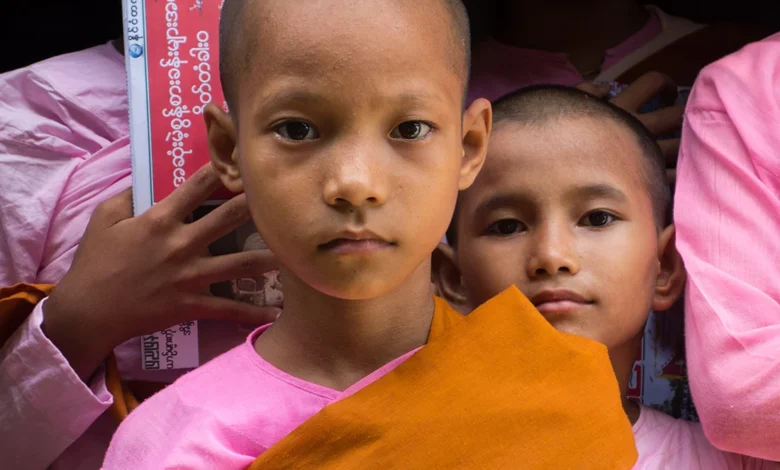
The San Francisco Bay Area has become a prominent hub of international solidarity with the launch of the Burma Spring Benefit Film Festival, a virtual event streaming online from June 3 through June 20. Organized by a dedicated collective of artists, filmmakers, educators, and activists, the festival responds directly to the escalating humanitarian and civil rights emergencies triggered by the military coup in Burma, internationally recognized as Myanmar, on February 1, 2021.
Featuring an expansive lineup of more than thirty independent films, documentaries, short features, and dramas, alongside daily live panels and speaker forums, the festival aims to amplify the voices of those resisting military oppression. All net proceeds from the event, which operates on a donation-model where contributions are welcomed but never required, will be channeled directly to grassroots humanitarian organizations operating inside Myanmar. These funds are designated to support the peaceful democracy movement, assist internally displaced populations, and sustain vital community networks under extreme duress.
The comprehensive film selection delves into a rich tapestry of Burmese society, exploring complex themes ranging from universal human rights and environmental conservation to indigenous ethnic diversity, Buddhist traditions, LGBTQ rights, and critical women’s issues. By combining historical retrospectives with frontline documentation, the festival organizers hope to offer global audiences a nuanced look at a nation caught in the crosshairs of tyranny while celebrating the extraordinary resilience of its ordinary citizens.
Chronology of the Crisis: From Democratic Transition to Military Junta
To fully understand the weight of the cinematic works showcased in the festival, observers must examine the fragile political landscape that preceded the 2021 takeover. For decades, Burma was ruled by a succession of military regimes that isolated the country economically and suppressed political dissent with brutal force. However, the early 2010s marked the cautious beginning of a tentative democratic transition. Constitutional reforms introduced in 2008 paved the way for general elections, culminating in a historic 2015 landslide victory for the National League for Democracy (NLD), led by civilian icon Aung San Suu Kyi.
Although the military, known locally as the Tatmadaw, retained significant constitutional power—including guaranteed control over key ministries and parliamentary seats—the civilian administration functioned with limited autonomy for five years. Hopes for continued democratization surged following the November 2020 general elections, in which the NLD secured an even larger majority, soundly defeating the military-backed Union Solidarity and Development Party (USDP).
Instead of respecting the democratic mandate, the Tatmadaw alleged widespread voter fraud—claims that were systematically debunked by domestic and international election monitors. In the early morning hours of February 1, 2021, just as the newly elected parliament was set to convene, the military seized total control of the government. State Counselor Aung San Suu Kyi, President Win Myint, and numerous other high-ranking civilian leaders, political activists, and cultural figures were instantaneously detained.
The coup abruptly shattered a decade of tentative reforms. Lee Morgenbesser, an expert on authoritarian politics in Southeast Asia at Griffith University’s School of Government and International Relations in Australia, noted that the takeover effectively terminated the nation’s fragile experiment with representative governance.
In the immediate aftermath of the coup, a massive wave of civil disobedience erupted across the country. Healthcare workers, civil servants, teachers, railway employees, and youth galvanized into a powerful nationwide movement. By May 2021, these decentralized pockets of resistance coalesced into a unified call for a global Spring Revolution, urging the international community to stand shoulder-to-shoulder with the people of Myanmar.
Humanitarian Toll and the Persecution of Cultural Icons
The military junta’s response to the peaceful Civil Disobedience Movement (CDM) was characterized by lethal force, arbitrary mass arrests, and widespread human rights violations. According to comprehensive data compiled by the Assistance Association for Political Prisoners (AAPP), a prominent human rights monitoring organization, security forces have killed well over 800 peaceful demonstrators and arrested, charged, or sentenced nearly 12,000 individuals since the February takeover.
The cultural and artistic community has borne a devastating share of the junta’s wrath. Prominent filmmakers, actors, musicians, poets, and models have stood on the frontline of the resistance, utilizing their platforms to document atrocities and rally public opposition. Among those swept up in the initial and subsequent crackdowns are Min Htin Ko Gyi, founder of the prestigious Human Rights Human Dignity Film Festival; veteran comedian Zarganar; popular action film star Min Lu, reportedly detained in the notorious Insein Prison; and high-profile male model Paing Takhon. Furthermore, the regime has imprisoned dozens of poets—some of whom have reportedly died in custody—and placed over a hundred professionals from the local cinematic industry on wanted lists, forcing many underground or into hiding along the country’s rugged borders.
Curated Cinematic Lineup: Bridging History and Frontline Realities
The Burma Spring Benefit Film Festival captures this profound historical pivot through a meticulously curated program that bridges generations of activism. Among the standout features is Burma Spring 21, a collaborative short work capturing the genesis of the 2021 coup and the spontaneous mobilization of the Civil Disobedience Movement.
Festival organizer Kenneth Wong, a Burmese-American author, translator, and language instructor at the University of California, Berkeley, emphasizes the profound educational value of pairing contemporary films with historical documentaries. He suggests that screening Burma Spring 21 alongside Burma VJ, a critically acclaimed documentary chronicling the brave video journalists who exposed the Saffron Revolution uprisings of 2007, provides audiences with a stark visual comparison of resistance movements separated by more than a decade of technological evolution.
Other notable selections address systemic injustices that predate the current coup. I Am Rohingya: A Genocide in Four Acts follows fourteen young refugees as they courageously re-enact the harrowing experiences of their families during the targeted violence against the Muslim Rohingya minority in Rakhine State. Meanwhile, The Black Zone tracks the perilous journeys of covert medical teams smuggling life-saving aid through dense jungles to civilians trapped by military offensives in ethnic borderlands. Additionally, A Peaceful Land explores rural resistance against state-mandated agricultural policies that have historically resulted in forced labor and large-scale land confiscations.
Voices of Solidarity: Organizing the Festival
The realization of the festival is the culmination of tireless volunteer efforts by prominent Bay Area intellectuals, filmmakers, and community leaders. Alongside Kenneth Wong, the organizing committee features Gaetano Kazuo Maida, executive director of the Buddhist Film Foundation; award-winning filmmaker Ellen Bruno; Jeanne Marie Hallacy, a documentary director specializing in digital storytelling projects for refugees and migrant youth; Hozan Alan Senauke, abbot of the Berkeley Zen Center; and Gregg Butensky, operations director of Kirana Productions, co-founder of Ethical Traveler, and principal at Code Refactory.
Reflecting on his motivation to spearhead the initiative, Gaetano Kazuo Maida explained that his initial fascination with Burma stemmed from its deep historical Buddhist traditions and the architectural majesty of the ancient Bagan valley temples. However, Maida noted that the escalating nationwide resistance over recent years revealed a much broader, multicultural reality.
"The burgeoning resistance to the military government over the past several years has helped make me aware of the diversity in Burma, of the many ethnic communities, religions, languages, and creative energies," Maida stated. "The Burma Spring Benefit Film Festival embraces all of that as we try to raise awareness and support for the movement to establish a democracy there."
Dialogues for Change: Speaker Forums and Panel Discussions
Beyond the cinematic screenings, the festival features daily interactive panel discussions addressing the geopolitical, humanitarian, and sociological dimensions of the crisis. Key forums include sessions titled Myanmar Diaspora and the Milk Tea Alliance, which examines regional solidarity among youth activists across Asia; Refugees and the Humanitarian Crisis; and a much-anticipated special panel featuring ministers from the National Unity Government (NUG), an administration formed by ousted lawmakers and ethnic representatives to challenge the legitimacy of the military junta.
Another critical discussion, Ethnic Nationalities and the Rohingya: A Search for Justice and Peace, addresses a vital paradigm shift occurring within Burmese society. Kenneth Wong points out that decades of military propaganda successfully divided the ethnic Burman majority from minority populations living in remote border regions. However, as the Tatmadaw’s brutality has extended uniformly across urban centers and rural territories alike, the civilian population has developed a profound empathy and solidarity with ethnic minorities, including the Rohingya, who have endured state-sponsored persecution for generations.
Broader Impact and Long-Term Implications
As the international community grapples with how to respond to the deteriorating situation in Myanmar, analysts emphasize that the crisis holds profound implications for regional stability, human rights norms, and democratic governance across Southeast Asia. The formation of the NUG and the unprecedented cooperation between ethnic armed organizations and urban democracy activists suggest that the military faces a unified internal opposition unlike anything seen in previous decades of authoritarian rule.
Local and international advocacy groups hope that events like the Burma Spring Benefit Film Festival will maintain global attention on a crisis that risks being overshadowed by other international developments. By directly funding grassroots relief networks, the festival ensures that humanitarian aid reaches displaced populations cut off from institutional assistance.
Looking beyond the immediate trauma of military rule, Kenneth Wong expresses a deeper, enduring hope for how his homeland is perceived by the global community. While the current news cycle is understandably dominated by images of violence, repression, and civil unrest, Wong encourages audiences to look past the headlines and recognize the vibrant soul of the nation.
"It’s the country where George Orwell was inspired to write his anticolonial novel Burmese Days; where people in bright sarongs and sweat-stained T-shirts spend hours in teashops talking about books and poetry; where spirit-possessed mediums dance in delirium as they quaff down glasses of whiskey offered by the worshipers," Wong reflected.
"In the not-so-distant future, when the military’s guns are silent and the people no longer feel the need to protest, I hope the viewers who are first introduced to Burma by the Film Festival get to experience that other Burma—the enchanting country beyond the news headlines."
Tickets and schedule information for the Burma Spring Benefit Film Festival can be accessed directly through its official streaming portal hosted on Eventive, running continuously through June 20.
Related posts: