The modern air travel experience is defined as much by its physical infrastructure as it is by the psychological management of passenger expectations. A long-standing anecdote, frequently recirculated on social media platforms like TikTok by influencers such as @designsecretsss, posits that airports have mastered the art of "queuing psychology" by forcing passengers to endure a lengthy walk to baggage claim. The narrative suggests that by increasing the distance between the arrival gate and the baggage carousel, airports provide ground crews with the necessary time to offload luggage, effectively reducing the perceived wait time to zero by the time passengers arrive. While this story is often framed as a confirmed case study from Houston’s George Bush Intercontinental Airport (IAH), its origins remain shrouded in the ambiguity of urban legend, even as it highlights genuine principles of human behavior and operations management.
The Origins of a Persistent Urban Legend
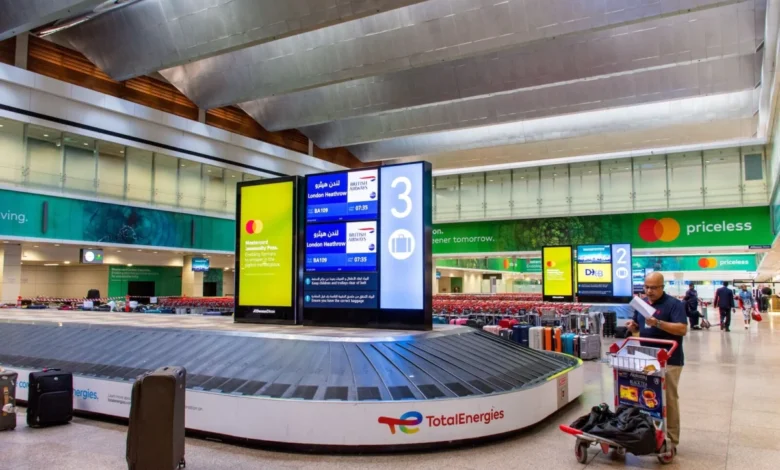
The story of the Houston airport redesign has become a staple of travel lore, surfacing periodically since it was popularized in a 2012 New York Times opinion piece by Alex Stone. Stone, exploring the concept of "queuing psychology," noted that airports faced a mounting volume of passenger complaints regarding baggage delays. Despite increasing staffing levels to reduce the actual wait time to eight minutes, passenger dissatisfaction remained high. The solution, according to the anecdote, was not to increase efficiency but to manipulate the environment. By relocating the baggage claim area to a position further from the arrival gates, the airport transformed "unoccupied" waiting time—standing at a carousel—into "occupied" time—walking through the terminal.
The psychological impact of this change was profound. Research into human behavior during delays indicates that individuals are far more tolerant of waiting when they are in motion or engaged in a goal-oriented task. The anecdotal evidence suggests that complaints dropped to zero because the passengers reached the carousel at the exact moment their bags were hitting the belt. Variations of this story have since appeared in academic journals, psychology blogs, and mainstream publications like The Guardian, each version refining the numbers to fit a narrative of corporate ingenuity. Despite its widespread acceptance as a classic example of service design, no official documentation from Houston’s George Bush Intercontinental Airport has ever surfaced to confirm the specific implementation of this strategy.
Queuing Psychology and the MIT Connection
The core principles underlying the "long walk" theory are grounded in the field of operations research, a discipline that has been extensively studied at institutions such as the Massachusetts Institute of Technology (MIT). Richard Larson, a professor at MIT and a leading expert on queueing theory, has frequently commented on the discrepancy between "perceived wait time" and "actual wait time."
According to the tenets of queueing psychology, the discomfort of a wait is exacerbated by three primary factors: uncertainty, boredom, and a lack of visible progress. When a passenger stands at a stationary carousel, their anxiety regarding the safety and location of their luggage is heightened by the lack of feedback. Conversely, while walking, the passenger is making physical progress toward their destination. This movement provides a sense of agency, which significantly diminishes the perceived duration of the delay.
Furthermore, the "last mile" of a journey is often the most critical in terms of passenger satisfaction. A study by the Port Authority of New York and New Jersey once highlighted that the frustration associated with baggage claim is often the final impression a passenger carries away from the airport. By masking the wait time through physical distance, airports essentially turn a potential failure in service—a slow unloading process—into a seamless experience that appears to be the result of high-level coordination.
Industry Standards and the Reality of Baggage Handling
While the "long walk" anecdote offers an intriguing look at human behavior, it operates within a broader context of airline logistics. There is currently no federal mandate in the United States that dictates a strict time limit for baggage delivery. However, the industry operates under an informal benchmark: approximately 20 minutes from the moment an aircraft parks at the gate.
This benchmark is not universally achieved, as the complexity of airport operations varies wildly based on size and infrastructure. Regional airports with limited daily traffic can often process luggage within 10 to 15 minutes. In contrast, international hubs—such as Hartsfield-Jackson Atlanta or Los Angeles International—must contend with the complexities of wide-body aircraft, multi-stop connections, and the sheer volume of passengers. At these locations, wait times of 30 to 40 minutes are not uncommon during peak travel periods, regardless of the distance between the gate and the terminal exit.
Some airlines have begun to formalize these expectations to build brand loyalty. Alaska Airlines, for example, has instituted a "20-minute guarantee" for its Mileage Plan elite-status members. If the bags do not appear on the carousel within 20 minutes of the aircraft arriving at the gate, the airline provides compensatory points or discount codes. This initiative serves as a marketing tool that also forces operational transparency, contrasting sharply with the "hidden" strategy of increasing walk times.
Official Responses and the Lack of Verification
In an effort to substantiate the Houston airport claims, various media outlets, including Matador Network, have reached out to major carriers such as United Airlines and American Airlines, as well as the Houston Airport System. To date, none of these entities have provided a formal confirmation or denial regarding the alleged redesign. The lack of an official paper trail or historical record suggests that if such a change did occur, it was likely an informal adjustment to terminal flow rather than a calculated, systemic overhaul.
The absence of a primary source does not necessarily invalidate the theory, but it does place it firmly in the category of "design folklore." In the world of architecture and urban planning, such adjustments are common. Often, when terminal expansions occur, baggage claim areas are moved to accommodate larger crowds or new security requirements. It is highly probable that the "Houston story" is an amalgamation of several real-world design adjustments that were later retroactively explained through the lens of psychological efficiency.
Broader Implications for Service Design
The enduring popularity of the "farthest carousel" story reflects a shift in how modern service providers view the customer journey. Businesses are increasingly moving away from the sole focus on raw speed and toward the management of the consumer’s emotional state. In the context of an airport, the goal is to minimize the "dead time" that characterizes a journey.
From an operations management perspective, the strategy is highly effective because it is a "low-cost, high-impact" intervention. Overhauling a baggage handling system to increase conveyor speeds or hire additional personnel involves millions of dollars in capital expenditure and labor costs. Simply changing signage or routing passengers through a longer corridor requires minimal investment while potentially yielding a significant reduction in customer service complaints.
However, there are ethical and practical considerations. While "managing expectations" is a standard practice in the hospitality industry, there is a fine line between optimizing flow and misleading the consumer. If an airport were to intentionally design a path that is unnecessarily circuitous solely to mask operational failures, it could be viewed as a deceptive practice. Nevertheless, as long as the walk is framed as a necessary logistical step, it remains a brilliant, if controversial, example of applied psychology.
Conclusion: The Future of Waiting
As airports continue to face the challenges of record-breaking passenger volumes, the lessons of queuing psychology will remain relevant. Technological advancements, such as real-time baggage tracking apps, are beginning to provide passengers with the transparency they have long craved. By offering updates on the status of their bags, airlines are addressing the "uncertainty" component of the wait, which may eventually make the "long walk" strategy obsolete.
Until then, the story of the Houston airport serves as a reminder that the perception of time is malleable. Whether the anecdote is a historical fact or a convenient piece of folklore, it highlights a fundamental truth about modern life: we are more concerned with how we feel while we wait than with the actual time spent waiting. As travelers, understanding these psychological levers can help us navigate the frustration of air travel with a bit more perspective—even when we find ourselves walking an extra quarter-mile to reach the baggage carousel.