Heathrow Expansion and the Conflict Between Aviation Growth and UK Net Zero Targets

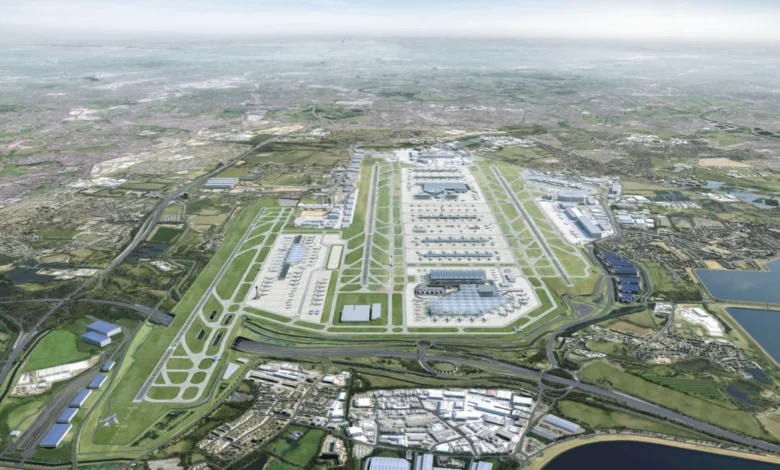
The debate surrounding the proposed expansion of Heathrow Airport has reached a critical juncture, as climate policy advisors warn that the project is fundamentally incompatible with the United Kingdom’s legally binding commitment to reach net-zero carbon emissions by 2050. At the heart of the controversy is a fundamental tension: the government’s desire to maintain the UK’s position as a global aviation hub versus the urgent necessity to curb greenhouse gas emissions. As passenger demand continues to rebound following the global pandemic, experts are suggesting that the only viable path to meeting climate goals may involve a deliberate throttling of aviation growth.
The Climate Change Committee (CCC), the UK government’s official independent advisor, has emerged as a vocal critic of current aviation strategy. Nigel Topping, the recently appointed chair of the CCC, has been clear in his assessment of the situation. He posits that even without the addition of a third runway at Heathrow, emissions from the aviation sector are projected to rise. Without a credible, enforceable plan to decouple this growth from carbon output, the expansion project represents a significant risk to the UK’s climate targets. According to Topping, the aviation industry must be held strictly accountable for the environmental costs it incurs—a condition he argues is not currently met by the existing regulatory framework.
A Chronology of the Heathrow Expansion Controversy
The proposal to expand Heathrow has been a feature of British political and economic discourse for decades, characterized by shifting government positions, legal challenges, and environmental protests.
The seeds of the current debate were sown in the early 2000s, when the government first signaled the need for increased airport capacity in the South East. In 2003, a white paper titled "The Future of Air Transport" suggested a third runway could be necessary. By 2009, the Labour government formally backed the proposal, only for the incoming Coalition government in 2010 to cancel the project in favor of a different approach.
In 2012, the Airports Commission, chaired by Sir Howard Davies, was established to examine the long-term options for airport capacity. After three years of study, the Commission recommended a third runway at Heathrow in 2015. In 2018, Parliament voted overwhelmingly in favor of the expansion. However, the project was derailed in 2020 when the Court of Appeal ruled that the government’s National Policy Statement (NPS) was unlawful because it had failed to take the Paris Agreement on climate change into account.
Following this, the Supreme Court overturned the Court of Appeal’s decision later in 2020, effectively reviving the project. Yet, the legal victory did not equate to a green light. The subsequent years have seen the aviation industry grapple with the devastating impacts of COVID-19, followed by an intense focus on how to align the sector with the government’s Net Zero Strategy, published in 2021.
The Scale of the Climate Challenge
Aviation accounts for approximately 2.5% of global carbon dioxide emissions. While this percentage may appear modest compared to sectors like power generation or manufacturing, it is a sector that is notoriously difficult to decarbonize. Unlike road transport, which is rapidly transitioning to battery-electric propulsion, long-haul aviation remains tethered to liquid hydrocarbon fuels.
The climate impact of flying extends beyond CO2. Contrails—the white trails left by aircraft—and the emission of nitrogen oxides at high altitudes have a "radiative forcing" effect that significantly amplifies the warming impact of aviation. Scientists estimate that the total climate impact of aviation is roughly double that of its CO2 emissions alone.
In the UK, the aviation sector is one of the largest emitters, and its share of the national carbon budget is expected to grow as other sectors—such as domestic heating and electricity generation—decarbonize more rapidly. The CCC has previously recommended that the government adopt a "demand management" framework, suggesting that the expansion of airport capacity should be conditional on the sector’s ability to stay within its allocated carbon budget.
Official Responses and Industry Stance
The aviation industry, including Heathrow Airport Ltd., maintains that growth and sustainability are not mutually exclusive. Proponents argue that the expansion is essential for the UK’s economic competitiveness, facilitating trade, tourism, and global connectivity. The industry’s strategy relies heavily on the concept of "Jet Zero"—a government-led initiative that centers on the development of Sustainable Aviation Fuels (SAF), hydrogen-powered flight, and operational efficiencies.
However, the CCC and other climate advocacy groups remain skeptical of the timeline for these technological shifts. While SAF—produced from biomass, waste, or synthetic processes—offers a lower lifecycle carbon footprint, current production levels are a fraction of what would be required to power global aviation. Furthermore, the cost of SAF is currently several times higher than conventional kerosene, raising questions about who will bear the financial burden and how this will affect ticket prices.
In response to the recent warnings from the CCC, a spokesperson for Heathrow Airport stated that the airport remains committed to achieving net-zero emissions by 2050. They argue that the expansion is being designed to be the "greenest" in the world, incorporating modern aircraft technology and improved airspace management to mitigate environmental impacts. Nevertheless, critics point out that these measures do not offset the sheer volume of additional emissions generated by a 50% increase in flight capacity.
Economic Implications and Strategic Risks
The economic argument for Heathrow expansion rests on the assumption that global aviation demand will continue to grow regardless of UK policy. If Heathrow does not expand, proponents argue, that demand will simply shift to other European hubs like Paris-Charles de Gaulle or Frankfurt, resulting in "carbon leakage"—where the emissions occur elsewhere, but the UK loses the economic benefits.
Conversely, environmental economists argue that this is a false dichotomy. By subsidizing or facilitating the expansion of high-carbon infrastructure, the government may be creating "stranded assets." If the world successfully moves toward more stringent carbon pricing and stricter environmental regulations, the demand for high-carbon air travel may diminish, rendering the multibillion-pound investment in a third runway economically unviable.
Furthermore, there is the risk of reputational damage. As the UK attempts to maintain its leadership in global climate diplomacy—a role bolstered by hosting COP26 in Glasgow—the approval of a massive expansion of fossil-fuel-dependent infrastructure could be viewed as a contradiction of the government’s own climate rhetoric.
The Path Forward: Throttling Demand?
If the expansion is to proceed without undermining the UK’s climate goals, the CCC suggests that radical policy changes are required. These could include:
- Aviation Tax Reform: Moving away from the current system of aviation tax and toward a more comprehensive carbon pricing mechanism that reflects the true environmental cost of flying.
- Mandatory SAF Targets: Implementing aggressive, legally binding targets for the percentage of SAF used on flights departing from the UK.
- Capacity Caps: Linking the issuance of flight slots to demonstrated reductions in sector-wide carbon emissions.
- Investment in Alternatives: Enhancing the national rail network to provide viable, low-carbon alternatives for domestic and short-haul international travel, thereby reducing the need for regional flights.
The debate over Heathrow is, ultimately, a microcosm of the broader struggle to navigate the transition to a sustainable economy. It pits the immediate economic imperatives of a post-pandemic recovery against the long-term, non-negotiable reality of a warming planet. As the government evaluates its next steps, it faces a narrowing window of opportunity to reconcile these competing interests. The warnings from the Climate Change Committee serve as a stark reminder that in the race to net zero, infrastructure decisions made today will dictate the environmental legacy of the coming decades. Whether that future involves a sprawling, expanded Heathrow or a more constrained aviation sector remains one of the most significant policy decisions the UK will make in this decade.