The Ultimate Guide to Connecting Across Europe: Navigating eSIM Technology and Mobile Data Plans for International Travelers


The landscape of international telecommunications has undergone a quiet yet profound revolution over the past few years, shifting away from physical plastic SIM cards toward embedded digital technology known as eSIMs. For millions of travelers journeying to Europe each year, staying connected is no longer merely a matter of convenience; it has become an operational necessity for modern travel. From validating digital high-speed rail tickets and navigating foreign municipal transit systems via real-time GPS to accessing QR-code-based restaurant menus and booking on-demand rideshares, reliable high-speed mobile data is foundational to navigating the continent seamlessly.

Historically, international travelers relied heavily on physical prepaid SIM cards purchased upon arrival at airport kiosks, or they endured the exorbitant daily roaming fees charged by domestic carriers in North America and beyond. However, the widespread adoption of eSIM technology in modern smartphones—ranging from Apple’s iPhone lineup to leading Android manufacturers like Google and Samsung—has transformed how tourists and business travelers provision mobile data. Understanding how these digital profiles operate, evaluating the best available regional plans, and avoiding common logistical pitfalls can save travelers significant time and money.
The Evolution of Mobile Connectivity: From Physical SIMs to Embedded Profiles
For decades, accessing cellular networks abroad meant removing the physical SIM card from one’s device and swapping it with a local provider’s chip. While functional, this method presented distinct friction points: tiny plastic cards were easily lost or damaged, phone cases had to be stripped off, and users frequently required specialized ejection tools. Furthermore, removing a domestic SIM card often meant losing access to vital two-factor authentication text messages from banks and financial institutions, leaving users vulnerable to security lockouts while far from home.

The introduction of the embedded subscriber identity module, or eSIM, eliminates these physical hurdles. Built directly into the smartphone’s hardware, an eSIM functions as a rewritable digital profile. Users can download and install multiple carrier profiles remotely via QR codes or dedicated mobile applications. This capability underpins the dual-SIM functionality found in modern handsets, allowing travelers to maintain their primary domestic phone number active for incoming security alerts while simultaneously routing heavy data traffic through a cost-effective regional or local provider.
Industry analysts note that this shift has accelerated rapidly due to hardware changes led by major manufacturers. Notably, Apple’s decision to remove the physical SIM tray entirely from United States models starting with the iPhone 14 has forced consumers to embrace digital-only provisioning. While international variants of these devices often retain a physical slot alongside eSIM capabilities, the global telecommunications market has decisively pivoted toward software-based carrier integration.

Evaluating International Data Solutions: Home Carriers vs. Prepaid eSIMs
When planning a trip across the Atlantic, travelers typically weigh three primary options for mobile connectivity: relying on domestic international roaming packages, purchasing local physical SIM cards upon arrival, or pre-purchasing a prepaid regional eSIM data plan.
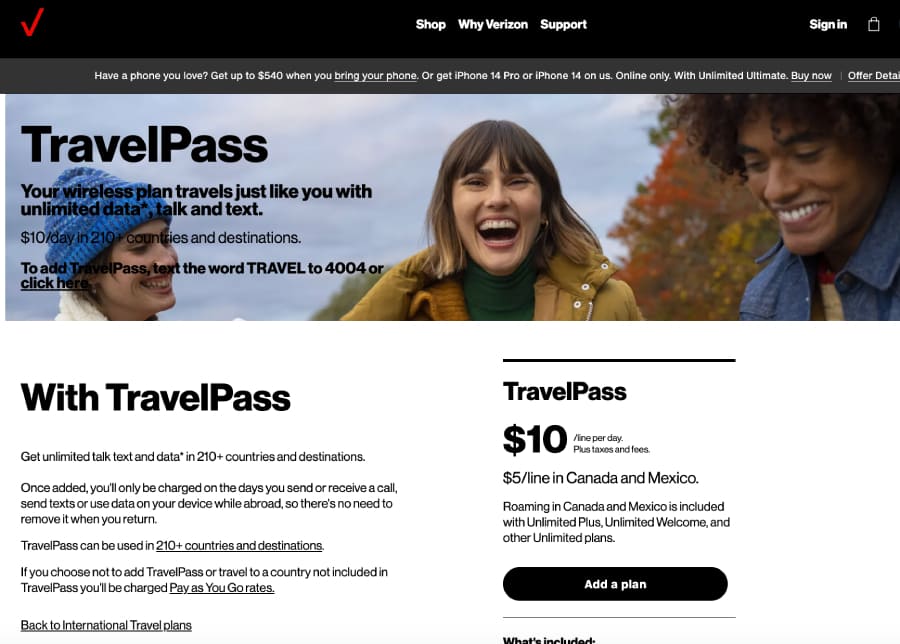
Major domestic telecommunications providers in the United States, Canada, and Australia frequently market international day passes or monthly travel bundles. For instance, prominent US carriers like AT&T and Verizon routinely charge approximately $10 per day for international day passes, which mirror domestic allowances but can accumulate rapidly over a multi-week vacation. Furthermore, some carriers throttle speeds down to sluggish 3G networks after a minimal daily threshold, such as 2 gigabytes. Meanwhile, alternative plans from providers like T-Mobile may offer included international data, but speeds are frequently restricted to basic 2G rates once a cumulative limit is reached, rendering high-bandwidth applications like real-time mapping nearly unusable without purchasing costly high-speed add-ons.
In contrast, specialized third-party eSIM providers operating within Europe offer significantly more economical alternatives. By partnering with major European infrastructure networks—such as Orange, Bouygues Telecom, and O2—these digital providers deliver high-speed 4G and 5G connectivity at a fraction of traditional carrier costs, often averaging between $2 and $4 per day depending on the chosen data volume and plan duration.
Leading eSIM Providers and Regional Plan Options
Because the European Union outlawed domestic mobile data roaming fees among member states years ago, a consumer utilizing a data plan purchased in one EU country can travel freely across borders without incurring additional roaming charges. This regulatory environment allows travelers to select a single comprehensive plan that covers multiple destinations throughout the continent.

Orange Holiday Europe eSIM
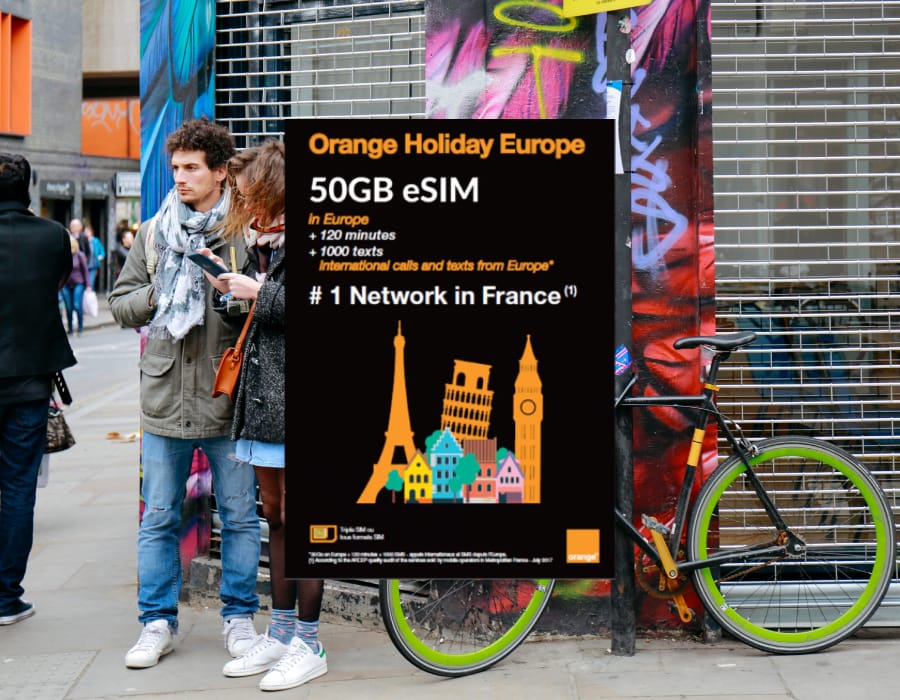
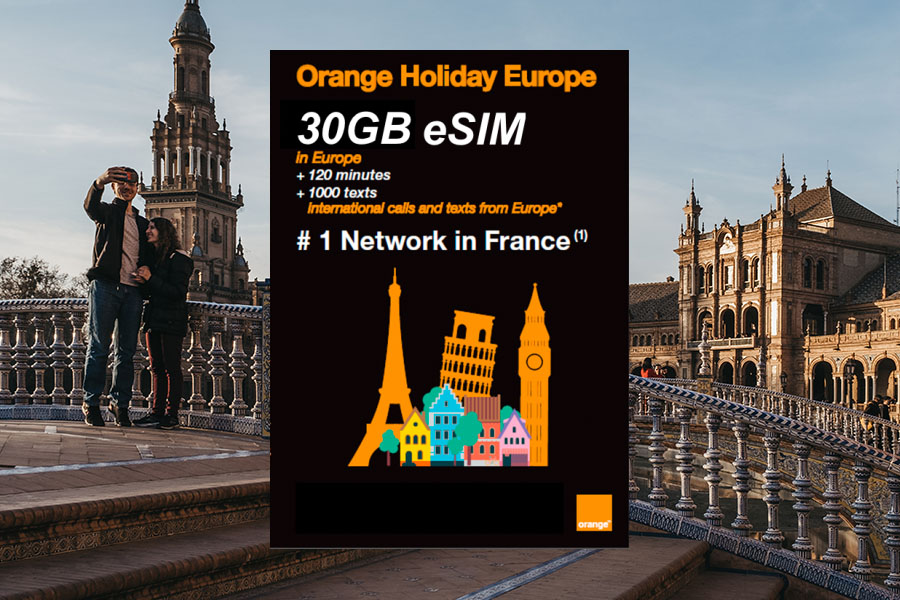
As one of France’s largest telecommunications conglomerates, Orange offers some of the most robust and reliable tourist-focused packages on the market. Their flagship options, including the 30GB and 50GB Europe eSIM plans, provide extensive high-speed data allowances valid over a 14-day or 28-day window, respectively. Notably, Orange plans stand out by including a legitimate French mobile phone number, enabling traditional voice calls and text messaging across Europe. Additionally, these plans support mobile hotspot tethering, allowing users to share their connection with laptops or travel companions.
Holafly Unlimited Data Plans
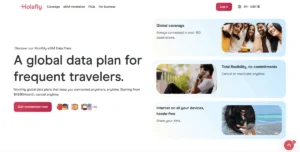
For travelers whose digital consumption habits lean heavily toward streaming video, constant social media uploads, and remote work, Holafly provides data plans with unlimited capacity. Operating across various durations ranging from 1 to 90 days, Holafly’s Europe-wide plans offer peace of mind against running out of data mid-trip. While these plans typically restrict hotspot sharing to prevent network congestion, they offer uninterrupted, high-speed connectivity backed by major local partner networks.
Bouygues My European eSIM
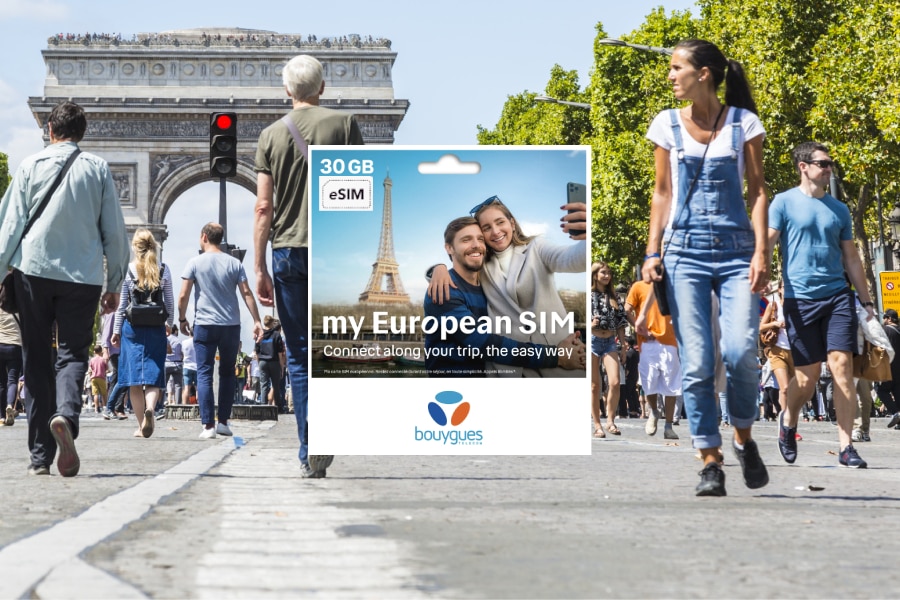
Another major contender rooted in French telecommunications infrastructure is Bouygues Telecom. Their European eSIM offering delivers a generous data allocation—typically around 30GB—paired with a 30-day validity period and unlimited voice calling within Europe. This makes it an exceptionally strong choice for extended vacations or digital nomads traversing multiple European nations over the course of a month.
Smart Comfort X and International Aggregators
For budget-conscious consumers with modest data requirements, international aggregators offer data-only eSIMs such as the Smart Comfort X plan. Providing a baseline data pool without voice or SMS capabilities, these plans rely on dynamic multi-carrier partnerships to connect users to reliable networks like O2 in Germany, WIND in Italy, and Telefónica in Spain. While lacking voice features, these plans accommodate app-based communication tools such as WhatsApp or Apple’s iMessage seamlessly.

Navigating Regional Nuances: The United Kingdom and Switzerland
While the abolition of roaming fees simplifies travel across the European Union, travelers must remain mindful of regulatory boundaries. Switzerland and the United Kingdom are not members of the European Union; consequently, certain EU-focused eSIM plans may exclude coverage in these regions or impose distinct routing rules.
While prominent tier-one carrier plans—such as those offered by Orange—frequently maintain bilateral agreements that include both Switzerland and the UK, budget-oriented international aggregators occasionally omit these territories from their standard coverage maps. Travelers planning itineraries that include London, Zurich, or the Swiss Alps should carefully review the specific country lists provided by their chosen eSIM retailer to avoid unexpected connectivity interruptions upon crossing the border.
Practical Implementation and Best Practices
Successfully deploying an eSIM requires adherence to a few technical prerequisites and logistical best practices to ensure a smooth transition upon arrival abroad.
Device Compatibility and Network Unlocking
Before purchasing any digital plan, consumers must verify two critical factors: whether their specific smartphone model supports eSIM technology, and whether the device is "unlocked." Many mobile handsets sold via carrier financing agreements in North America are software-locked to their native network. Users must contact their home carrier to request an official network unlock prior to departure. Essentially all iPhones manufactured since 2019 and the vast majority of Android devices released since 2020 possess the necessary hardware capabilities.
Timing the Activation Process
A common pitfall among novice travelers is activating an eSIM too early. Most prepaid regional data plans operate on a strict chronological countdown—ranging from 14 to 30 days—that begins the precise moment the digital profile connects to a supported cellular network. Experts strongly recommend purchasing the plan online prior to departure to receive the installation QR code via email, but withholding final activation until the aircraft touches down on European soil to preserve the full validity period.
Optimizing Data Consumption and Battery Life
Even with generous data packages, travelers can easily exhaust allowances through background app refreshes and high-definition video streaming. Implementing simple conservation measures—such as downloading offline maps via Google Maps for navigation without cellular data, restricting background data access for non-essential social media applications, and relying on secure Wi-Fi networks in hotels and cafes—can drastically extend data longevity. Furthermore, because continuous GPS tracking and cellular handoffs accelerate battery depletion, carrying a compact portable power bank remains an essential item for any modern travel packing list.
By leveraging the flexibility of eSIM technology, international travelers can bypass the logistical friction of traditional roaming agreements, secure reliable high-speed connectivity at competitive rates, and ensure their journey across Europe remains as digitally connected as it is culturally enriching.