Langtang Flood Update: 1,453 Dead and 6,664 Missing as Rescue Efforts Stagger Under Scale of Regional Catastrophe

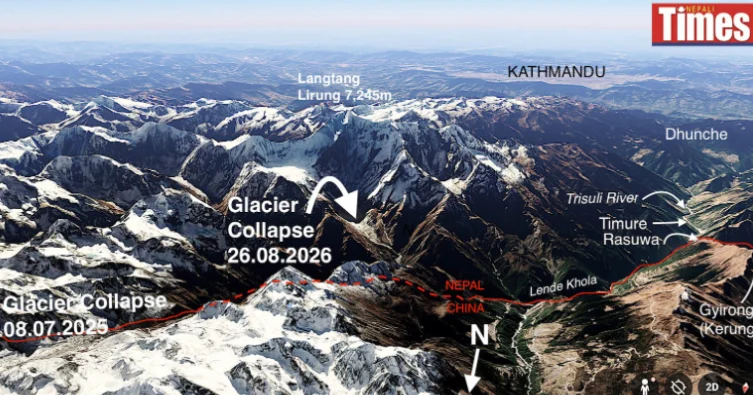
The catastrophic debris flow that cascaded from the northern slopes of the Langtang Lirung massif on August 26 has resulted in one of the most significant natural disasters in the modern history of the Himalayas. According to the latest consolidated data from authorities in both Nepal and the Tibet Autonomous Region of China, the death toll has reached 1,453, with an additional 6,664 individuals still listed as missing. The sheer scale of the disaster, which spanned across international borders and treacherous, high-altitude terrain, has turned a remote mountain pass into a site of unprecedented humanitarian crisis.
The Mechanics of the Collapse: A Geologic Overview
On the morning of August 26, a massive section of rock and glacial ice dislodged from the north face of the 7,227-meter Langtang Lirung peak. The geological event, which originated at an altitude of approximately 5,200 meters, triggered a catastrophic debris flow that descended more than 2,200 vertical meters into the valley below.
Seismological stations initially detected the event as a magnitude 5.2 earthquake. However, subsequent analysis by geologists clarified that the seismic signal was not tectonic in origin, but rather the result of the immense kinetic energy generated by the landslide’s rapid descent. Observers note that the mass moved with terrifying velocity, traversing a distance of 20 to 22 kilometers in a mere seven minutes. This rapid transit time left virtually no window for evacuation or warning for those stationed in the narrow valley floor, which serves as a critical conduit for trade and travel between the two nations.
The debris, composed of pulverized rock, glacial ice, and massive boulders, funneled into the Lhende Khola River, creating a high-energy slurry that acted like a battering ram. The force of the surge obliterated the infrastructure at the Rasuwagadhi border crossing and the road leading to Gyirong Port, effectively severing one of the busiest land trade arteries between China and Nepal.
Chronology of the Disaster
The timeline of the event illustrates the speed at which a high-altitude geological instability can transform into a transboundary humanitarian emergency:
- August 26, Early Morning: The north face of Langtang Lirung collapses. The debris flow begins its descent, reaching the valley floor in less than ten minutes.
- August 26, Mid-Morning: Initial seismic reports of a 5.2 magnitude earthquake trigger confusion. First responders in the Kyirong Valley and Rasuwa district report losing contact with remote outposts.
- August 26, Afternoon: Aerial reconnaissance reveals that the Lhende Khola has been dammed and subsequently breached, sending a secondary flash flood surging downstream through the Bhote Koshi and Trishuli River corridors.
- August 27-28: Search and rescue teams from Nepal and China attempt to access the epicenter. Their efforts are hampered by destroyed bridges, mud-choked hydroelectric tunnels, and continued instability on the slopes.
- August 30-Present: The focus shifts from potential rescue to recovery. Officials confirm that the search area now extends hundreds of kilometers downriver, with debris and bodies being recovered as far away as the Indian border.
Human Toll and Demographic Impact
The human impact of the disaster is staggering due to the density of travelers in the region during the late August window. The missing population comprises a diverse cross-section of regional stakeholders. Among the 6,664 reported missing are hundreds of foreign nationals—a group that includes religious pilgrims traveling to the sacred Mount Kailash, international trekkers, cross-border traders, and laborers working on the region’s burgeoning hydroelectric infrastructure.
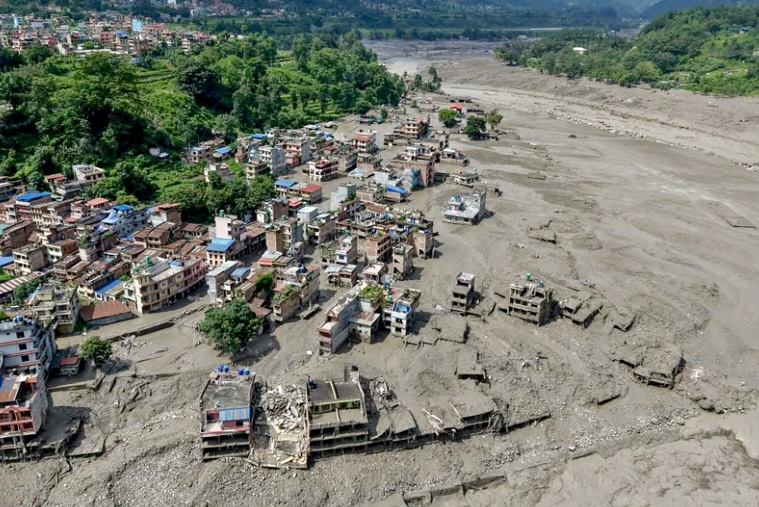
Nepal has borne the brunt of the tragedy, reporting 1,410 confirmed fatalities and 6,145 missing persons. In the neighboring Kyirong County of Tibet, authorities have confirmed 43 deaths with 519 people unaccounted for. The identification process is proving to be a logistical nightmare for authorities. Because the floodwaters acted as a hydraulic conveyor belt, carrying debris and victims over 240 kilometers downstream into Indian territory, the traditional methods of recovery and identification are insufficient. Many victims remain trapped in mud-filled hydroelectric tunnels or buried under deep layers of river silt, making the prospect of recovery difficult for families and authorities alike.
Official Responses and International Cooperation
The governments of Nepal and China have pledged to cooperate on the search and recovery efforts, though the sheer isolation of the site remains a major impediment. The Nepal Ministry of Home Affairs has deployed additional search-and-rescue personnel, but the damage to roads and bridges has turned simple supply chain logistics into a multi-day operation.
In Beijing, officials have emphasized the need for a joint scientific investigation into the causes of the collapse, pointing to potential climate-related factors that may have weakened the structural integrity of the Langtang Lirung glacier. The disaster has prompted immediate questions regarding the safety of infrastructure projects in the Himalayas, as the force of the flood was sufficient to fill, and effectively neutralize, several critical hydroelectric tunnels that serve as the backbone of the region’s power grid.
Broader Implications: A Changing Himalayan Landscape
This disaster is being analyzed by environmental scientists as a potential bellwether for the risks posed by climate change in high-altitude environments. As global temperatures rise, the stability of glacial faces and permafrost in the Himalayas is coming under increasing scrutiny. The "thaw-and-slip" phenomenon, where melting permafrost destabilizes the underlying rock of massive peaks, is a growing concern for regional planners.
Furthermore, the economic impact of the disaster cannot be understated. The destruction of the Rasuwagadhi crossing creates an immediate bottleneck in trade between China and Nepal, forcing both nations to seek alternative, more costly routes for imports and exports. The hydroelectric infrastructure damage also threatens to create a medium-term power shortage, as the destroyed or damaged tunnels represent significant energy assets that will require years to restore.
For the local communities, the loss of life represents a generational trauma. Entire villages located on the banks of the Trishuli River were flattened in the span of an hour. The cultural loss, particularly for those communities whose livelihoods were tethered to the pilgrimage routes and mountain tourism, is profound.
Challenges in Recovery
Moving forward, the search for the missing faces significant hurdles. Monsoon-swollen rivers and the potential for secondary landslides continue to threaten search-and-rescue teams. Furthermore, officials admit that the current figures for the "missing" are fluid. "We are dealing with a situation where identification is slowed by the very nature of the disaster," a spokesperson for the district disaster management office noted. "Bodies have been recovered in states that make visual identification impossible, and many people who were simply transiting the area are not on any official manifest, making the final tally of those lost a moving target."
The tragedy at Langtang Lirung serves as a grim reminder of the volatility of the Himalayan ecosystem. While the region is accustomed to seismic activity and seasonal flooding, the scale of this event—a singular, massive, and rapid-onset collapse—has overwhelmed the existing disaster response frameworks. As the region begins the long process of mourning and recovery, the international community watches, mindful that the mountains which define the landscape are also home to forces that remain beyond the reach of human control. The focus in the coming weeks will remain on the arduous task of recovery, while the long-term work of understanding how such a catastrophe can be mitigated in the future will surely become the subject of intense global scrutiny.