Xteink X3 E-Reader Trail Test: Is This Ultra-Small Device a Backpacking Game Changer or Just a Gimmick?

The eternal compromise between carrying comforts and minimizing pack weight defines the philosophy of ultralight backpacking. For decades, dedicated readers who brave the backcountry have faced a frustrating dilemma: leave behind the literary comforts of home or suffer under the heavy, nonessential physical burden of paperbacks and standard electronic tablets. While books provide vital entertainment during multi-day storms and help hikers decompress after grueling ascents, they are traditionally classified as expendable luxuries. However, recent hardware developments from overseas manufacturers are challenging this long-standing calculus. The introduction of the pocket-sized Xteink X3 e-reader has forced a reevaluation of what gear makes the final cut, offering a sub-60-gram alternative that promises distraction-free reading without the traditional weight penalty.
Main Facts and Device Specifications
Manufactured by the Chinese electronics firm Xteink, the X3 e-reader was originally conceptualized as an everyday-carry lifestyle gadget rather than specialized outdoor equipment. Its primary design intent was to provide a pocket-sized or smartphone-mountable display that allows users to sneak in a few pages of reading during daily downtime, effectively serving as an antidote to mindless smartphone scrolling. Yet, the physical attributes that make the device appealing to urban commuters—extreme portability and minimal mass—happen to align perfectly with the rigorous demands of ultralight backpacking enthusiasts.
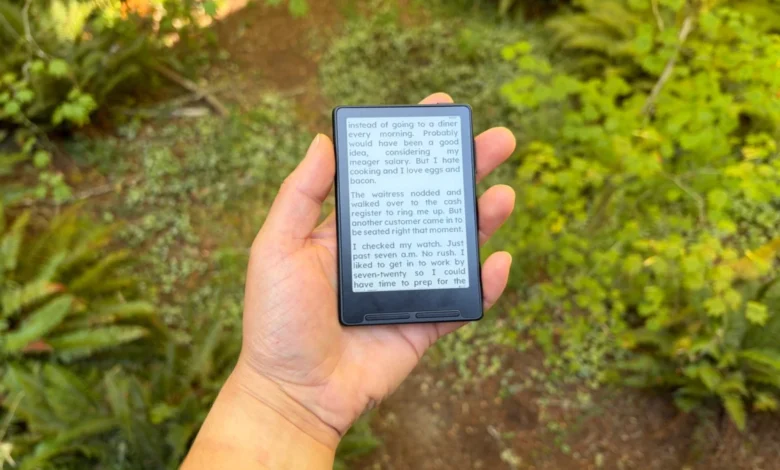
The technical specifications of the Xteink X3 immediately distinguish it from mainstream market offerings. The device features a compact 3.7-inch e-ink display, roughly equivalent in surface area to a standard playing card. In terms of physical dimensions, it measures an ultra-slim 5.1 millimeters in thickness and registers a mere 58 grams on a scale—comparable to the weight of a standard Snickers candy bar. To contextualize this featherlight profile, the X3 weighs less than half of the lightest full-sized Kindle models currently available on consumer markets.
Power efficiency remains one of the device’s strongest selling points. Xteink officially rates the internal battery to last between 10 and 14 days under standard usage conditions, assuming an average of one to two hours of daily reading. Extended field testing corroborates these manufacturer claims, as prolonged deployment cycles have proven difficult to drain entirely without intentional, heavy stress testing. Furthermore, with an accessible retail price point of $69, the financial barrier to entry is significantly lower than that of premium e-readers.
Chronology and Field Testing Methodology
The evaluation of the Xteink X3 within outdoor settings followed a rigorous testing protocol designed to assess its durability, utility, and interface limitations over a multi-week period in variable backcountry environments.
- Initial Acquisition and Setup: Field testers began by transferring pre-existing EPUB digital book files from various personal devices to the X3. The process was documented as straightforward and rapid, requiring minimal technical proficiency.
- Backcountry Deployment: Over a two-week span, the device accompanied backpackers into remote wilderness areas, subjected to the typical rigors of tent life, fluctuating temperatures, and the general jostling of being packed alongside cooking gear and extra layers.
- Battery Endurance Tracking: Testers monitored power consumption under daily reading regimens of approximately 90 minutes per night, verifying whether the 10-to-14-day battery life claims held up away from electrical grids.
- Interface and Usability Assessment: Observers evaluated the tactile feedback of the physical navigation buttons, the absence of touchscreen capabilities, and the lack of an integrated front light during nighttime reading sessions inside tents.
Supporting Data and Comparative Analysis
To understand the operational niche the Xteink X3 occupies, it is essential to compare its metrics against existing alternatives commonly packed by backpackers: traditional paperback books, standard e-readers like the Amazon Kindle, and mobile smartphones.
| Device / Medium | Weight | Display Size | Waterproofing | Battery Life | Primary Limitation for Backpacking |
|---|---|---|---|---|---|
| Traditional Paperback | 150g – 400g+ | Variable | Poor (paper damage) | Indefinite | Heavy weight, bulk, degradation in moisture |
| Standard E-Reader (Kindle) | 150g – 200g+ | 6 inches or larger | Varies by model | Weeks | Excessive weight for ultralight purists, larger footprint |
| Smartphone (e.g., iPhone) | 170g – 240g+ | 6.1 inches+ | Generally high | 1–2 days (heavy use) | Screen glare, battery drain on critical navigation tools, temptation of notifications |
| Xteink X3 | 58 grams | 3.7 inches | None | 10–14 days | No front light, no touchscreen, lack of Libby/library app integration |
As illustrated by the data, the X3 occupies a unique statistical space. While a smartphone is ostensibly carried on nearly every modern backpacking trip, relying on it for literature introduces distinct operational risks. Navigational applications, digital photography, and emergency communication require preserved battery reserves. Draining a smartphone battery on evening reading sessions in the backcountry compromises safety margins. Moreover, psychological separation from digital connectivity is a primary goal for many who seek wilderness immersion; utilizing a dedicated, offline reader prevents the cognitive intrusion of incoming messages, emails, and social media notifications.
Operational Challenges and Limitations
Despite its impressive weight-to-performance ratio, the Xteink X3 presents several notable compromises that users must navigate. Because the device was not engineered specifically for expedition travel, it lacks several standard features found in ruggedized outdoor gear.
First, the device is not waterproof or water-resistant. While full-sized e-readers often boast IPX ratings that protect against accidental submersions or heavy downpours, the X3 requires conscious protective measures. Field tests demonstrated that storing the device inside a standard Ziploc bag within a backpack successfully mitigates moisture risks without adding measurable weight, yet the lack of inherent ingress protection remains a vulnerability.
Second, the navigation architecture differs drastically from contemporary consumer electronics. The X3 features no touchscreen interface. Instead, users must rely entirely on a physical array of four buttons located directly on the chassis to turn pages, access menus, and select titles. This physical configuration introduces a distinct learning curve, and the lack of screen real estate makes navigating large libraries less straightforward than on high-end tablets.
Third, the omission of an integrated front light presents a practical hurdle for nighttime reading inside a tent. While the e-ink screen mimics the matte, glare-free aesthetic of paper under ambient daylight, reading after dark requires an external light source—typically a headlamp.
Finally, digital rights management and software ecosystem compatibility present friction points for public library patrons. Readers who rely heavily on library apps such as Libby—which synchronizes seamlessly with Amazon Kindle architecture—will find no simple, direct method to transfer borrowed library books onto the X3 operating system, limiting content acquisition primarily to sideloaded EPUB files.
Broader Impact and Implications for the Ultralight Community
The introduction and evaluation of niche gadgets like the Xteink X3 reflect a broader evolution in the ultralight backpacking community. Historically, the movement was defined by radical deprivation—shedding every conceivable item that did not serve an immediate life-support or navigational function. Over time, however, technological advancements in materials science and consumer electronics have allowed backpackers to reclaim small comforts without violating weight thresholds.
Industry analysts note that consumer trends are increasingly favoring modular, multi-use, or micro-form-factor devices. By repurposing a lifestyle gadget intended for urban digital detox into a backcountry entertainment tool, modern hikers continue to blur the line between specialized outdoor equipment and general consumer technology.
Ultimately, consensus among gear reviewers suggests that the X3 transcends the label of a mere novelty, provided the user’s priorities align with its constraints. For backpackers who prioritize absolute minimum base weight, wish to preserve smartphone batteries for emergency protocols, and desire a distraction-free retreat into literature beneath the stars, the Xteink X3 represents a compelling operational success. Conversely, those unwilling to manage separate file transfers, read by headlamp illumination, or sacrifice touchscreen fluidity will likely continue to view heavy paperbacks or full-sized tablets as a necessary compromise. As the market for micro-electronics expands, the X3 signals a growing appetite for ultra-portable solutions that cater to the mental well-being of travelers as effectively as their physical endurance.