Resilience on the Steppe: Conservationists Fight to Protect the Ancient Migration Routes of Kazakhstan’s Saiga Antelope

The rugged expanses of the Eurasian steppe serve as the stage for one of the most remarkable wildlife spectacles on Earth, featuring the saiga antelope. Traveling across the remote landscapes of western Kazakhstan requires navigating tracks that test both vehicle and driver, surrounded by an environment largely unchanged since the Pleistocene epoch. Conservationists from the Association for the Conservation of Biodiversity of Kazakhstan (ACBK) regularly monitor these regions to track the population dynamics of the saiga, a species that once shared the planet with woolly mammoths and saber-toothed cats. Today, these ancient ungulates face modern threats from industrial development, infrastructure fragmentation, and shifting land use policies across Central Asia.
Main Facts and Ecological Profile
The saiga antelope (Saiga tatarica) is easily distinguished by its prominent, flexible, tubular snout, which functions as an evolutionary marvel. This specialized nasal structure filters out dust during the dry summer months and warms frigid, sub-zero winter air before it enters the animal’s lungs. Historically, saiga populations ranged across a vast expanse from the Caucasus Mountains to Mongolia.
The species is renowned for its resilience, having survived the Late Pleistocene extinction event that wiped out much of the megafauna in its habitat. Saigas are intensely migratory, traveling hundreds of miles annually in large herds to access seasonal grazing grounds and water sources. During the annual rutting season, males engage in aggressive territorial displays and physical combat, prioritizing reproductive dominance over feeding, which occasionally leads to high mortality rates from exhaustion. Females evaluate potential mates based on physical vigor and the size of their distinctive snouts, which signal strong genetic fitness in harsh environmental conditions.
Historical Context and Nomadic Traditions
The history of the Eurasian steppe is deeply intertwined with nomadic human cultures and the movements of wildlife. The term "Kazakh" is historically derived from Turkic roots signifying wanderers or vagabonds, reflecting a lifestyle of seasonal mobility that persisted for millennia. Small human communities traditionally migrated to higher altitudes during the summer to access melting snow and green pastures, returning to sheltered valleys ahead of severe winter weather.
These historical transit corridors formed the foundation for portions of the ancient Silk Road, an evolving network of commercial pathways connecting East and West. The fertile banks of the Ural River, which serves as a natural boundary between Europe and Asia, became vital transcontinental crossroads featuring strategic settlements, public baths, and trading posts. Throughout this history, travelers and merchants viewed the saiga antelope with profound reverence, recognizing the species as an expert navigator of an otherwise inhospitable terrain.
The Impact of Modern Infrastructure and Sedentarization
The traditional mobility of both human populations and wildlife underwent a drastic transformation during the 20th century. Under the Soviet Union, mandatory sedentarization policies forced nomadic communities into agricultural settlements, seeking to modernize the region through farming and urbanization. However, large portions of the steppe soil proved unsuitable for intensive crop cultivation, highlighting the ecological limitations that originally necessitated a nomadic lifestyle.
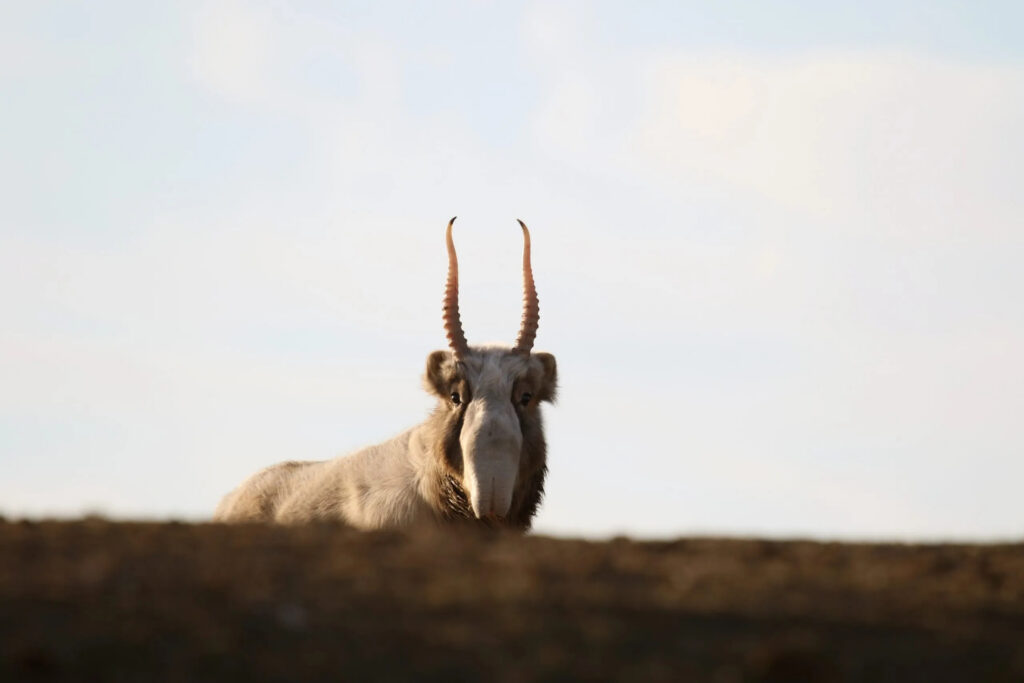
While human populations settled into permanent towns and cities, the saiga antelope continued its ancient migratory patterns. Unfortunately, the rapid expansion of post-Soviet infrastructure—including railways, fenced borders, and gravel roads—severely fragmented the landscape.
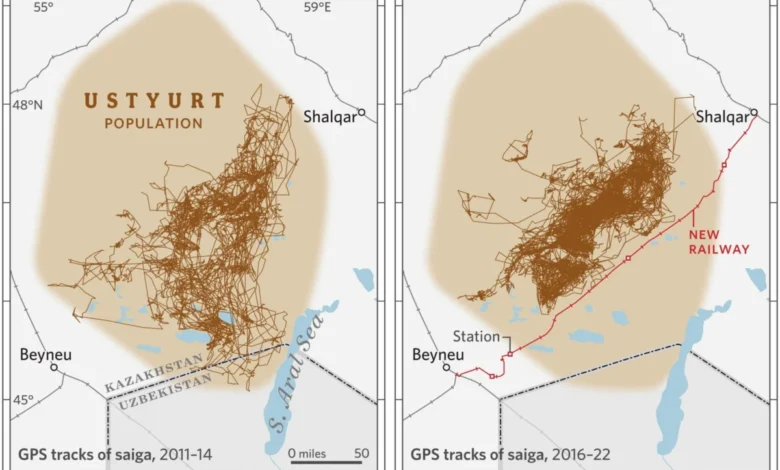
Tracking data gathered by conservationists illustrates the immediate consequences of such barriers. For instance, research analyzing GPS-collared saiga populations demonstrated that a traditional migration route extending deep into Uzbekistan was abruptly severed by the construction of a new railway line in 2014. Pre-construction data revealed fluid, seasonal movements across the border, whereas post-construction observations showed herds milling despondently on the northern side of the tracks, unable to access historical southern grazing lands and water sources. This physical obstruction leads to a cultural loss of spatial knowledge, as younger generations fail to learn traditional migration routes from older animals.
Conservation Strategies and Cross-Border Collaboration
To mitigate the catastrophic fragmentation of saiga habitats, the Association for the Conservation of Biodiversity of Kazakhstan (ACBK), in partnership with the Kazakh government and international bodies, has implemented targeted conservation interventions. These efforts are grounded in rigorous field audits and telemetry data collected by researchers using GPS collars to monitor herd movements.
Key conservation measures include:
- Wildlife-Friendly Crossings: Constructing specialized earthen ramps alongside railway lines that match track elevation, creating the illusion of a natural break in the infrastructure and allowing herds to cross safely.
- Strategic Fencing Modifications: Collaborating with neighboring governments, such as Uzbekistan, to redesign border security barriers. Traditional barbed-wire walls have been replaced with X-shaped barricades that prevent unauthorized vehicular access while maintaining sufficient ground clearance for saigas to pass underneath.
- Protected Area Designation: Establishing new wildlife sanctuaries based on empirical tracking data to secure critical habitats for rutting and calving seasons.
These multifaceted initiatives aim to restore ecological connectivity across the Eurasian steppe, rebuilding the spatial trust necessary for saiga populations to resume their historical migrations.
Broader Implications and Future Outlook
The conservation status of the saiga antelope serves as a bellwether for the ecological health of Central Asia. Following catastrophic population crashes in the late 20th and early 21st centuries—driven by poaching, habitat loss, and epizootic disease outbreaks—coordinated international conservation efforts have yielded signs of population recovery. However, long-term survival remains contingent upon balancing regional economic development with the preservation of transboundary migration corridors.
Experts emphasize that infrastructure planning must explicitly incorporate ecological connectivity to prevent permanent biodiversity loss. By dismantling physical barriers and restoring historical pathways, conservationists hope to ensure that the saiga antelope—an enduring symbol of steppe freedom—continues to navigate the landscapes that it has traversed for thousands of years.