The Industrialization of Innocence: Inside the Multi-Billion-Dollar School Photography Machine

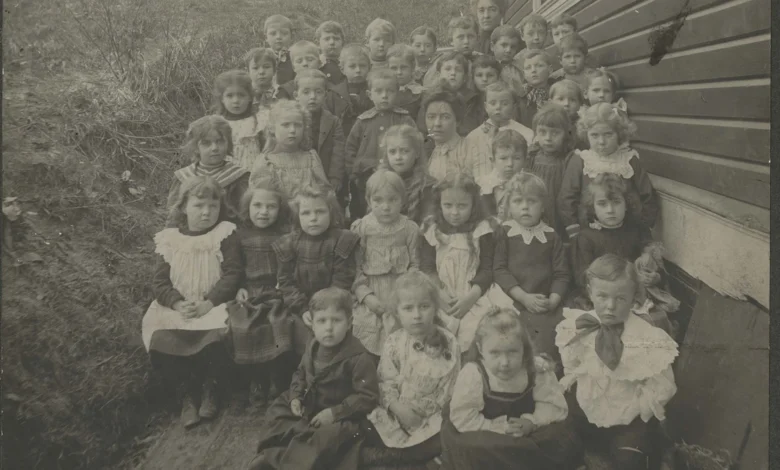
Every autumn, millions of American children undergo a remarkably uniform ritual. They sit on a metal stool, adjust their posture under the glare of a strobe light, and stare blankly into a camera lens while a stranger offers a brief, practiced direction: chin down, eyes up here. Within thirty seconds, the interaction concludes, leaving behind a digital file destined to be cataloged, processed, and ultimately printed onto wallet-sized sheets of photographic paper. This routine, deceptively simple and universally recognized, is the foundational engine of the largest sustained portrait operation in human history.
At the center of this massive enterprise is Lifetouch, a corporate titan that has long dominated the American classroom landscape. According to recent disclosures from chief executive Ken Murphy, the company photographs roughly 30 million children annually across roughly 50,000 schools and childcare centers. While the company’s footprint has experienced strategic retrenchments—including the private sale of Lifetouch Canada to Everest Solutions and the strategic transfer of select U.S. high school accounts to competitors like CADY—Lifetouch historically controlled up to half of the entire school photography market. For generations, industry professionals and insiders have casually categorized the operation as a functional monopoly, driven by unmatched logistical scale and an unyielding corporate strategy.
Yet, despite its immense economic footprint, the school portrait industry largely operates in plain sight. It hides in manila envelopes left on kitchen counters, inside hallway yearbooks, and within the wallets of grandparents across the nation. The enduring fascination of picture day lies not in the artistic caliber of the resulting photographs, but in its flawless execution as an industrial image-making machine—one that treats the photograph itself almost as an incidental byproduct of a far larger logistical network.
From Humble Great Depression Roots to National Dominance
The corporate lineage of modern school photography traces back to 1936, deep within the economic despair of the Great Depression. Two entrepreneurs, Bruce Reinecker and Eldon Rothgeb, pooled a modest $500 to establish National School Studios. Their business model was straightforward yet ambitious: bringing structured, professional "school photography of distinction" to isolated, one-room schoolhouses scattered across rural Minnesota. Within a single decade, the fledgling enterprise scaled rapidly, transforming into one of the largest school photography firms in the United States.
Decades later, in the 1980s, the company rebranded as Lifetouch, anchoring its corporate headquarters in Eden Prairie, Minnesota. A pivotal structural decision occurred in 1978 when founder Bruce Reinecker transferred 100 percent of the company’s ownership to its labor force through one of the earliest Employee Stock Ownership Plans (ESOPs) established under federal law. For decades following, Lifetouch maintained its status as the world’s largest employee-owned photography company, aligning the hands-on labor of field photographers directly with corporate equity.
The overarching strategy of this growth was never artistic refinement; it was absolute scale. While a traditional portrait studio functions as a craft product, dependent on bespoke artistic choices and personalized client relationships, school photography operates fundamentally as a logistics product. The profound genius of the business model was recognizing that the final photographic print is merely the vehicle for selling access, repeatable processes, and a distribution network capable of reaching nearly every school-aged child on a predictable, cyclical calendar. By aggressively acquiring more than 250 smaller regional competitors over the decades, Lifetouch systematically absorbed the fragmented market, ensuring that the local studio photographing a community’s children was, in reality, a subsidiary of the Minnesota-based giant.
Anatomy of an Image Factory: The Mechanics of Picture Day
To understand how Lifetouch and its competitors process millions of students annually, one must examine picture day not as a creative photoshoot, but as an assembly line. Field crews typically arrive at school gymnasiums or cafeterias before the first morning bell. They erect collapsible backdrops, position heavy strobe lights, set up seating stools, and connect laptops for tethered digital capture.
Entire classes are marched into the temporary studio in rapid succession. Assistants streamline the pipeline by handing photographers pre-labeled cards or scanning student barcodes, instantaneously binding the digital file to specific administrative data before the shutter even activates. A single, efficient photographer can process hundreds of children in a single shift—sometimes pushing past a thousand students in a large institution—operating at a pace reminiscent of an automated toll booth rather than a traditional portrait sitting.
The standard mottled blue or gray canvas backdrop is a deliberate, highly calculated engineering choice. Neutral tones effectively obscure fabric wrinkles and guarantee uniform color reproduction under harsh, standardized portable lighting. This visual consistency is paramount; it allows a national corporation to guarantee identical aesthetic standards for parents ordering prints in Ohio, Oregon, or anywhere in between.
Increasingly, modern operators have transitioned to green screen technology utilizing chroma key compositing. The economic rationale is undeniable. By photographing students against a uniform green background—a color chosen deliberately because it contrasts sharply with human skin tones and rarely appears in everyday apparel—companies eliminate the logistical burden of hauling physical backdrops. More importantly, it empowers parents to select their preferred background digitally after the fact, ranging from autumnal woodlands to classic marbled gradients, entirely post-shoot. Naturally, this technology occasionally yields unintended viral moments, such as students wearing St. Patrick’s Day green garments inadvertently blending into floating, disembodied heads when the software strips away the green spectrum.
Because the breakneck pace of the operation prohibits lengthy interventions to coax smiles from anxious kindergartners, the system relies on a crucial safety valve: retake day. Designed to absorb inevitable human failures—blinks, scowls, bad hair days, and uncooperative toddlers—a secondary date is scheduled weeks later. Crucially, students are typically photographed regardless of whether their families intend to purchase prints, as these baseline images serve vital administrative functions for school ID cards, administrative databases, and yearbooks. The portrait functions first as a functional data point for the institution; the consumer keepsake is merely the commercial monetization of that administrative necessity.
The Economics of the Order Form and Captive Audiences
The true financial lifeblood of the industry resides within the order form, a masterclass in behavioral design and pricing psychology. Packages typically span a spectrum from $15 at the entry-level to upwards of $100 for premium bundles. These offerings are anchored around a physical unit largely extinct outside of school photography: the wallet-sized print. A standard mid-tier package systematically bundles a single 8×10 print, several 5x7s, and sheets of wallets, providing families with convenient tear-off increments meant to satisfy extended family members and coworkers.
Pricing structures are intentionally hierarchical. Initial packages are priced at a premium, while supplementary add-ons are heavily discounted, gently coercing parents into purchasing significantly more physical inventory than strictly necessary. Premium tiers frequently layer on digital file downloads—commanding anywhere from $25 to $35—alongside automated skin retouching, magnets, and class composite prints that cost pennies to manufacture at scale.
Data cited by consumer watchdog organizations indicates that roughly 96 percent of parents express a desire to possess the official school portrait. However, translating sentiment into transactions requires careful economic balancing. According to public statements from leadership, conversion thresholds typically demand that approximately 30 percent of parents at a given school complete a purchase at an average order value of around $25 to successfully underwrite the complex machinery of labor, transportation, equipment depreciation, printing, and national shipping.
Fall picture day alone routinely accounts for roughly half of total corporate revenues, with the remainder supplemented by spring sessions, athletic team composites, club photos, senior portraits, and early childhood education centers. While industry-wide market estimates in the United States fluctuate between $1 billion and nearly $3 billion annually, every financial assessment points toward the same fundamental reality: a massive, recurring, highly resilient revenue stream driven by high-volume, low-friction micro-transactions.
Crucially, the profitability of this enterprise relies heavily on business-to-business arrangements rather than direct consumer marketing. Portrait studios traditionally survive through aggressive consumer acquisition costs; Lifetouch, by contrast, operates through institutional contracts. The company pays nothing to utilize school facilities for picture day. Instead, it secures exclusive operating rights by negotiating commission structures with school districts. Industry executives note that commission percentages frequently range from 15 to 50 percent of total sales, or alternatively manifest as flat per-package bounties or guaranteed institutional signing bonuses. These payouts are subsequently baked into the retail prices presented to parents on order forms. Consequently, the enterprise faces virtually zero customer acquisition friction, as state-mandated compulsory education funnels its target demographic directly into buildings where exclusive corporate contracts are already secured.
Consolidation, Disruption, and Market Evolution
Achieving dominance over one-third of the American student body required decades of aggressive corporate consolidation. By acquiring over 250 regional competitors, Lifetouch systematically dismantled local independent studios, replacing them with a standardized national infrastructure.
The resulting barriers to entry are formidable. A prospective competitor requires far more than skilled photographers; it demands robust regional logistics crews, industrial printing and fulfillment facilities, sophisticated customer service architectures, advanced software capable of tracking tens of millions of distinct digital assets, and entrenched political relationships with school superintendents and district administrators. For a school official, altering established photographic vendors carries inherent administrative risk, particularly when existing systems function smoothly and generate supplemental commission revenue for institutional budgets.
Nevertheless, the landscape is not entirely static. Regional competitors such as Inter-State Studio maintain strong localized footholds, while yearbook giant Jostens commands massive market share in complementary segments. Furthermore, emerging tech-forward startups increasingly pitch schools on streamlined digital galleries and reduced sales pressure. A notable structural shift occurred when CADY acquired Lifetouch’s high school photography accounts and Prestige senior portrait brands across targeted regions, signaling that specialized competitors can successfully peel away market share in sectors where consumers demand higher creative investment. Senior portraits, in particular—where families willingly allocate substantial budgets for milestone moments—provide an opening for agile competitors to challenge legacy models.
The Enduring Cultural Legacy of Picture Day
Beyond the corporate balance sheets and logistical supply chains, picture day remains one of the last truly universal cultural rituals in modern society. Operating much like a minor civic holiday, it prompts premeditated wardrobe discussions, morning hair management, and the familiar, mildly unnatural postural adjustments demanded by rushed photographers.
The resulting archive is culturally distinct. School portraits rarely conform to the rigorous technical or artistic standards of contemporary commercial photography, and therein lies their unique authenticity. The awkward expressions, missing teeth, unflattering outfits, and unfortunate haircuts are preserved with absolute demographic consistency. Viewed collectively across successive grade levels, these images serve as an unvarnished visual flip-book of human development, free from artificial digital curation or modern self-presentation filters.
This structural uniformity explains why school portraits consistently outlive vastly superior photographs stored on digital devices. Preserved in shoeboxes and kitchen drawers for decades, the rigid standardization of the format allows viewers to clearly trace the arc of personal maturation. While fine art photographers chase fleeting moments and documentary shooters capture nuanced narratives, the school portrait machine executes a singular, unyielding mandate: recording an individual’s physical existence at a specific height, on a specific date, with a specific expression, year after year.
Financial Realities and Modern Adaptations
The immense scale of this enterprise attracted major corporate attention, culminating in January 2018 when e-commerce and printing giant Shutterfly agreed to acquire Lifetouch for $825 million in an all-cash transaction funded via an incremental term loan. Shutterfly sought to integrate Lifetouch’s unmatched physical distribution network—projected to inject roughly $935 million in annual revenue—combining internet-based photo product personalization with a guaranteed, recurring physical relationship with tens of millions of households.
Despite seismic technological shifts—most notably the rise of smartphones and ubiquitous digital cameras, which leadership acknowledges has reduced overall participation rates from historical peaks—the fundamental mechanics of the school portrait have proven remarkably durable. Smartphones have decimated the market for casual photographic prints, yet they have utterly failed to replicate the institutional authority of the school portrait, the class composite, or the official yearbook headshot.
As a new academic year unfolds, photographic crews will continue to arrive before dawn in gymnasiums nationwide, taping down backdrops and assembling lighting kits to process hundreds of children before lunch. Though none of these images will hang in fine art galleries, they will quietly outlive the vast majority of casual photographs captured on personal devices that same day. Resting securely in drawers, family albums, and hallway frames, they will continue to execute the precise logistical purpose for which the world’s largest portrait operation was originally designed.
Related posts: