Holafly Plans Global eSIM Subscription: A Comprehensive Review for Long-Term Travelers and Digital Nomads

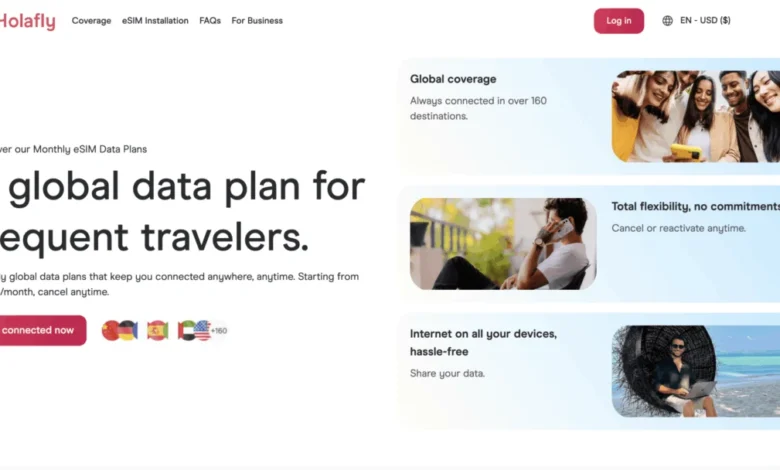
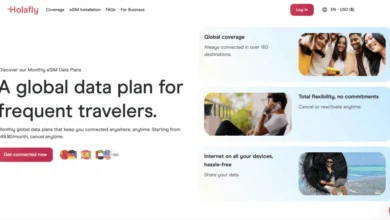
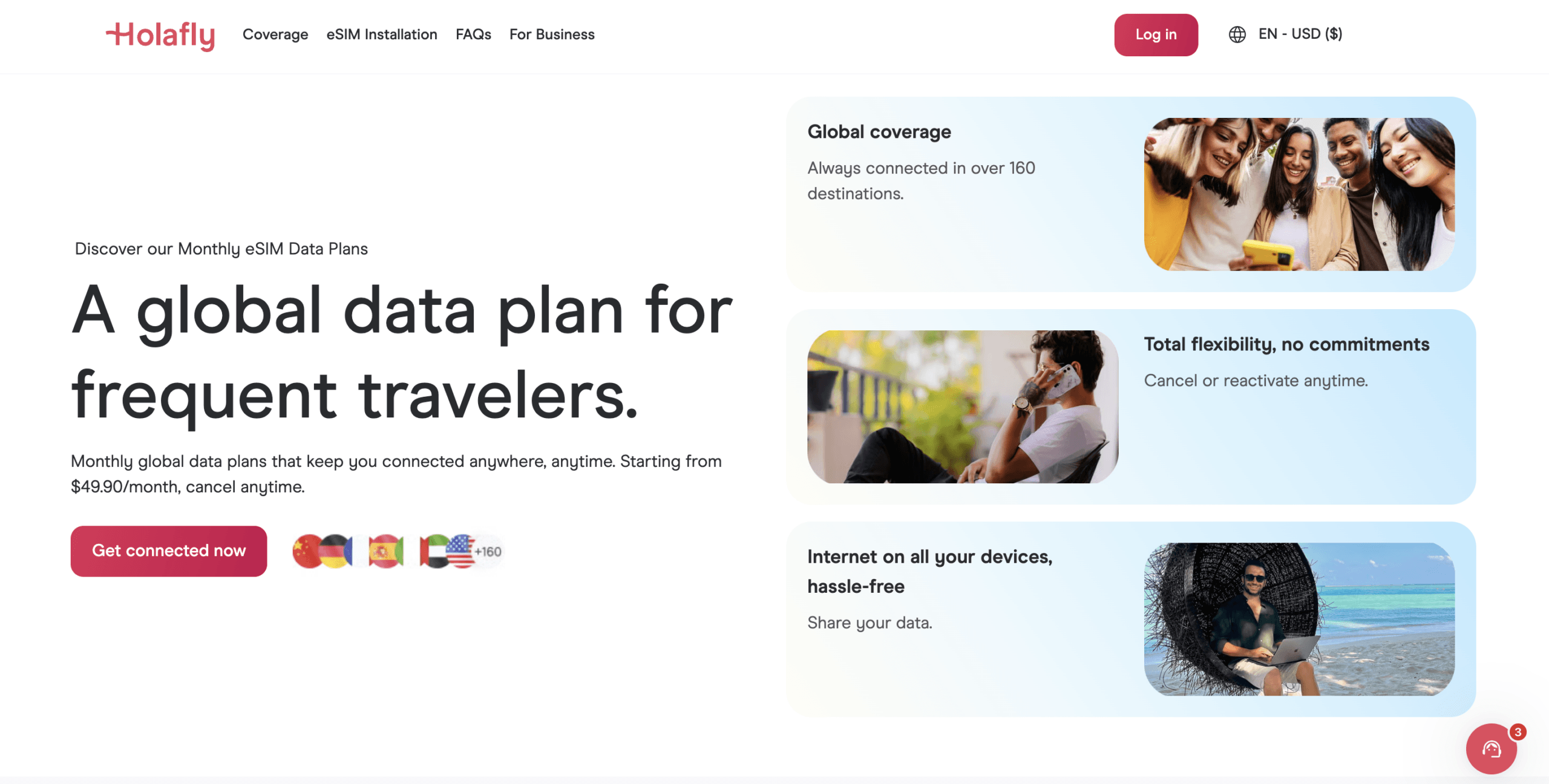
The landscape of international telecommunications for travelers has undergone a significant structural shift with the introduction of continuous, subscription-based digital SIM (eSIM) technologies. For years, the global travel market relied on fragmented solutions: local physical SIM cards purchased upon arrival, regional data packages tied to strict calendar limits, or exorbitant international roaming packages offered by domestic domestic carriers. These traditional models often resulted in inflated costs, logistical friction at borders, and inconsistent connectivity. To address these systemic inefficiencies, international connectivity provider Holafly has launched Holafly Plans, a unified global eSIM subscription model designed to maintain continuous data connectivity across more than 160 destinations under a single digital profile.
This development marks a departure from traditional episodic travel data products. By combining ongoing, multi-country coverage with automated network handshakes upon landing, the service bridges the functional gap between localized travel data apps and traditional postpaid domestic mobile contracts.
Mechanics and Evolution of eSIM Technology
The underlying technology of the eSIM—embedded Subscriber Identity Module—eliminates the physical plastic card historically required to authenticate a mobile device on a cellular network. Built directly into the hardware of modern smartphones, tablets, and laptops, an eSIM allows users to download carrier profiles remotely via software installation or QR code scanning.
This technical architecture fundamentally alters how consumers manage telecommunications when crossing international borders. A single device can simultaneously host multiple eSIM profiles, enabling users to maintain their domestic phone number for banking and verification purposes while toggling to a local or global data provider for internet access. Industry analysts note that widespread consumer adoption of eSIM-enabled hardware by major manufacturers such as Apple, Samsung, and Google has accelerated the demand for borderless, software-driven data solutions.

Historically, travel eSIM providers operated on a transactional, per-trip basis. Users selected a specific destination, calculated the expected duration of their stay, and purchased a fixed data allocation—such as 10 gigabytes for 15 days in a specific country. While effective for standard vacations, this transactional approach proved cumbersome for digital nomads, frequent business travelers, and long-term backpackers who cross multiple national borders within compressed timeframes. Every border crossing necessitated searching for a new regional package, scanning a new QR code, or navigating localized network activation procedures, occasionally resulting in temporary connectivity blackouts upon arrival.
Product Architecture of Holafly Plans
Holafly Plans addresses these logistical challenges by introducing a standing subscription model rather than a per-trip purchase. Operating across over 160 destinations, the service requires a single initial installation. Once the eSIM profile is active on a compatible device, the software automatically negotiates with local partner networks whenever the user enters a covered country, re-establishing cellular data connectivity without user intervention.
The subscription model is structured around two primary tiers: the Light Plan and the Unlimited Plan.
- The Light Plan: Tailored for moderate data consumers, this tier provides a monthly allotment of 25 gigabytes of high-speed data. It includes mobile hotspot capabilities, allowing users to tether external devices such as laptops or tablets, and maintains full coverage across the entire 160+ destination network. This option is primarily marketed toward travelers whose usage centers on navigation tools, instant messaging, email management, and light web browsing.
- The Unlimited Plan: Designed for remote workers, digital nomads, and heavy data users, this tier removes data caps entirely and includes unrestricted mobile hotspotting. Subscribers to the Unlimited tier can tether multiple devices without throttling, facilitating activities such as video conferencing, large cloud backups, and high-definition media streaming. Additionally, this tier incorporates a functional local phone number originating from the United States, the United Kingdom, or Canada, enabling users to receive SMS verification codes and voice calls while abroad.
Both subscription tiers incorporate an automated contingency feature designated as "Always On." This protocol provides subscribers with a complimentary 1GB backup data allowance each month across participating destinations. Crucially, this backup feature remains active permanently, even if the user eventually cancels their primary subscription.
Comparative Cost Analysis and Market Positioning
When evaluated against legacy alternatives, subscription-based global eSIMs present a distinct financial and operational profile.
Traditional domestic mobile carriers in major markets like the United States historically charged substantial daily fees—frequently averaging $10 per day—for international roaming passes. For a traveler spending an entire month abroad, these daily fees can accumulate to $300 per month, often accompanied by strict data throttling thresholds after a modest daily usage limit (typically 512 megabytes to 2 gigabytes of high-speed data).
Conversely, localized single-destination eSIMs or physical SIM cards purchased upon arrival typically cost between $30 and $60 per country for moderate data packages. While economical for isolated trips, cumulative costs escalate rapidly for travelers visiting three or four countries within a single 30-day period.
Holafly Plans operates on a tiered billing structure—monthly, quarterly, or annually—with pricing varying by region and currency. Long-term commitments offer tiered savings, with quarterly billing discounting rates by approximately 10% and annual commitments reducing costs by roughly 15%. For comparison, the Unlimited tier on an annual payment structure averages approximately $55 per month, undercutting the cost of traditional domestic carrier international roaming packages while removing data consumption limits.
| Feature / Cost Metric | Holafly Plans (Unlimited Tier) | Major Domestic Carrier Roaming Pass | Single-Destination eSIMs / Local SIMs |
|---|---|---|---|
| Average Monthly Cost | $55 – $65 USD (depending on billing cycle) | $100 – $300 USD ($10/day add-on model) | $60 – $120 USD cumulative (multi-country travel) |
| Data Allocation | Unlimited high-speed data | Capped daily high-speed data, then throttled | Fixed packages (typically 5GB–20GB per country) |
| Operational Friction | Minimal (single installation, automated handshakes) | Low (automatic, but economically prohibitive) | High (frequent re-purchasing and QR code swaps) |
| Hotspot Capabilities | Fully included across multiple devices | Frequently restricted, throttled, or charged extra | Varies widely by local network operator |
Target Demographics and Industry Implications
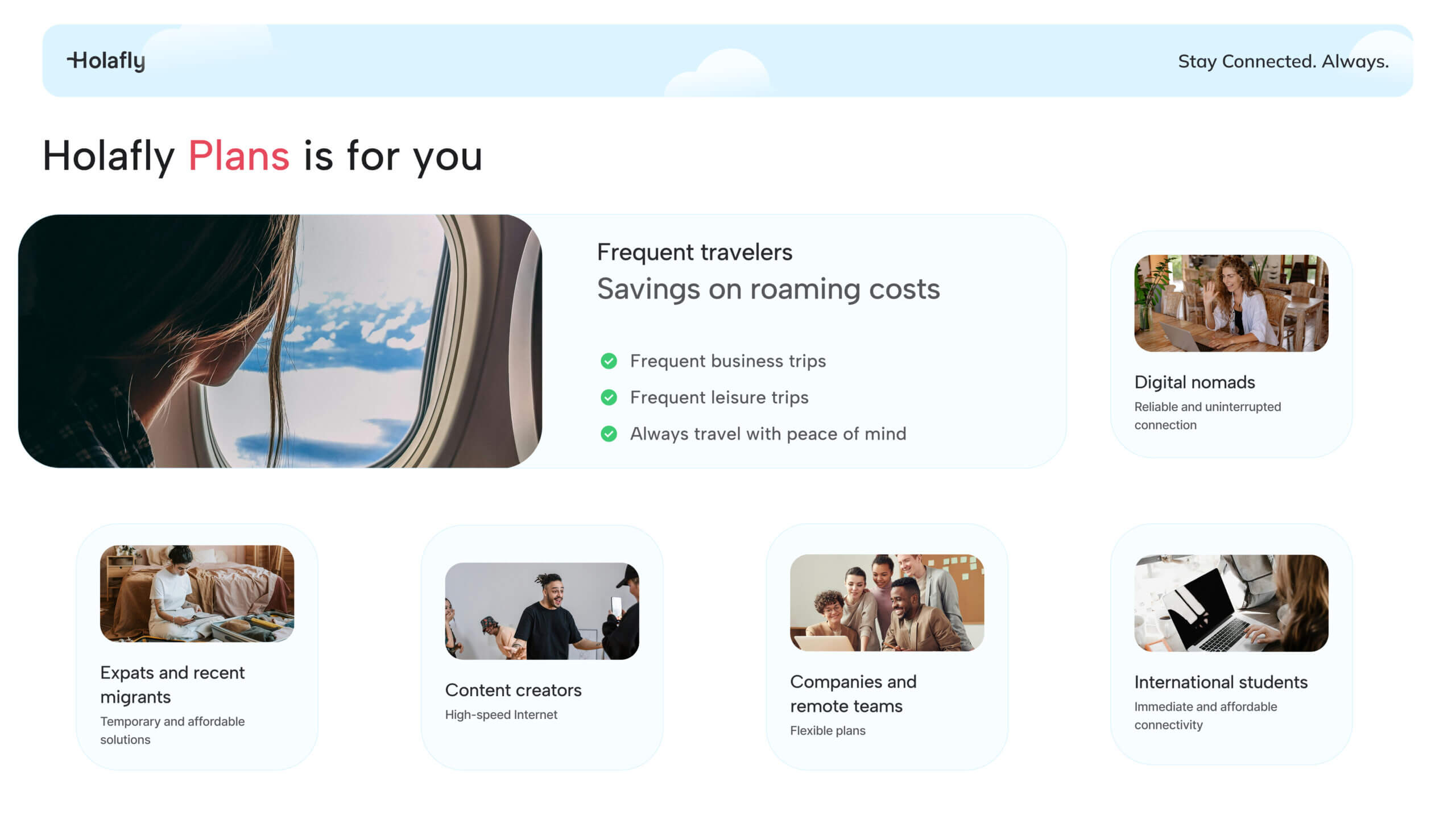
Market analysts observe that products like Holafly Plans cater specifically to the expanding demographic of location-independent professionals, long-term expatriates, and multi-destination tourists. The global rise of remote work policies following the structural economic shifts of the early 2020s has catalyzed demand for seamless cross-border infrastructure. Telecommunications experts indicate that traditional mobile network operators (MNOs) are increasingly facing competitive pressure from agile mobile virtual network operators (MVNOs) and digital-first eSIM providers that bypass traditional roaming agreements through direct partnerships with global network aggregators.
Despite the operational advantages, industry observers note certain limitations inherent to subscription models. Transitioning between service tiers—such as moving from the Light Plan to the Unlimited Plan—currently requires canceling the active subscription and initiating a new profile installation rather than executing an in-place software upgrade. Furthermore, short-term travelers taking isolated vacations of less than two weeks may find traditional, single-destination fixed eSIM packages more economically efficient than entering a recurring monthly subscription.
Consumer Integration and Technical Support
Subscription activation follows a streamlined digital workflow. Users select their preferred tier via the provider’s digital interface, complete the payment transaction, and receive a digital installation profile. Technical deployment is managed via direct in-app installation or manual QR code configuration within the device’s cellular settings menu.
To mitigate potential connectivity disruptions caused by localized network outages or configuration errors during transit, the service maintains round-the-clock customer support infrastructure. Industry standards for digital-first telecommunications providers increasingly prioritize 24/7 responsiveness, given that users may cross time zones and national borders at any hour.
As the telecommunications sector continues its transition toward software-defined subscriber management, subscription-based global eSIM platforms represent a maturing market segment. By replacing fragmented, transaction-heavy roaming models with continuous, multi-destination data architecture, these services provide a scalable connectivity framework for the modern international traveler.
Related posts: