The Psychology of the Wilderness Settlement: Why Backpackers Obsess Over Organizing Camp


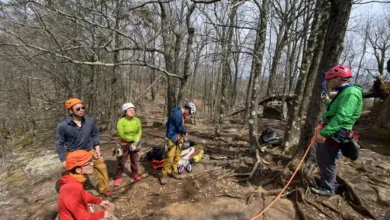
Under banner-blue skies in the autumn of 2025, a party of ten backpackers and five dogs traversed into a remote canyon in Southern Utah to mark a milestone birthday for a companion named Ace. The destination, dictated by geographic contours, centered on a towering one-hundred-foot natural sandstone arch spanning a widening of the local gulch. The site provided sufficient expanse to accommodate the large group, allowing the participants to space their sleeping quarters widely enough to ensure privacy and acoustical isolation from adjacent snoring, while maintaining direct visual lines to the geological formation.
This routine act of selecting a patch of earth, pitching nylon, and arranging gear is rarely viewed by participants as a mere chore. Instead, it constitutes one of the most psychologically engaging rituals of backcountry travel. Behavioral scientists, evolutionary anthropologists, and outdoor recreation experts note that the meticulous organization of a wilderness campsite is fundamentally hardwired into human evolutionary biology. Far from being a random choice of convenience, the arrangement of a temporary camp reflects deep-seated neurological responses to safety, territorial mapping, and environmental mastery.
The Geography of the Utah Encampment
The spatial distribution of the Utah birthday expedition mirrored classic principles of human settlement patterns observed across millennia, albeit on a micro-scale. The participants intuitively partitioned the landscape based on micro-topography, wind protection, and acoustic management.
Ace, accompanied by two group members, Devaki and Walter, secured a campsite nestled directly in the protective shadow of a sandstone alcove, maximizing thermal retention as desert temperatures plummeted after sunset. Nearby, another participant, Axel, and his canine companion, Enzo, occupied an elevated knoll featuring a flat footprint bounded by natural rock outcrops that served as a natural windbreak.
Meanwhile, Elliot, a professional photographer, selected an integration of shade and exposure. He positioned his gear beneath the interwoven canopies of hackberry and maple trees, backing his temporary domicile against a sheer, vibrant orange cliff face. His arrangement of equipment—suspending an instant camera from a low-slung maple branch while delicately placing a digital camera body on a flat slab of fractured sandstone—demonstrated an acute hyper-awareness of environmental integration. This precise micro-zoning, replicated by backpackers worldwide every weekend, offers a window into how the human brain evaluates, categorizes, and dominates unfamiliar terrain.
Evolutionary Drivers of Wilderness Organization
From an evolutionary perspective, the compulsion to organize a campsite is an echo of Pleistocene survival strategies. According to environmental psychologists, entering a wild, unmanaged landscape triggers a baseline activation of the human amygdala, the brain structure responsible for processing perceived threats. While modern backpackers carry synthetic sleeping bags and dehydrated meals, the primitive brain still perceives the open wilderness as a zone of vulnerability.
Research published in environmental behavior journals indicates that establishing a bounded, organized space serves as a psychological countermeasure to the cognitive fatigue induced by wilderness exposure. By arranging gear, defining a kitchen perimeter, and staking a tent, an individual rapidly transforms an unpredictable external environment into a controlled, predictable micro-territory.
Dr. Elena Vance, a cognitive anthropologist specializing in human-landscape interactions, explains that spatial organization acts as a cognitive offloading mechanism. "When humans enter a novel ecosystem, the volume of sensory data processed by the brain spikes exponentially," Vance notes. "Creating a camp is an instinctive method of reducing cognitive load. By categorizing space—here is where we sleep, here is where we cook, here is where we store waste—we trick the primitive brain into recognizing a safe zone, thereby lowering cortisol levels and inducing psychological restoration."
Chronology of the Modern Backcountry Settlement
The ritual of setting up camp follows a predictable temporal sequence that has evolved alongside the development of lightweight outdoor gear. While the specific tools have transitioned from canvas and wool to cuben fiber and titanium, the behavioral chronology remains remarkably consistent:
- Initial Reconnaissance (The Arrival): Upon reaching a designated destination, the group or individual ceases active transit and enters a phase of environmental scanning. Eyes track overhead hazards—such as "widow-maker" dead branches—slope angles, drainage patterns, and prevailing wind directions.
- Macro-Zoning (Territorial Claim): Group members disperse to stake out claims. Social hierarchies, personal relationships, and functional needs dictate the layout. Snoring companions are isolated; photographers seek dramatic backdrops; those needing early morning sun position themselves facing east.
- Micro-Arrangement (The Nesting Phase): Once the primary shelter is erected, attention shifts to the interior and immediate exterior. Gear is systematically unpacked not randomly, but according to frequency of use. Rain gear and first-aid kits remain accessible; sleeping systems are laid out to loft.
- Perimeter Definition: The final phase involves establishing boundaries—setting up kitchen areas downwind or at a distance from sleeping quarters to deter wildlife, gathering firewood, and securing water filtration stations.
This chronological progression mirrors the historical evolution of human settlement, compressed into a frantic, highly satisfying ninety-minute window at the end of a long day on the trail.
Economic and Cultural Implications of Campcraft
The deep psychological satisfaction derived from organizing camp has fostered a multi-billion-dollar outdoor recreation economy designed explicitly around micro-organization. The contemporary backpacking market features an array of specialized products—such as ultralight packing cubes, color-coded tent stakes, nested cooksets, and modular internal frame packs—that cater directly to the human desire for order and categorization in the wild.
Industry data from the Outdoor Industry Association indicates that spending on camping and backpacking equipment has grown steadily over the past decade, driven largely by participants seeking psychological respite from urban environments characterized by digital hyper-connectivity. The appeal of the backcountry is no longer limited to physical exertion; it is increasingly valued as a tactile, analog exercise in spatial autonomy.
Furthermore, outdoor educators and wilderness guides report that the quality of a group’s camp organization is often a direct indicator of overall expedition safety and morale. Groups that take the time to methodically establish their sites experience fewer interpersonal conflicts, lower rates of lost gear, and better physical recovery overnight.
Conclusion
Backpacking strips away the complex infrastructural layers of modern civilization, reducing human existence to its fundamental components: shelter, water, nourishment, and community. Within that minimalist framework, the arrangement of a campsite emerges not as a trivial chore, but as a deeply rooted psychological imperative.
Whether under a towering natural sandstone arch in Utah or within a dense subalpine forest, the act of pitching a tent, aligning gear, and defining a temporary home allows modern humans to temporarily reconcile their evolutionary past with the demands of the present. In organizing the wilderness, backpackers ultimately organize their own minds, finding enduring peace within the structured confines of the wild.