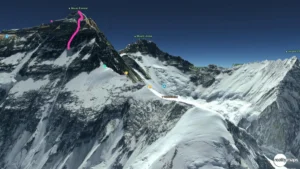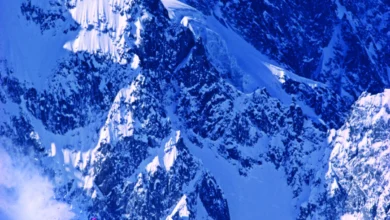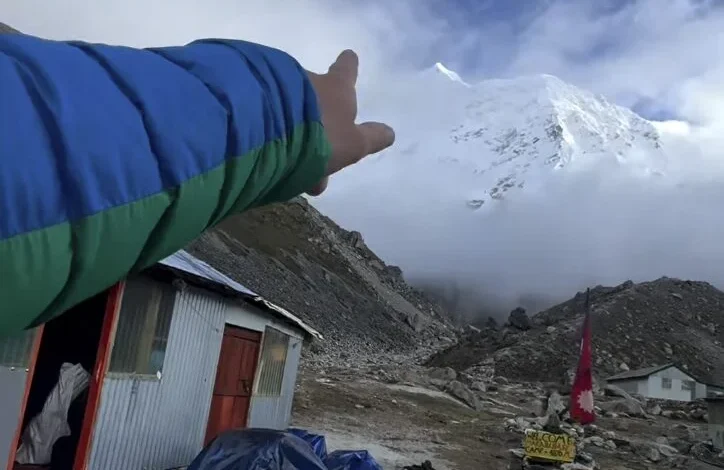
Russian mountaineers Denis Aleksenko and Artem Tsentsevitsky have arrived at the base of Makalu, the world’s fifth-highest peak, to launch a high-stakes expedition characterized by a shift toward minimalist, alpine-style tactics. Standing at 8,463 meters (27,766 feet), Makalu is widely regarded as one of the most formidable and technically demanding mountains in the Himalayas. The duo’s return to the peak marks a significant departure from their previous approach, signaling an intent to tackle the mountain in a single, continuous push without the reliance on fixed ropes, high-altitude support staff, or multiple established camps.
The expedition, which began with their arrival in Samagaon earlier this week, is currently in the crucial acclimatization phase. To prepare their bodies for the "death zone" and the thin air of the upper reaches of Makalu, the pair is first utilizing the slopes of Manaslu, an 8,163-meter peak, as a high-altitude training ground. This strategy is essential for their goal: to move fast and light on a mountain that has historically punished those who linger.
A History of Persistence on Makalu
The current mission represents the second attempt by Aleksenko and Tsentsevitsky to summit Makalu. Their inaugural effort in the fall season of the previous year provided a harsh masterclass in the realities of Himalayan climbing. During that expedition, the pair utilized a more traditional approach, which included fixing ropes on the most treacherous and exposed sections of the route. Despite their efforts, they were met with extreme conditions, including deep, unstable snowpack that forced them to break trail manually for days on end.
The logistics of their previous climb were defined by isolation. Unlike the spring season, when Makalu sees a higher density of commercial expeditions and Sherpa-led teams, the fall season often leaves the mountain deserted. Last year, the Russians found themselves effectively alone on the peak, a scenario that removes the safety net of shared infrastructure but also spares them the congestion that often plagues the world’s 8,000-meter giants.
Their final push last year reached an elevation of approximately 7,700 meters. Faced with deteriorating weather and the physical toll of repeated attempts to navigate the upper slopes, they made the difficult decision to retreat. That experience, however, provided them with invaluable topographical knowledge and a clearer understanding of the mountain’s behavioral patterns, which they are now applying to their current, more radical strategy.
The Philosophy of Alpine Style
In the context of 8,000-meter climbing, "alpine style" is the gold standard for pure mountaineering. It involves climbing without supplemental oxygen, without high-altitude porters, and without the use of pre-fixed ropes installed by earlier teams. Instead, the climbers carry all their necessary equipment, food, and fuel in their packs from the moment they leave the base camp.
This approach carries a significantly higher risk profile. Because the climbers are not tethered to a system of fixed lines, a mistake in navigation or a sudden shift in weather can be catastrophic. By choosing this method, Aleksenko and Tsentsevitsky are essentially betting on their speed and physical conditioning to overcome the massive vertical gain required to reach the summit.
The logistical pivot is profound. By transitioning from the traditional "expedition style" to "alpine style," the pair has eliminated the need for a massive support crew, yet they have increased the burden of physical exertion. Their current acclimatization stint on Manaslu is a strategic necessity to ensure they can maintain the pace required for a single-push summit bid on Makalu without suffering from the onset of altitude-related illnesses.
The Geography of Isolation
One of the primary factors influencing the success of an alpine-style attempt is the state of the route. On many Himalayan peaks, climbers rely on the "trail-breaking" efforts of other teams. If a commercial expedition has already fixed ropes and cleared a path, the ascent becomes significantly easier for those following.
On Makalu, however, the Russians are currently the only team with a permit for the mountain. While some local outfitters had previously announced potential fall expeditions, none have materialized on the ground so far. This isolation is a double-edged sword. While it provides the pure, unadulterated mountaineering experience they seek, it also means that the responsibility for every meter of progress rests entirely on their shoulders. Should they encounter deep, unconsolidated snow, there is no one else to share the labor of pathfinding.
Data and Environmental Context
Makalu is often cited by professional climbers as technically more difficult than Everest or even K2 in certain conditions. Its steep, pyramid-shaped structure features sharp ridges and dramatic faces that require sustained climbing focus. Statistics from the Himalayan Database suggest that Makalu maintains a lower success rate compared to other 8,000-meter peaks, largely due to the technical nature of the summit pyramid and the unpredictability of the weather patterns in the Khumbu region during the post-monsoon season.
The fall season on Makalu is characterized by shorter days and colder temperatures, which can turn the snow into hard, blue ice. The transition from the monsoon season to winter can create volatile snow conditions, increasing the risk of slab avalanches on the steeper faces. Aleksenko and Tsentsevitsky’s decision to attempt the climb now demonstrates a high level of confidence in their technical climbing abilities, as well as a willingness to accept the inherent risks of the late-season environment.
Implications for Modern Mountaineering
The decision by this Russian pair highlights a growing trend among elite alpinists to return to the roots of the sport. In an era where commercialization has made the world’s tallest peaks increasingly accessible to wealthy amateurs via guided, oxygen-supplemented efforts, there is a renewed interest in the "purist" approach.
Professional mountaineers argue that alpine-style ascents are the only way to maintain the integrity of the sport on the world’s highest peaks. By removing the reliance on fixed ropes and oxygen, the climbers are forced to respect the mountain on its own terms. If successful, an alpine-style ascent of Makalu would be considered a significant achievement in the international mountaineering community, potentially serving as a benchmark for future expeditions seeking to bypass the commercial infrastructure of modern Himalayan climbing.
Looking Ahead: The Challenges of the Summit Push
As the team settles into the rhythm of life at Base Camp, the focus shifts to the weather windows. A successful alpine-style push requires a multi-day window of stable, high-pressure weather. Any delay caused by storms or high winds at altitude could derail the entire project, as their limited supplies are calculated for a specific timeframe.
The duo’s reliance on their prior experience from the previous year is their greatest asset. Having stood at 7,700 meters, they understand the specific challenges of the terrain that lies between that point and the summit. The final section of the climb, which includes the famous "French Couloir" and the final, steep rock scramble to the top, will be the ultimate test of their stamina and technical precision.
While the climbing community watches with interest, the focus for Aleksenko and Tsentsevitsky remains squarely on the logistics of survival. In the coming weeks, their progress will be measured not in commercial milestones or high-profile social media updates, but in the slow, rhythmic steps toward the 8,463-meter summit. Their expedition serves as a reminder that even in an age of satellite technology and high-tech gear, the mountains remain the final arbiter of human ambition. Whether or not they reach the summit, their choice to prioritize style over certainty is a testament to the enduring allure of traditional, high-stakes mountaineering.