The Psychology of Wilderness Encampment: Why Backpackers Arranging Campsites Reflects Deep-Rooted Human Survival Instincts


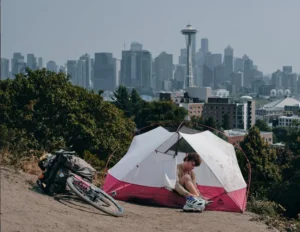
In the autumn of 2025, under crisp, banner-blue skies, a group of ten backpackers and five dogs ventured into a remote Utah canyon to celebrate a milestone birthday. The expedition, led by experienced outdoorsmen and documented by wilderness photographers, converged beneath a hundred-foot natural sandstone arch where the gulch widened. This temporary settlement offered a micro-study in human spatial organization. Participants instinctively established distinct perimeters: Ace, Devaki, and Walter pitched their tents within the protective shadow of a natural stone alcove; Axel and his canine companion, Enzo, secured an elevated knoll backed by stable rock outcrops; and Elliot, an architectural photographer, curated a precise basecamp beneath the intertwined branches of hackberry and maple trees, positioning his gear with deliberate mindfulness against an imposing orange cliff.
While to the casual observer such meticulous arrangement may simply appear to be standard backcountry tidiness, behavioral scientists and evolutionary anthropologists argue that the act of organizing a campsite is far more profound. It is a primal ritual—an expression of neurological wiring that dates back hundreds of thousands of years. As modern outdoor recreation surges in popularity, researchers are increasingly examining how the human brain processes wilderness environments, transforming wild terrain into a secure, psychologically restorative home.
The Evolutionary Imperative of Spatial Organization
Anthropological and neurological research suggests that the human drive to organize a living space—even a temporary one in the harsh backcountry—is fundamentally encoded in our neural architecture. According to environmental psychologists, when humans enter an unfamiliar or wild landscape, the amygdala and the prefrontal cortex immediately engage in a continuous risk-assessment process.
Throughout human evolution, selecting where to sleep was a matter of life and death. Environmental cues that signaled safety—such as overhead shelter, a clear line of sight, proximity to water, and defensible perimeters—became hardwired preferences. The unconscious choice of an alcove for windbreak, a knoll for elevated visibility, or a dense grove of trees for thermal regulation reflects ancient survival strategies adapted for modern recreation.
Data from the Outdoor Industry Association indicates that participation in backpacking and primitive camping has steadily increased over the past decade, with more than 14 million Americans engaging in overnight backcountry trips annually. As urbanization disconnects a larger percentage of the population from daily interactions with natural elements, the psychological compulsion to impose order on the wilderness becomes even more pronounced. Organizing a tent, arranging cooking gear, and delineating private versus communal zones serve as psychological mechanisms to reduce anxiety and establish cognitive control over a chaotic environment.
Chronology of a Wilderness Settlement: The Utah Expedition
To understand the macro-phenomenon of camp organization, researchers often analyze micro-expeditions like the October 2025 Utah canyon trip. The chronology of establishing such a backcountry community typically follows a structured, instinctive timeline:
- Phase One: Arrival and Reconnaissance (T-minus 0 to 30 minutes). Upon reaching the destination—in this case, the widening beneath the natural arch—the group disperses briefly. Members mentally map the terrain, evaluating geological stability, wind vectors, and potential hazards such as dead-standing trees or flash-flood channels.
- Phase Two: Perimeter Establishment (30 to 60 minutes). Individuals claim territory based on social dynamics and psychological needs. Introverted members or those valuing maximum auditory privacy seek physical distance (such as isolating oneself to muffle snoring), while social hubs form around central fire rings or cooking rocks.
- Phase Three: Micro-Habitat Curation (60 to 90 minutes). Tents are pitched facing optimal morning light or scenic vistas. Gear is systematically unpacked; cameras, filtration systems, and layers are assigned specific "stations" on flat sandstone slabs or hung from sturdy branches, mimicking the domestic organization of a permanent residence.
- Phase Four: Communal Integration (90+ minutes). Boundaries soften as camp is fully realized. Pathways naturally form between individual tents and the central kitchen area, creating a localized infrastructure that mirrors ancient settlement patterns.
Environmental Psychology and Cognitive Restoration
The cognitive benefits of organizing a campsite are closely linked to Attention Restoration Theory (ART), developed by psychologists Rachel and Stephen Kaplan. Urban environments demand "directed attention," which fatigues the prefrontal cortex as individuals constantly filter out artificial stimuli, traffic, and digital noise.
In contrast, natural environments invoke "soft fascination," allowing the brain to process effortless stimuli like rustling leaves, moving water, and geological formations. However, the transition from urban fatigue to cognitive restoration can be hindered if a person feels unsafe or disordered in their temporary environment. By meticulously organizing a campsite—clearing debris from a tent footprint, neatly rolling sleeping pads, and establishing logical perimeters—backpackers create a micro-order that bridges the gap between wild unpredictability and domestic security.
Dr. Aris Thorne, a behavioral ecologist specializing in human-nature interactions, notes that this behavior is not unique to modern humans. "The impulse to curate a sleeping site is observed across hominid evolution and is mirrored in other social mammals," Thorne explains. "When we arrange our gear and position our shelter against a cliff face or beneath a protective canopy, we are signaling to our nervous system that the territory is claimed, managed, and secure. It triggers a neurochemical shift, lowering cortisol levels and facilitating deep physiological recovery."
The Broader Impact: Modern Recreation and Leave No Trace Ethics
As public lands experience record visitor numbers, the intersection between primal settlement behaviors and modern conservation ethics becomes increasingly critical. The innate human desire to alter, organize, and dominate a space can sometimes conflict with "Leave No Trace" (LNT) principles, which mandate that wilderness visitors minimize their impact.
Land management agencies, including the U.S. Forest Service and the Bureau of Land Management (BLM), report that improper campsite selection and unauthorized site modification—such as digging trenches, moving large boulders, or clearing native vegetation—pose significant challenges to fragile ecosystems. Educational campaigns increasingly focus on channeling the instinctual urge to organize camp into sustainable practices, encouraging backpackers to utilize existing durable surfaces, such as rock slabs or established clearings, rather than moving natural elements.
Furthermore, the commercial outdoor industry has responded to the psychological needs of campers by designing modular, highly organized gear systems. Tents with color-coded poles, modular packing cubes, and specialized accessory attachment points cater directly to the human brain’s desire for efficiency and spatial control in the wild.
Conclusion
The act of organizing camp in a remote Utah canyon or any backcountry setting is far more than a logistical necessity before nightfall. It is a living manifestation of evolutionary psychology, environmental adaptation, and the innate human quest for order within chaos. By transforming a patch of untamed wilderness into a structured, functional home, backpackers engage in a timeless ritual that bridges the gap between our ancestral past and our modern need for cognitive restoration. As participation in outdoor recreation continues to evolve, understanding the psychological underpinnings of how we inhabit the wild will remain essential for both personal well-being and the preservation of natural landscapes.