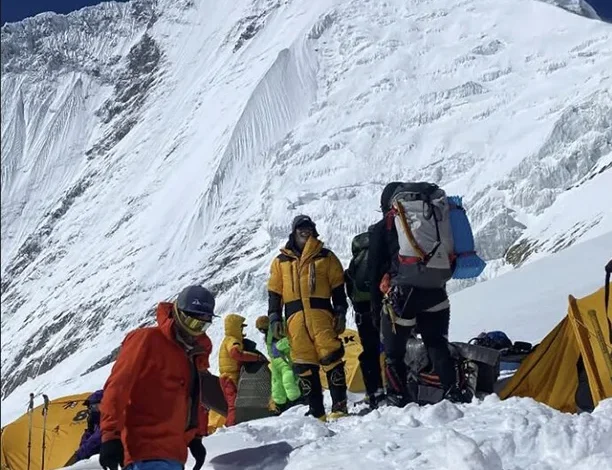
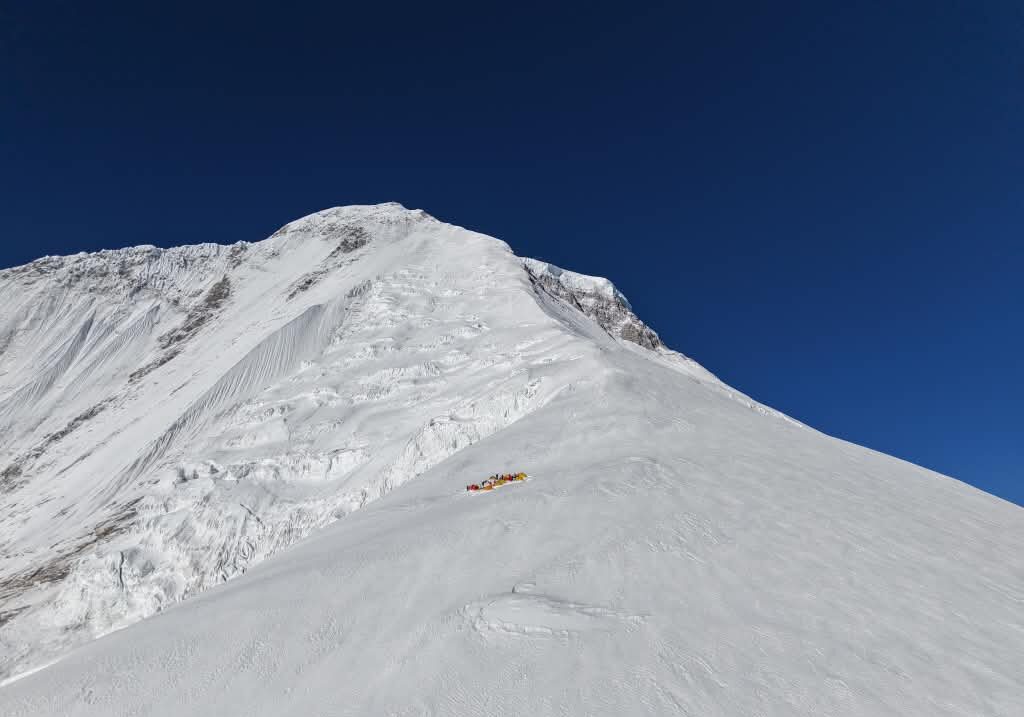
Dhaulagiri, the seventh-highest mountain in the world at 8,167 meters, has become the stage for a deepening crisis that threatens to end the autumn climbing season prematurely. Despite optimal weather conditions characterized by clear skies, minimal wind, and stable snow, approximately 20 climbers currently stationed at Camp 2 have been forced to abandon their summit bids. The catalyst for this sudden retreat is the abrupt cessation of rope-fixing operations on the mountain’s upper reaches—a development that has left the international climbing community questioning the transparency and accountability of high-altitude expedition management.
The Breakdown of Operations
The current impasse centers on the critical final sections above Camp 3. Rope-fixing on 8,000-meter peaks is a highly coordinated logistical operation, typically managed by a designated team—often provided by a primary expedition operator—whose costs are shared among all participating companies. This system ensures that a safety-compliant route is established from the base of the mountain to the summit.
Reports from the field indicate that the Seven Summit Treks (SST) team, which had been tasked with the rope-fixing responsibilities for the season, has halted progress. Climber Paul Clarke, who has been documenting the situation from Camp 2, confirmed that the progress made earlier last week—which saw lines installed up to approximately 400 meters above Camp 3—has stalled indefinitely.
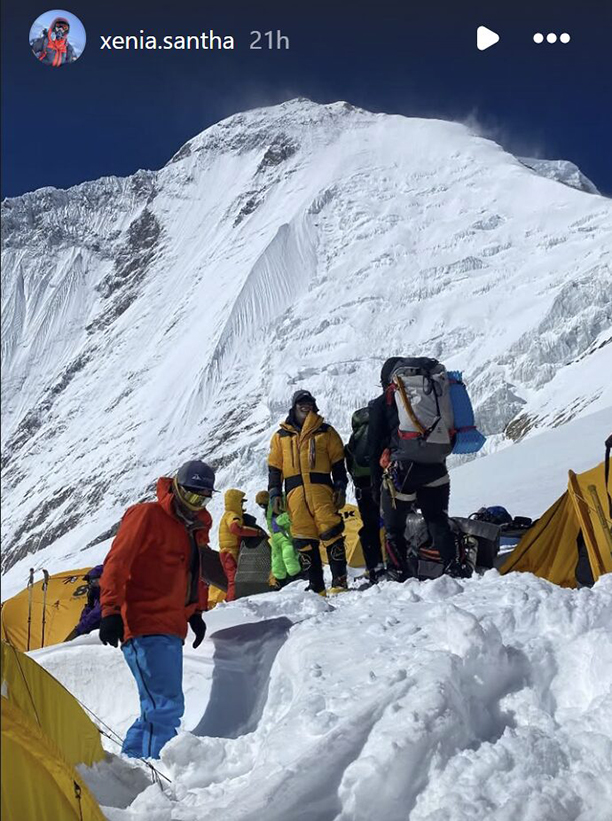
"We are stuck here at Camp 2 waiting for the route above us to be fixed," Clarke noted in a communication with correspondents. The underlying frustration, echoed by climbers such as Xenia Santha and Anni Penttila, stems from the perception that the cessation of work is not due to environmental hazards or safety concerns, but rather a shift in commercial priorities.
Commercial Interests vs. Climber Safety
The prevailing narrative among those currently on the mountain suggests that the motive behind the halted progress is financial. According to accounts provided by several climbers on the ground, the decision to stop fixing the route coincides with the withdrawal of high-profile, or "VVIP," clients from the SST expedition.
In the modern landscape of Himalayan mountaineering, the dependency of commercial clients on fixed ropes has reached an all-time high. A significant percentage of recreational climbers attempting 8,000-meter peaks rely entirely on routes prepared by Sherpa teams. Without these fixed lines, the technical difficulty of the terrain—particularly in the thin air of the "Death Zone"—becomes insurmountable for most non-professional climbers.
If the primary expedition operator determines that its own commercial interests are no longer served by completing the route, the logistical framework for all other teams on the mountain effectively collapses. This raises a critical question regarding the industry: Does the Expedition Operators Association of Nepal (EOAN) have the authority to mandate the completion of a route once a firm has accepted the contract to fix it, or are these operations strictly beholden to the individual company’s profit-and-loss statements?
A Chronology of the 2024 Season
The season on Dhaulagiri had shown promise during its early stages. Following a significant weather event two weeks ago, teams retreated to Base Camp to wait out the storm. Upon the arrival of a high-pressure window, the teams returned to the upper camps.
- October 11: Ideal weather conditions were reported, with teams establishing Camp 2.
- Early October: The rope-fixing team made steady progress, reaching a point roughly 400 meters above Camp 3.
- Friday, October 15: Makalu Sherpa, representing the lead expedition team, provided an update suggesting that operations were proceeding according to plan.
- October 16-17: A communication blackout from the lead operators coincided with the cessation of work above Camp 3.
- October 18: Climbers at Camp 2 realized that no further progress would be made. Anni Penttila confirmed via social media that the situation had reached a stalemate, with all teams electing to retreat to Base Camp.
The Wider Implications for Himalayan Expeditions
The Dhaulagiri situation highlights the fragility of the current expedition model in the Himalayas. As the commercialization of high-altitude mountaineering continues to evolve, the reliance on a single lead operator to manage the infrastructure for the entire mountain is increasingly viewed as a single point of failure.
This model, while efficient when all parties are aligned, lacks the redundancy necessary to protect the interests of independent climbers or smaller operators when the lead company changes its operational strategy. The lack of an official statement from either Seven Summit Treks or 14 Peaks Expeditions regarding the cessation of work has only fueled speculation. The industry is now facing calls for more robust oversight and perhaps a shift toward a more equitable, possibly non-profit-driven model for managing essential mountain infrastructure like fixed ropes and base camp waste management.
The Path Forward: Who Remains?
While the majority of the commercial expeditions have begun their descent, one notable exception remains at the Base Camp: the Polish professional climber and skier Andrzej Bargiel. Known for his "clean" style—climbing without the use of supplemental oxygen and descending via skis—Bargiel’s mission remains distinct from the commercial teams.
Bargiel has previously successfully skied eight other 8,000-meter peaks, including Everest. His presence on Dhaulagiri, supported by a large film and technical team, underscores the contrast between the commercial "summit-at-all-costs" model and the professional, athletic-focused mountaineering that exists in parallel. Whether the lack of fixed ropes will affect Bargiel’s ability to safely navigate the upper sections remains to be seen, though his reliance on his own technical skill and endurance makes him less vulnerable to the logistical failures affecting the commercial groups.
Conclusion
The events on Dhaulagiri serve as a cautionary tale regarding the intersection of commerce and adventure. When the infrastructure of an 8,000-meter mountain is treated as a proprietary asset rather than a shared necessity, the entire community of climbers suffers. For the 20 or so climbers who spent weeks preparing, sacrificing time, energy, and significant capital, the realization that their summit hopes were ended by a decision made in a boardroom—rather than by the mountain itself—is a bitter outcome.
As the climbing community awaits formal clarification from the expedition operators, the silence surrounding the abandoned ropes remains the loudest element of the 2024 Dhaulagiri season. Whether this incident will prompt a reform in how expeditions are coordinated in the future remains uncertain, but it has undeniably exposed the vulnerabilities inherent in the current structure of Himalayan commercial climbing. As winter approaches, the window for any further activity has effectively closed, leaving behind a mountain of unanswered questions and a season that ended in premature retreat.
Related posts: