The remote expanses of northeastern Botswana offer a striking geographical and ecological contrast, juxtaposing the hyper-arid, lunar landscape of the Makgadikgadi Salt Pans with the rich, wildlife-dense corridors of the Boteti River Valley. Spanning approximately 6,200 square miles (16,000 square kilometers) within the broader Kalahari Basin, the Makgadikgadi Salt Pans represent the remnants of ancient Lake Makgadikgadi, which historically covered an area larger than Switzerland. Today, this region serves as the stage for one of Africa’s most remarkable seasonal spectacles: a 310-mile (510-kilometer) migration of roughly 15,000 zebras traveling between the Okavango Delta and the Makgadikgadi Pans.

Geological and Historical Context of the Makgadikgadi Basin
The evolution of the Makgadikgadi Basin is tied to tectonic shifts and climatic fluctuations over millennia. Once a colossal inland sea fed by major river systems, Lake Makgadikgadi began to shrink due to changing climate patterns and tectonic activity, leaving behind a series of vast salt flats where alkaline conditions prevent vegetation from taking root. The southern section of the pans, characterized by cracked earth and total isolation, presents an environment so stark that it is visibly identifiable from space.

Adjacent to this geological anomaly is the Boteti River, which historically served as the primary outflow of the Okavango Delta. The hydrological history of the Boteti River has been volatile; receding significantly in the mid-1980s due to declining rainfall and reduced floodwaters from the delta, the riverbed dried up entirely by the mid-1990s. This prolonged dry period reduced the once-flowing waterway to isolated waterholes, profoundly impacting local wildlife populations such as hippopotamuses, crocodiles, and large herbivores. However, a return to high regional rainfall in 2009 partially reinstated the watercourse, injecting new ecological vitality into the western boundary of Makgadikgadi Pans National Park and restoring critical seasonal habitats.
The Seasonal Dynamics and Wildlife of the Boteti River Valley

The wildlife dynamics of the region are heavily dictated by the shifting seasons. During the dry season, which typically runs from May to October, animals concentrate heavily along the remaining moisture sources of the Boteti River. As the dry period peaks, the river valley transforms into a natural amphitheater for wildlife viewing. Large herds of African savanna elephants, zebras, wildebeests, impalas, and gemsbok converge on the shrinking watering holes, creating high-density interactions between predator and prey species.
Guides operating in the region, such as Mathale Mosheti—a veteran naturalist with nearly two decades of experience under Desert & Delta Safaris—utilize deep ecological knowledge to navigate these wildlife concentrations safely. According to field experts, the coexistence of different herbivorous species is maintained through specialized feeding habits; zebras preferentially consume taller grasses, while wildebeests target shorter swards, thereby reducing direct resource competition.

The onset of the rainy season, usually beginning in November, triggers a reversal of these distribution patterns. As precipitation fills inland pans and temporary freshwater pools across the Makgadikgadi basin, the zebra and wildebeest herds disperse away from the river into the grasslands to feed on fresh, nutrient-rich vegetation and to give birth. This cyclical migration shields the animals from overgrazing and minimizes resource depletion during the critical calving period.
Community Conservation and Human-Wildlife Coexistence

As ecotourism expands in Botswana, the management of human-wildlife conflict remains a central challenge for conservationists and local communities. The boundaries of national parks, often demarcated by natural features like rivers, frequently intersect with communal lands and agricultural settlements. Incidents involving predators such as lions crossing park boundaries to prey on livestock have historically driven retaliatory killings by local farmers protecting their livelihoods.
To mitigate these pressures, tourism operators in Botswana increasingly emphasize community-based conservation models. Properties such as Leroo La Tau and Chobe Game Lodge operate under 100-percent Botswana-owned frameworks that prioritize local employment, staff empowerment, and regional investment. Industry analysts note that integrating local communities into the economic benefits of tourism is essential for fostering long-term tolerance of wildlife. Without alternative economic supports or compensation mechanisms for livestock loss, rural communities living adjacent to protected areas face immediate food security risks that standard conservation mandates alone cannot resolve.

The Broader Implications of Eco-Tourism and Sustainable Travel
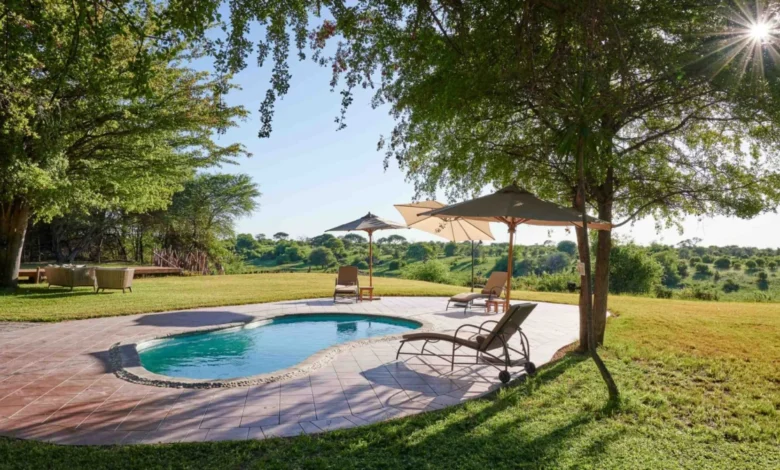
The integration of remote wilderness experiences—ranging from open-air sleep-outs on the Makgadikgadi salt flats to luxury chalet stays overlooking the Boteti River—highlights a growing market demand for low-impact, immersive nature travel. Publications and travel organizations committed to sustainability, such as Adventure.com and its parent B Corp Intrepid Travel, emphasize the importance of maintaining strict ecological standards to protect fragile desert and wetland ecosystems from over-tourism.

Ultimately, the confluence of extreme environments and abundant wildlife in northeastern Botswana underscores the resilience of the Kalahari ecosystem. Whether through the survival strategies of specialized insectivores like the aardwolf—which consumes up to a quarter of a million termites in a single night using a specialized sticky tongue—or the vast migratory networks of zebras and elephants, the region remains a vital living laboratory for African conservation science and sustainable wilderness management.
Related posts: