The Culinary Renaissance: How Denver’s Food Hall Boom is Redefining Urban Landscapes

The transformation of Denver’s urban core from dormant industrial zones into vibrant, high-density culinary destinations marks a significant shift in American city planning. This evolution, largely anchored by the rise of the modern food hall, represents a calculated strategy to reclaim underutilized real estate while providing a platform for independent entrepreneurs. As cities across the United States grapple with the decline of traditional retail, Denver has emerged as a case study in using gastronomy as an economic engine.
From Industrial Decay to Economic Catalyst
The modern Denver food hall is not merely a collection of dining stalls; it is an infrastructure project. Justin Croft, vice president of development at Zeppelin Development, the firm behind The Source and other prominent projects, frames this shift as a structural response to decades of urban stagnation. “Part of the reason that markets are blowing up is that cities, and especially industrial parts, declined for so long,” Croft notes. “Developers are coming in and building cities and neighborhoods from scratch, one big move at a time, in an effort to create compelling places for people to go.”
This trend began in earnest during the 1990s. The construction of Coors Field in the Lower Downtown (LoDo) district served as the primary catalyst, drawing tens of thousands of visitors to a section of the city previously dominated by vacant warehouses and rail lines. This influx of foot traffic created the necessary density for retail and hospitality ventures to take root. As the population moved back toward the city center, the traditional model of large, chain-dominated restaurant spaces became insufficient for a new generation of diners seeking local, curated experiences.
Demographic Shifts and Global Influence
Denver’s culinary landscape is currently mirroring the city’s evolving demographic profile. According to 2024 U.S. Census Bureau figures, the Denver metro area, home to approximately 3.05 million people, boasts a 24.6% Latino population—roughly 750,000 residents. This diversity is fueling a demand for authentic, international cuisine that deviates from traditional North American fare.
The immigrant population, which includes a robust presence from Mexico, India, China, and Vietnam, has significantly influenced the local flavor palette. Notably, Venezuela has risen to become the seventh-largest source of foreign-born residents, with nearly 9,000 people contributing to the city’s cultural fabric. This cross-pollination of cultures provides the ideal environment for the food hall model, which thrives on variety. Unlike a traditional restaurant that requires a high barrier to entry in terms of capital and labor, food halls allow "mom and pop" businesses to operate with reduced overhead, enabling entrepreneurs to bring specialized, global culinary concepts to a wider audience.
The Rise of the Incubator: A Chronology of Innovation
The emergence of these halls follows a clear trajectory of growth, beginning with the opening of The Source in 2013.
- 2013: The Source opens in the River North (RiNO) Art District, setting the standard for a "full-scale" market hall. It integrates a butcher, a brewery, and high-end dining, effectively bridging the gap between a grocery experience and a fine-dining experience.
- 2015: Avanti F+B introduces the "incubator" concept to LoHi. By repurposing shipping containers into a two-story warehouse, Avanti created a low-risk environment for chefs to test new concepts before committing to permanent, brick-and-mortar storefronts.
- 2016: Denver Central Market opens in LoDo, focusing on the European-style urban market experience, prioritizing artisanal quality over convenience-store speed.
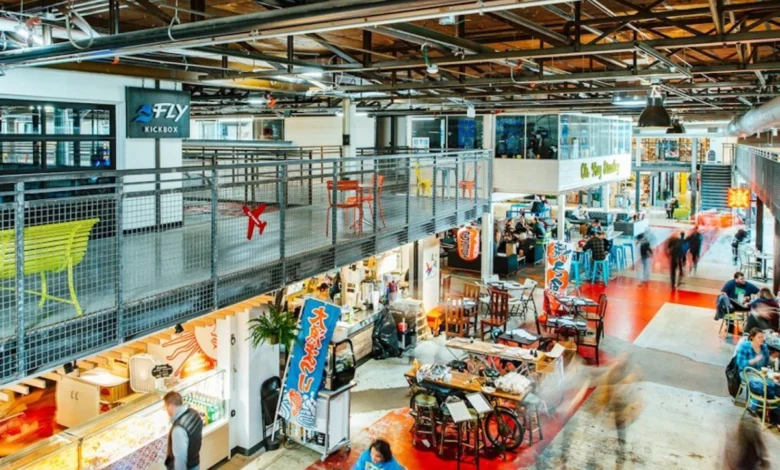
- 2018: The trend expands into suburban territory with the Stanley Marketplace in Aurora, which repurposes a former aviation factory. This signaled that the "food hall" model could successfully anchor suburban redevelopment.
- 2018: The concept reaches transport hubs as Denver Central Market opens an outpost at Denver International Airport, catering to both locals and international travelers.
- 2019–Present: The market continues to evolve, with Denver Milk Market focusing on the Dairy Block’s history, integrating 16 permanent kitchens that emphasize global variety.
Architectural Re-purposing and Strategic Location
The success of these developments lies in their architectural ingenuity. Rather than constructing new high-rises from the ground up, developers have prioritized adaptive reuse. The Avanti F+B model, which utilizes renovated shipping containers, highlights the efficiency of the modern food hall. This architectural style not only preserves the aesthetic history of the warehouse district but also keeps construction costs manageable, allowing for more competitive lease rates for independent tenants.

Stanley Marketplace in Aurora represents the most ambitious version of this strategy. By transforming a defunct aviation factory near the Anschutz Medical Campus into an inclusive destination, the developers moved away from the "suburban mall" stigma. The result is a hybrid space that functions as a coworking hub, a shopping center, and a premier dining destination, proving that the food hall concept is scalable beyond the urban core.
Economic Implications for Local Entrepreneurs
The primary benefit of the food hall model is its ability to lower the barrier to entry for the culinary sector. Twenty years ago, the urban core was largely occupied by national chain restaurants, which possessed the capital to survive high commercial rents and the brand recognition to secure long-term leases. For a local chef or a first-time restaurateur, securing a standalone storefront was often financially impossible.
"The reason market halls are happening is because there are interesting, independent brands with people who have devoted their lives to that endeavor," Croft explains. "Market halls really make it possible for mom and pop businesses to come together with their limited budgets and operational capacity and draw people in to enjoy them together."
This ecosystem creates a symbiotic relationship: the food hall provides the infrastructure, marketing, and shared space, while the independent tenants provide the creative content that keeps customers returning. This has led to the emergence of culinary "stars"—chefs like Ian Palazzola of Acorn have utilized these platforms to gain regional and national notoriety.
Challenges and Future Outlook
While the food hall trend has been a resounding success, it is not without risks. Market saturation is a growing concern as more developments compete for a finite pool of local diners. Furthermore, the reliance on high-density foot traffic means that these establishments remain vulnerable to shifts in commuter patterns, particularly in the post-pandemic era where remote work has reduced the number of downtown lunch-hour patrons.
However, the data suggests that these halls have become more than just lunch spots; they have become community anchors. By incorporating non-food elements—such as the coworking space at Stanley Marketplace, the hotel at The Source, or the barber shops and retail outlets within the halls—these developers are creating "third places" where the community gathers outside of home and work.
As Denver continues to grow, the food hall will likely remain a fixture of its urban planning. The ability of these spaces to adapt, pivot, and incorporate the diverse culinary talents of the city’s changing population ensures that they are not merely a passing fad, but a fundamental component of the modern city’s infrastructure. The focus is now shifting toward sustainability and deeper integration with local supply chains, with many halls prioritizing farm-to-table sourcing and zero-waste initiatives to appeal to an increasingly eco-conscious demographic.
Ultimately, the transformation of Denver’s warehouse districts into centers of culinary excellence illustrates a broader American story: one of resilience, reinvention, and the enduring power of food to bring disparate communities together under one roof. Whether in the heart of LoDo or the suburbs of Aurora, these market halls have successfully written a new chapter for the city’s economic and cultural identity.