International Airlines Group Strategy for Scaling AI Prioritizes Incremental Value and Regulatory Governance

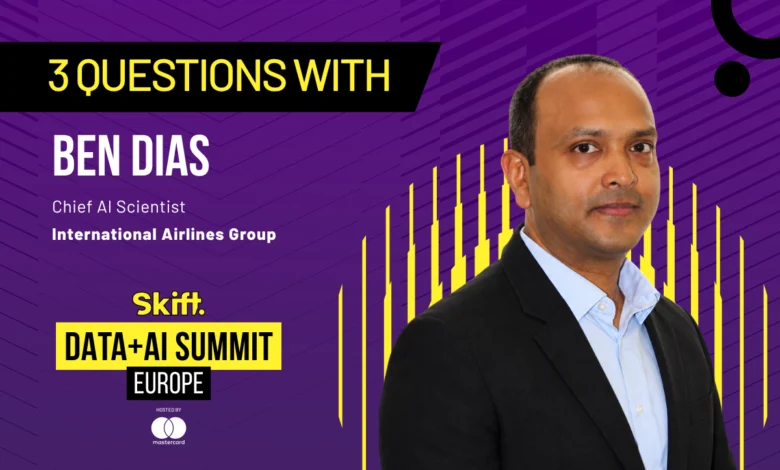
Managing a diverse aviation conglomerate that encompasses British Airways, Iberia, Aer Lingus, and Vueling presents a unique set of operational challenges, particularly when integrating artificial intelligence across distinct corporate cultures and technical infrastructures. For International Airlines Group (IAG), the strategy for navigating this complexity is rooted in a deliberate, measured approach to technology adoption. Ben Dias, the group’s Chief AI Scientist, has pioneered a methodology that avoids the pitfalls of premature, broad-scale implementation, opting instead to prove tangible business value within a single carrier before rolling out solutions across the entire portfolio.
As the travel industry approaches the Skift Data + AI Summit Europe, scheduled for October 6, 2026, in London, the aviation sector is increasingly scrutinized for how it balances rapid innovation with the stringent requirements of the European Union’s regulatory landscape. Dias, who will be a featured speaker at the event, emphasizes that the most successful AI initiatives are those that begin with specific, high-impact business problems rather than broad, undefined technological aspirations.
The Methodology of Incremental Scaling
The challenge of deploying AI across a multinational group lies in the fragmentation of data and the variation in operational workflows between brands. IAG’s approach is to treat one airline as a testing ground. By establishing a baseline and refining a solution within one brand, the organization can mitigate risk and gain insights that are specific to the unique market pressures of that airline—whether it is the premium-heavy model of British Airways or the low-cost efficiency of Vueling.
This strategy serves as a buffer against the “complexity trap,” where companies attempt to build a monolithic AI system meant to serve all entities simultaneously, often resulting in significant delays and resource depletion. According to industry analysts, this incremental approach aligns with best practices for digital transformation in legacy industries. By proving value in a controlled environment, IAG can demonstrate a clear return on investment (ROI) to stakeholders, which facilitates the internal funding and cultural buy-in necessary to scale across the group.
The Regulatory Landscape and Governance
The introduction of the EU AI Act and the ongoing enforcement of the General Data Protection Regulation (GDPR) have fundamentally altered the deployment strategy for major corporations in Europe. For a group like IAG, which handles vast amounts of sensitive passenger data and operates in multiple jurisdictions, compliance is not merely a legal requirement—it is a competitive advantage.
Dias notes that governance must be woven into the fabric of the design process from the initial conception phase. This proactive stance is exemplified in IAG’s “AI Creative Studio,” an internal hub for development where legal review, intellectual property assessment, and responsible AI guardrails are not considered afterthoughts. This “compliance-by-design” philosophy allows IAG to move with confidence, knowing that a successful tool can be deployed across borders without running afoul of regulatory bodies.
The broader impact of these regulations has been a shift in how firms view their data architectures. Companies are moving away from siloed, opaque models toward transparent, auditable systems that can withstand regulatory scrutiny. This shift is particularly vital for airlines, where AI decisions can impact flight safety, fuel efficiency, and complex pricing algorithms.
Empowering Human Expertise
A common misconception in the current discourse surrounding artificial intelligence is that it serves as a replacement for human judgment. Within the context of aviation, IAG’s leadership rejects this binary view. Instead, the focus is placed on “augmented intelligence,” where AI is utilized to provide high-level decision support for experts operating in high-pressure, complex environments.
In the aviation sector, the variables are near-infinite. A sudden change in weather, an unforeseen mechanical issue, or a geopolitical event can trigger a cascade of operational delays. AI excels at analyzing these massive, multifaceted datasets to identify patterns that a human operator might miss. However, the final decision remains in the hands of the expert. Whether it is optimizing maintenance cycles to prevent unplanned groundings or improving network resilience during peak travel seasons, the value lies in the speed and accuracy with which AI can present options to human teams, allowing them to make better-informed decisions with greater confidence.
The Skift Data + AI Summit Europe Context
The upcoming Skift Data + AI Summit Europe in London represents a critical convergence point for the travel industry. As the event approaches, the industry is transitioning from a period of AI exploration to one of tactical implementation. The summit is designed to address the challenges that remain, such as data interoperability, the integration of generative AI into customer-facing touchpoints, and the recruitment of specialized technical talent.
The event’s lineup reflects the multi-disciplinary nature of this shift, featuring voices from various corners of the travel ecosystem. Attendees will hear from Filip Filipov of OAG, whose expertise in flight data is crucial for scheduling and network planning; Peer Bueller of KAYAK, representing the cutting edge of metasearch and consumer-facing AI; Sheena Varma of Amex GBT, focusing on the corporate travel sector’s needs; and Nicolas Maynard of Accor, addressing how hospitality groups are leveraging AI for guest personalization.
Data and Operational Implications
The pressure to adopt AI is supported by a growing body of data suggesting that firms which integrate AI into their operational workflows see a significant improvement in efficiency. According to recent industry reports, airlines that have optimized their fuel consumption and predictive maintenance schedules using AI have reported cost reductions ranging from 5% to 15%.
For IAG, these percentages represent hundreds of millions of euros in potential savings. Beyond direct costs, the ability to improve operational resilience is perhaps the most significant outcome. In an era defined by unpredictable travel disruptions, the airline that can recover its network fastest after a storm or strike is the one that captures the most customer loyalty. AI-driven scenario planning allows IAG to simulate thousands of recovery paths in seconds, a feat that would be impossible for human teams relying on traditional scheduling software.
The Future of AI in Aviation
The trajectory of AI adoption in aviation is likely to follow a three-phase timeline. The first phase, which many airlines are currently exiting, involves digitizing data and cleaning historical records to make them “AI-ready.” The second phase, currently being championed by leaders like Ben Dias at IAG, involves the deployment of specific, high-value use cases that prove the utility of AI in niche operational areas. The third phase will involve the integration of these systems into a unified “digital twin” of the entire airline, where every department—from catering and baggage handling to fleet management—is synchronized by real-time AI analytics.
The challenge remains the speed of implementation. As AI models evolve, the window of opportunity to gain a competitive edge narrows. However, the industry is learning that haste can be costly. By prioritizing governance and incremental scaling, IAG is positioning itself to be a leader in the next generation of airline operations.
Conclusion
The evolution of AI within IAG is a testament to the fact that technical prowess is only as effective as the strategic framework that supports it. By focusing on real-world problems, ensuring regulatory compliance, and treating AI as a tool to augment rather than replace human expertise, the group is setting a roadmap for the rest of the industry. As the October 6 summit in London nears, the industry will look to figures like Ben Dias to provide further clarity on how to bridge the gap between theoretical AI potential and the harsh, complex realities of global aviation. The success of these efforts will ultimately determine not just the profitability of individual airlines, but the efficiency and reliability of the global travel network in the coming decade.
Related posts: