Mastering the Art of Photographic Vision: Why Knowing Where to Point the Camera Matters More Than Gear

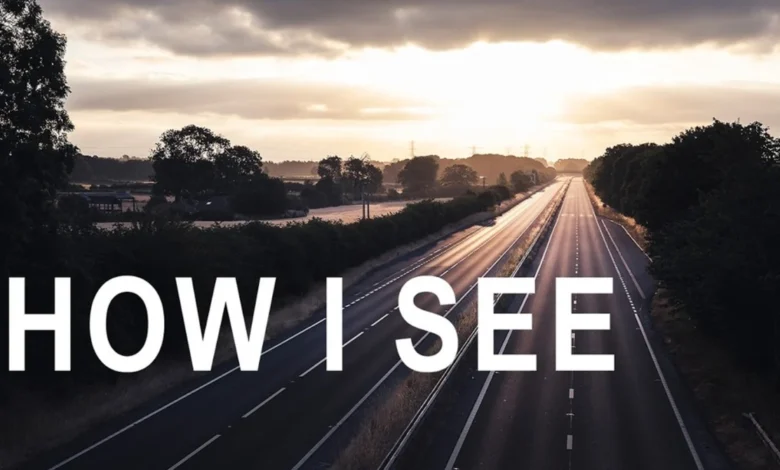
The fundamental divide in contemporary photography rarely rests on the equipment resting in a camera bag or the technical specifications of a modern digital sensor. While mastering exposure triangles, shutter speeds, and post-processing software can be achieved through a dedicated weekend of study, developing the intrinsic vision required to identify compelling compositions in a crowded environment or a sprawling landscape demands years of deliberate practice. This core artistic challenge—differentiating between a memory card filled with near-misses and a portfolio of striking images—forms the basis of a recent instructional breakdown by seasoned photographer Craig Roberts of e6 Vlogs.
The Anatomy of a Photographic Outing
Stepping into a bustling metropolitan center with a camera often triggers sensory overload. Every storefront, passing pedestrian, and architectural element competes simultaneously for a photographer’s attention. Addressing the inquiry he receives most frequently from his audience—how to systematically spot and capture compelling subjects—Roberts categorizes his photographic excursions into two distinct mental frameworks: targeted outings with a preconceived vision, and exploratory sessions driven entirely by spontaneity.
Focusing primarily on structured outings, Roberts emphasizes the importance of previsualization. When a photographer embarks with a clear conceptual goal, the finished frame is mentally constructed long before arrival at the destination. Preparation shifts from speculative wandering to practical logistics, involving topographical maps, tide tables, and meteorological forecasts. Within chaotic street environments, Roberts employs what he describes as virtual blinkers, consciously tuning out visual noise that falls outside his predetermined narrative. Notably, he avoids wearing headphones, maintaining that the auditory landscape of a location provides just as much contextual information as its visual elements.
Conversely, Roberts cautions against the inverse trap: becoming so rigidly fixated on a single mental image that the surrounding environment is entirely ignored. For photographers prone to tunnel vision, he advocates for an initial phase of total environmental immersion. Before lifting a camera to the eye, creators must absorb the ambient noise, dynamic movement, and spatial relationships overhead and beneath their feet. Determining what to exclude from a composition is impossible without first acknowledging everything present within the scene. This comprehensive sensory approach applies equally to landscape photography, where the natural acoustics and ambient atmosphere of a location are treated as integral components of the final visual narrative.
The Power of Constraint: Equipping the Eye for Focus
One of Roberts’s most actionable exercises encourages photographers to leave their cameras at home entirely. Carrying hardware introduces a psychological pressure to capture images, which frequently hinders the development of observational skills. During routine commutes or mundane errands, Roberts suggests framing the world mentally. This practice involves identifying horizontal and vertical compositions, recognizing whether a scene demands a wide-angle perspective or telephoto compression, and noting moments of regret when a physical camera is absent.
When returning to physical gear, Roberts identifies the standard multi-focal-length zoom lens as a primary source of cognitive friction for developing photographers. Juggling four or five distinct fields of view—such as 28mm, 50mm, 100mm, and 200mm—multiplies compositional complexity. To combat this, he recommends locking a zoom lens at a single focal length or transitioning exclusively to a prime lens. This constraint forces the photographer to internalize a singular perspective, viewing the world uniformly through a specific focal length rather than constantly recalibrating spatial relationships.
This philosophy of physical constraint is not merely theoretical; it underpins the design philosophy of several highly sought-after digital cameras released in recent years. The market demand for fixed-lens cameras illustrates a broad consumer appetite for intentional limitation.
Market data from major retailers highlights this sustained trend. Released in early 2024, Fujifilm’s X100VI—featuring a fixed 23mm lens (roughly equivalent to a 35mm full-frame field of view) paired with an APS-C sensor—faced severe supply chain shortages and extended backorders for months following its launch. Similarly, Ricoh’s GR III and GR IIIx models, offering 28mm and 40mm equivalents respectively, have maintained cult status among street photographers precisely because their minimalist design prevents lens indecision. Leica’s high-end Q3 follows a comparable architecture, mating a full-frame sensor with a fixed 28mm Summilux lens.
For photographers unwilling to invest in specialized fixed-lens hardware, Roberts notes that the same exercise can be replicated using existing equipment. A simple strip of gaffer tape applied across the zoom ring of a standard lens, or locking a smartphone camera to a single native focal length, achieves identical results. Selecting a focal length that aligns with personal spatial preferences—such as a 28mm wide-angle to immerse the viewer within a scene, or a 50mm standard lens to maintain distance and isolate specific subjects—and committing to it for several weeks fundamentally alters visual perception. Over time, practitioners begin recognizing viable frames instinctively before lifting gear to their eye.
The Psychology of the Shutter Release
The final component of Roberts’s methodology transitions the focus from visual awareness to mechanical execution. During the era of analog film, every depression of the shutter release incurred a measurable financial cost, naturally instilling a sense of deliberation in every frame. The transition to digital photography, characterized by seemingly limitless and free storage media, has largely eroded this psychological barrier.
Roberts challenges photographers to evaluate their internal decision-making process at the exact moment of capture. He questions how far down a mental checklist a shooter progresses before actuating the shutter, and whether they possess absolute certainty that every element within the frame serves a definitive purpose. This inquiry leads to a broader philosophical debate within the medium: whether a single, heavily considered photograph holds greater artistic value than a rapid sequence of exploratory frames.
Industry Implications and Technical Analysis
From a broader analytical perspective, the ongoing commercial success of fixed-lens, constraint-driven cameras reflects a counter-movement against the maximalist engineering of modern smartphones and mirrorless systems. As computational photography introduces multi-lens arrays capable of shifting seamlessly from ultra-wide to periscope telephoto zoom in milliseconds, dedicated photographers increasingly seek out gear that forces deliberate artistic choices.
Industry analysts point out that while technological versatility lowers the barrier to technical perfection—ensuring properly exposed, sharp images—it frequently externalizes creative decision-making to automated algorithms. By deliberately adopting the mechanical and cognitive constraints advocated by educators like Roberts, photographers reclaim ownership of the narrative process.
Ultimately, the synthesis of environmental previsualization, physical equipment limitation, and deliberate shutter discipline transforms photography from a mechanical recording process into an intentional exercise in visual editing. Whether applied to the frantic pace of urban street photography or the tranquil stillness of natural landscapes, the core lesson remains unchanged: the most sophisticated tool in any photographer’s kit is a trained and disciplined eye.