The Rise of Sustainable Luxury: Exploring the Global Surge in Off-Grid Accommodations

The travel industry has undergone a paradigm shift over the past decade, moving away from traditional hotel chains toward experiential, sustainable, and isolated lodging options. This transition, accelerated by global health concerns and a growing environmental consciousness, has transformed the "off-grid" rental market from a niche subculture into a multi-billion-dollar sector. As travelers increasingly prioritize privacy, ecological responsibility, and deep immersion in nature, property owners are responding by blending high-end architectural design with self-sustaining infrastructure.
The Evolution of the Off-Grid Market
The concept of off-grid living—defined as a lifestyle that operates independently of public utilities such as electricity, water, and sewage systems—has historical roots in counter-culture movements of the 1960s and 70s. However, the current iteration, often termed "luxury off-grid," focuses on the integration of smart-home technology and high-end design.
Market data from the travel hospitality sector indicates that demand for eco-conscious rentals has grown by nearly 40% since 2019. Travelers are no longer willing to sacrifice comfort for sustainability; instead, they seek properties that utilize solar energy, rainwater harvesting, and local building materials while maintaining the amenities of a five-star resort.
Architectural Innovations in Remote Environments
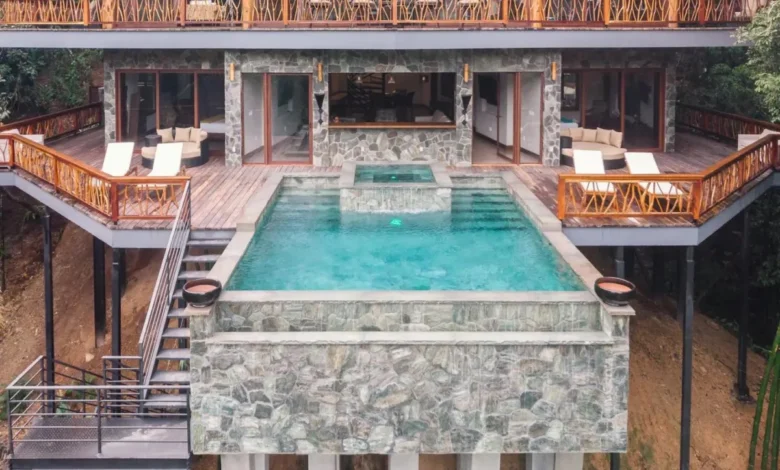
The architectural movement behind these structures often relies on biomimicry and sustainable materials. In Belize, properties like Valley Stream represent this new frontier. Situated within a 200-acre private jungle sanctuary, the residence utilizes soaring native thatch ceilings and local hardwoods. These structures are engineered to facilitate passive cooling, reducing the reliance on artificial climate control. Such designs are not merely aesthetic choices but are essential for maintaining a low carbon footprint in tropical climates.
A similar architectural philosophy is observed at Brazil’s Caipira Modernista. Recognized as one of the nation’s premier examples of 100-percent off-grid sustainable housing, it employs advanced solar arrays and mountain-fed water filtration systems. The architectural significance lies in the structure’s ability to blend into the landscape—a concept known as "landscape integration"—which minimizes the human impact on the local ecosystem while providing occupants with uninterrupted views of the valley.
Geography and the Glamping Phenomenon
"Glamping," a portmanteau of glamorous and camping, has provided a bridge for travelers hesitant to commit to full-scale wilderness survival. In Norway, the BirdBox concept near the Blegja mountain range illustrates how small-footprint structures can provide high-value experiences. By utilizing modular design, these units offer a "gallery-like" experience where the landscape serves as the primary amenity.
This model is being replicated globally, from the historic boat conversions in the United Kingdom—such as the 1945 Anthony Stevenson vessel—to the hogan-style accommodations in Arizona’s Navajo Nation. These sites offer unique historical and cultural context, allowing travelers to engage with regional traditions while operating on a minimal energy budget. The Navajo Nation, in particular, emphasizes the importance of land stewardship, with property regulations that reflect a deep respect for the environment and cultural history.
The Digital Nomad Influence
The post-2020 rise of remote work has significantly altered the requirements for off-grid travel. Properties that were once considered "unplugged" now frequently include high-speed satellite internet, such as Starlink, to cater to digital nomads.
At NeoNauta 23 in Spain, the intersection of luxury and connectivity is evident. The property, constructed in 2021, integrates volcanic landscape aesthetics with modern professional amenities, including dedicated office spaces and high-speed Wi-Fi. This shift highlights a broader trend: the "work-from-anywhere" culture is no longer restricted to urban centers. Employers and industry analysts suggest that this decentralization of the workforce has allowed for longer stays in remote locations, which in turn benefits local economies that were previously overlooked by mainstream tourism.
Economic and Environmental Implications
The economic impact of high-end off-grid tourism is twofold. First, it provides a revenue stream for remote regions, supporting local employment in hospitality, culinary arts, and property maintenance. In Morocco, for instance, the "Loop" project in the Marrakech countryside provides professional chef services that source ingredients from the local region, fostering a symbiotic relationship between the luxury rental and the surrounding agricultural community.
Second, the environmental implications are significant. Many of these properties operate as "carbon sinks" or net-positive energy producers. By utilizing renewable energy sources and sustainable waste management, these developments often set a standard for local construction practices. However, critics argue that the high cost of entry for these properties can lead to gentrification in rural areas, potentially inflating local living costs.
Chronology of Sustainability in Tourism
- 1990s: The inception of "Ecotourism" as a formal concept, focusing on conservation and local community development.
- 2010–2015: The rise of home-sharing platforms allows owners of unique, remote properties to reach a global audience without traditional travel agency mediation.
- 2016–2019: Advances in solar storage (lithium-ion batteries) and satellite internet make truly off-grid living comfortable enough for the luxury market.
- 2020–2022: The global health crisis triggers a surge in demand for isolated, private travel, leading to record bookings for off-grid properties.
- 2023–Present: The maturation of the sector, characterized by professional management, standardized sustainability certifications, and a focus on architectural design.
Comparative Analysis of Off-Grid Offerings
| Property | Location | Primary Appeal | Sustainability Feature |
|---|---|---|---|
| Valley Stream | Belize | Luxury Jungle Privacy | Solar-powered, local materials |
| BirdBox | Norway | Fjord/Mountain Views | Low-impact modular design |
| Caipira Modernista | Brazil | Architectural Design | 100% off-grid utility cycle |
| Casa Bell | Costa Rica | Wildlife Integration | Solar-powered, rainforest location |
| The Loop | Morocco | Cultural Immersion | Solar-powered, local agriculture |
Challenges and Future Outlook
Despite the growth, the sector faces challenges regarding regulatory compliance and resource management. In many countries, building codes are not designed for fully independent utilities, creating a gray area for developers. Furthermore, as these properties become more popular, the challenge of maintaining the "seclusion" that customers pay for becomes more difficult.
Looking forward, the industry is likely to move toward "regenerative tourism," where the goal is not merely to leave no footprint, but to actively improve the land on which the property is built. This may involve reforestation projects, the support of local biodiversity, and the implementation of circular economy models for waste and water.
As the demand for authentic, nature-based experiences continues to rise, the market for off-grid luxury will likely continue to expand. For the modern traveler, the destination is no longer just a place to sleep; it is an integrated experience that balances the comforts of the modern world with the necessity of preserving the natural landscapes that make travel worth pursuing. Whether through a clifftop rock pool in Belize or a volcanic view in Spain, the future of travel lies in the ability to coexist with the environment, rather than merely observing it from behind a glass window.