Royal Caribbean International’s Oasis Class vessels remain among the most recognizable and technologically ambitious cruise ships navigating international waters. Featuring distinctive open-air atriums, park-like settings, and extensive multi-deck layouts, these vessels have redefined the modern cruise vacation paradigm. While Royal Caribbean’s newly introduced Icon Class ships have surpassed them in overall gross tonnage, the Oasis Class fleet continues to represent a pinnacle of maritime engineering, high-capacity family entertainment, and resort-style amenities at sea.
Understanding the Scale and Evolution of Oasis Class Ships
To contextualize the Oasis Class within the broader cruise industry, it is essential to examine vessel classification. Cruise lines typically group ships into specific classes based on architectural blueprints. While individual ships within a class may undergo interior refurbishments or feature unique themed venues, their structural dimensions, gross tonnage capacities, and fundamental layouts remain largely identical.

The introduction of the Oasis Class marked a paradigm shift in cruise ship architecture when Royal Caribbean debuted the lead ship, Oasis of the Seas, in 2009. Prior to the advent of the Icon Class, these mega-ships held the title of the largest passenger vessels in the global fleet. Today, the class encompasses several sister ships, with Utopia of the Seas serving as the newest addition to this specific lineage.
Because features, restaurants, and entertainment offerings can vary significantly by individual vessel due to periodic dry-dock upgrades and class iterations, cruise operators strongly advise passengers to review specific deck plans and digital application schedules prior to embarkation.
Chronology of the Oasis Class Fleet
The evolution of the Oasis Class spans over a decade of continuous maritime innovation, reflecting changing consumer demands for onboard entertainment, dining variety, and sustainable technologies.
- December 2009: Oasis of the Seas enters service, forever altering the scale of contemporary cruising by introducing the split-superstructure design and open-air neighborhoods.
- November 2010: Sister ship Allure of the Seas debuts, matching the massive scale and innovative layout of its predecessor.
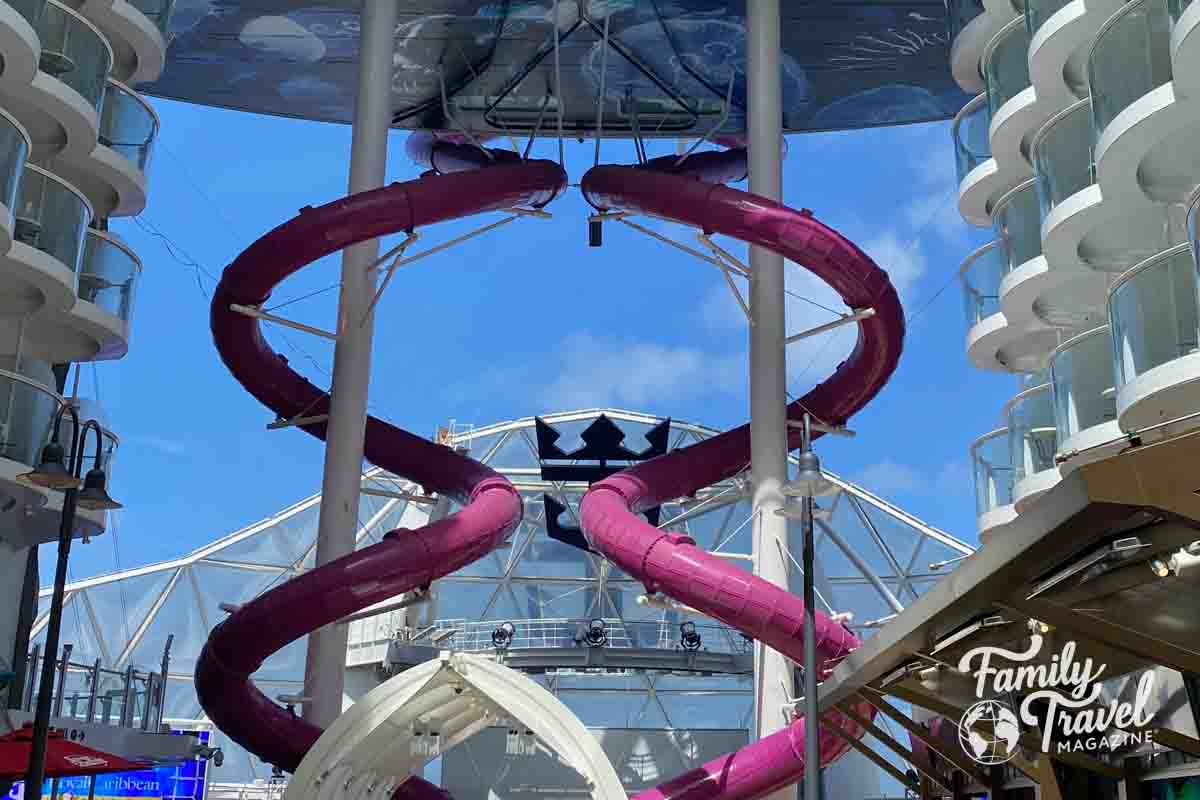
- March 2016: Harmonious of the Seas joins the fleet, introducing the multi-story Ultimate Abyss dry slide and heightened technological integration.
- May 2018: Symphony of the Seas launches, incorporating enhanced family-focused suites and expanded culinary options.
- March 2022: Wonder of the Seas commences operations, holding the distinction of launching directly into service from Fort Lauderdale, Florida, and featuring a dedicated Suite Neighborhood.
- July 2024: Utopia of the Seas officially debuts, tailored specifically for high-energy, short-duration weekend itineraries departing from Port Canaveral, Florida.
Architectural Innovations and Neighborhood Design
The primary engineering breakthrough of the Oasis Class lies in its split superstructure. Traditional cruise ships feature a solid block of staterooms rising directly from the hull. In contrast, Oasis Class ships feature a deep, open-air central canyon running down the middle of the vessel. This architectural design creates distinct outdoor environments surrounded by interior and exterior staterooms, effectively mimicking a resort town on land rather than a traditional ocean liner.
These massive vessels are divided into distinct zones known as neighborhoods, each engineered to serve a specific demographic or mood. While configurations vary slightly across the fleet, the standard neighborhoods include:
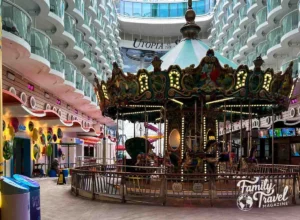
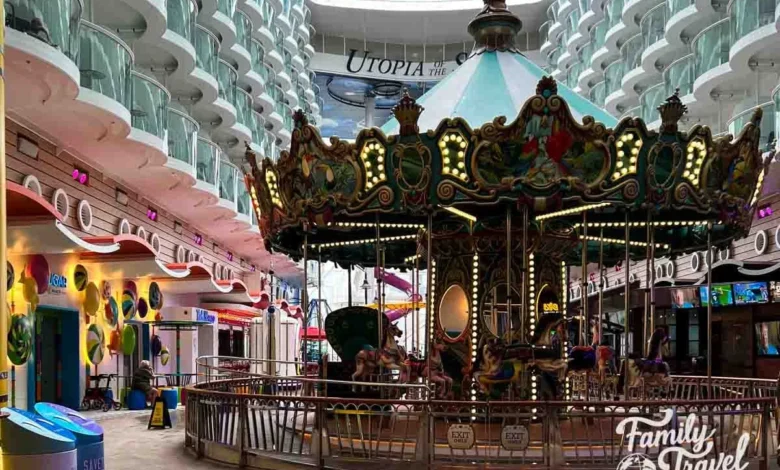
- The Boardwalk: A nostalgic nod to classic seaside amusement piers, complete with a hand-carved wooden carousel, casual eateries, and the open-air AquaTheater at the stern.
- Central Park: A living, open-air garden housing over 20,000 live plants and trees, surrounded by upscale specialty restaurants and quiet boutique shopping.
- The Royal Promenade: A bustling indoor thoroughfare serving as the central hub for duty-free shopping, bars, parades, and social gatherings.
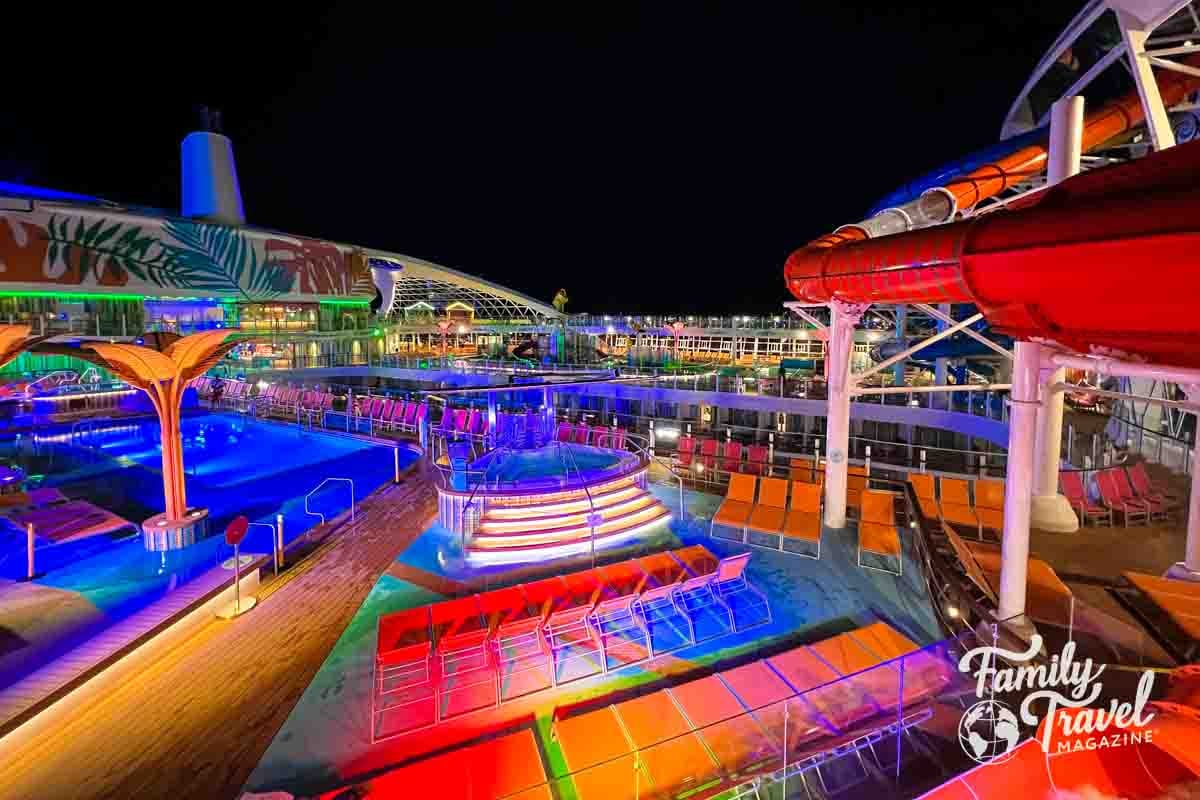
- Pool and Sports Zone: An expansive top-deck area featuring multiple resort-style swimming pools, high-speed waterslides, surf simulators, and sports courts.
- Youth Zone: Dedicated, age-specific facilities providing supervised programming for infants, children, and teenagers.
- Entertainment Place: A subterranean deck dedicated to high-tech theaters, comedy clubs, and a regulation-sized ice-skating rink.
- Vitality Spa and Fitness Center: A comprehensive wellness facility offering advanced treatments, thermal suites, and a fully equipped gymnasium.
Culinary Landscape and Dining Diversity

Dining on an Oasis Class ship represents a massive logistical operation, balancing mass-catering efficiency with high-end culinary experiences. Passengers can choose from dozens of dining venues spanning complimentary buffet options, multi-course main dining rooms, casual grab-and-go cafes, and specialty reservation-only restaurants.
Complimentary standards available across all Oasis Class ships include the multi-level Main Dining Room, offering rotating international menus, and the Windjammer Marketplace, a sprawling buffet venue handling thousands of guests daily at peak meal times.
Specialty dining venues, which typically incur an additional cover charge or à la carte pricing, include upscale steakhouses like Chops Grille, high-end seafood concepts such as Hooked Seafood, Italian trattorias like Giovanni’s Italian Kitchen, and whimsical experiential dining venues such as Wonderland. Because specialty dining venues operate at limited capacity, maritime analysts recommend securing reservations via the cruise line’s digital application well in advance of the sail date.
Onboard Entertainment, Activities, and Technical Logistics

Managing passenger flow and entertainment options across a floating city accommodating upwards of 6,000 guests requires sophisticated digital infrastructure. Oasis Class ships offer an array of high-capacity entertainment venues, including the main Royal Theater for Broadway-style productions, Studio B for professional ice-skating revues, and the AquaTheater, a deep-pool aquatic performance space featuring high-divers, acrobats, and synchronized swimmers.
In addition to scheduled performances, the vessels feature active recreational amenities such as escape rooms, laser tag arenas, rock-climbing walls, and the Ultimate Abyss—a 10-story dry slide plunging passengers from the sports deck down to the Boardwalk.
To prevent overcrowding and ensure equitable access, Royal Caribbean requires passengers to reserve showtimes and specialized activities in advance. Reservations typically open via the mobile application during the month preceding the sailing. Industry data indicates that high-demand entertainment slots fill within hours of release, making early digital planning a critical component of the guest experience.
Stateroom Categories and Accommodation Strategies

Oasis Class ships offer a diverse inventory of staterooms, ranging from traditional interior cabins to sprawling, multi-story family suites. Beyond standard oceanview and interior rooms, these ships feature innovative balcony configurations that overlook internal architectural spaces rather than the open sea. Balconies facing Central Park offer a quiet, acoustic-buffered environment surrounded by foliage, while Boardwalk-facing balconies provide front-row views of the bustling activity and ocean vistas at the stern.
Guests seeking enhanced flexibility often utilize Royal Caribbean’s RoyalUp program, an automated bidding system allowing booked passengers to offer monetary bids for stateroom upgrades prior to departure. However, maritime travel experts advise that travelers desiring specific room locations—such as proximity to elevators or avoidance of high-traffic public decks—should reserve their exact category at the time of booking rather than relying on upgrade auctions.
Economic Implications and Market Positioning
The deployment of Oasis Class ships represents a cornerstone of Royal Caribbean Group’s financial strategy. By consolidating thousands of passengers onto single, highly efficient vessels, the corporation achieves significant economies of scale. High-capacity ships reduce per-passenger operational costs while maximizing revenue generation through onboard spending on specialty dining, shore excursions, gaming, and beverage packages.

The introduction of vessels like Utopia of the Seas into short-duration itineraries marks a strategic pivot in industry marketing. Historically, mega-ships were exclusively deployed on seven-night or longer Caribbean circuits. By stationing an Oasis Class ship on three- and four-night weekend routes from Port Canaveral, Royal Caribbean captures first-time cruisers and short-vacation travelers seeking a concentrated taste of mega-ship amenities without committing to a full week at sea.
Addressing Perceptions of Scale and Size
A primary concern frequently raised by prospective passengers centers on whether ships of this magnitude feel overwhelmingly crowded. With maximum capacities exceeding 6,000 guests, the visual scale can appear intimidating to travelers accustomed to smaller, intimate vessels.
However, operational data and guest feedback indicate that the neighborhood architectural concept successfully disperses crowds throughout the vessel. While central thoroughfares experience peak congestion during embarkation, disembarkation, and transition times between dinner seatings, vast areas of the ship—particularly Central Park and upper-deck solariums—maintain a tranquil atmosphere.
For travelers hesitant about committing to a massive vessel, industry analysts recommend testing the class via a shorter itinerary, such as a weekend sailing aboard Utopia of the Seas. This approach allows passengers to evaluate the mega-ship environment and determine whether the extensive array of onboard amenities aligns with their personal vacation preferences.