Royal Caribbean International’s Oasis Class represents a monumental shift in naval architecture and commercial cruise operations. Long before the introduction of the Icon Class, the debut of the Oasis Class redefined the boundaries of scale, engineering, and onboard entertainment within the global cruise industry. These floating resorts are characterized by their multi-neighborhood layout, open-air atriums, and a staggering array of amenities designed to accommodate thousands of passengers simultaneously. While individual vessels within this class—ranging from pioneering early hulls to the state-of-the-art Utopia of the Seas—feature distinct variations in their dining options, retail spaces, and entertainment lineups, their overarching structural design and passenger capacity remain remarkably consistent. Industry analysts and maritime experts frequently examine the Oasis Class as a benchmark for modern mega-ship engineering, noting how these vessels successfully manage crowd flow, environmental technologies, and guest satisfaction on an unprecedented scale.
The Genesis and Chronological Evolution of the Oasis Class

The development of the Oasis Class began over a decade and a half ago, fundamentally altering the trajectory of cruise ship design. Royal Caribbean envisioned a vessel that would break away from traditional cruise ship layouts by incorporating open-air neighborhoods, maximizing interior space, and offering unprecedented diversity in recreation.
The chronological rollout of the Oasis Class highlights the steady refinement of these massive ships:
- 2009: Oasis of the Seas launched, instantly becoming the largest cruise ship in the world, introducing the revolutionary split-superstructure design with an open-air Central Park and Boardwalk.
- 2011: Allure of the Seas entered service as the second vessel in the class, offering minor enhancements to dining and retail spaces while maintaining the signature layout.
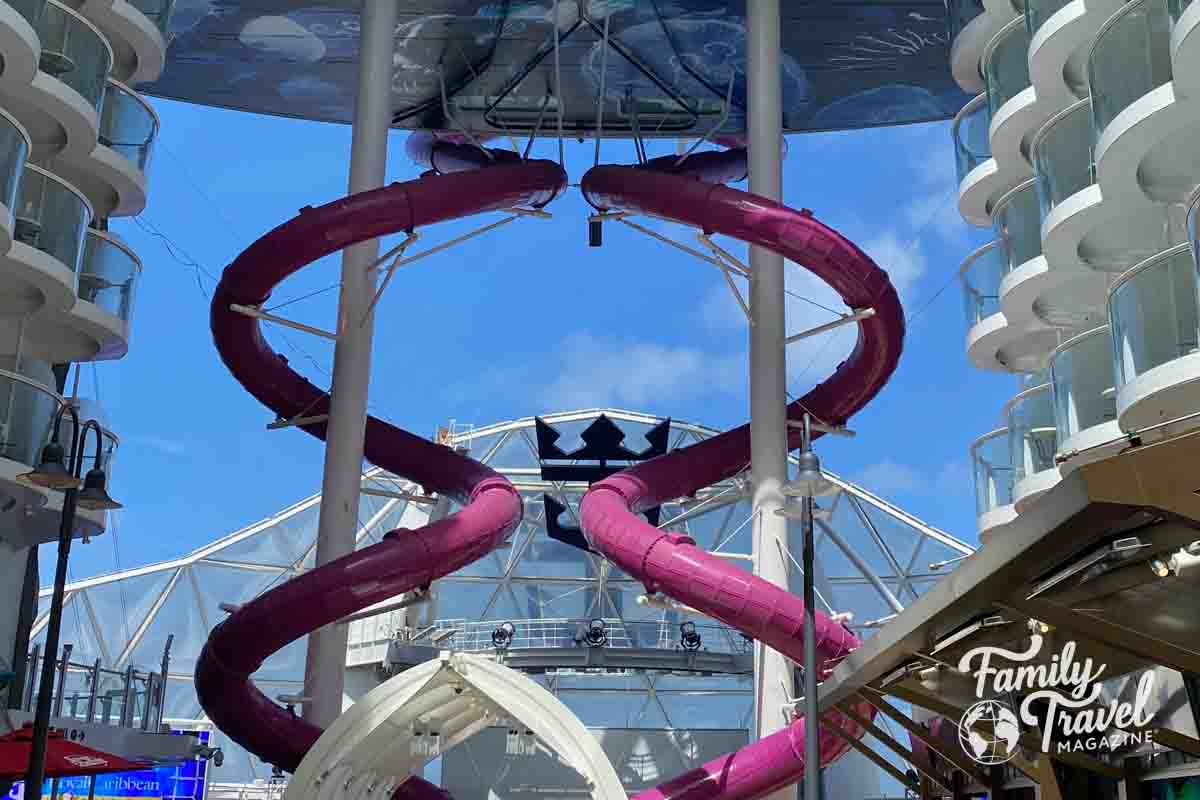
- 2016: Harmony of the Seas joined the fleet, marking the introduction of the Ultimate Abyss dry slide and incorporating elements from the subsequent Quantum Class.
- 2018: Symphony of the Seas debuted with further refined family suites, expanded culinary concepts, and advanced digital check-in capabilities.
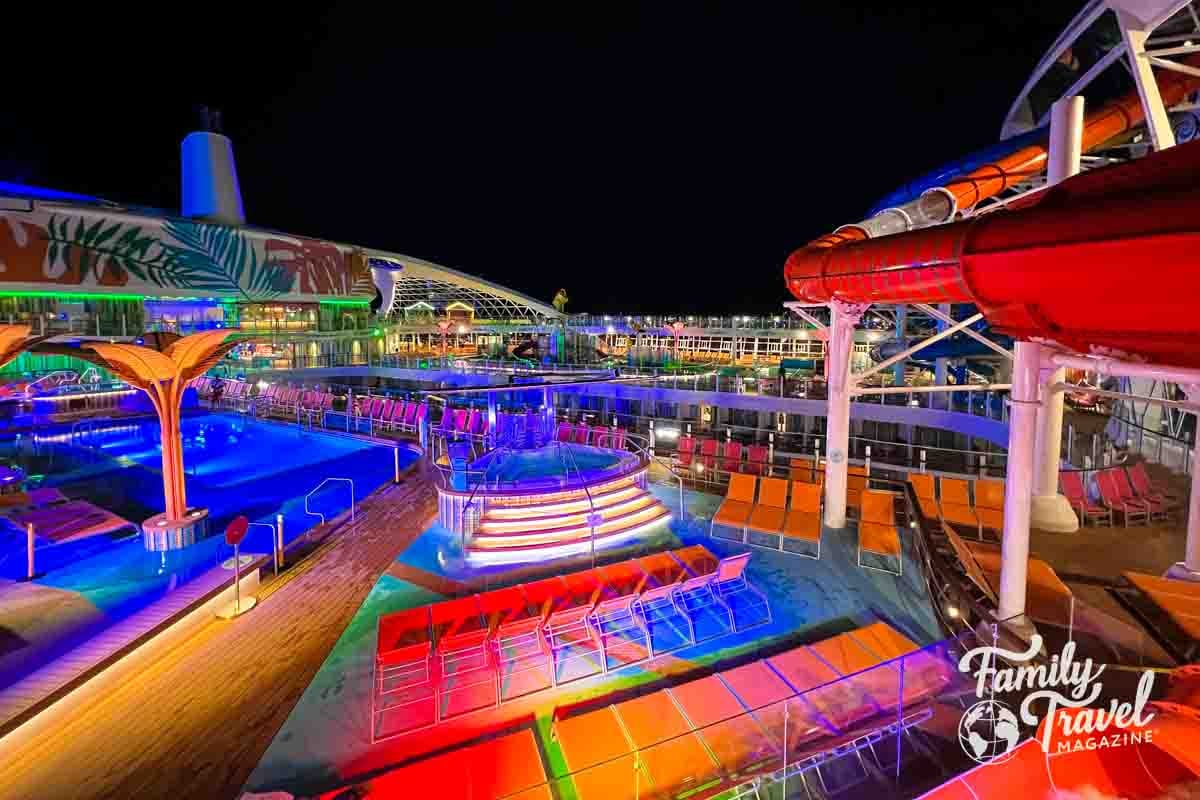
- 2022: Wonder of the Seas launched, featuring a dedicated suite neighborhood and a redesigned pool deck tailored for warmer itineraries.
- 2024: Utopia of the Seas entered service, breaking new ground as the first Oasis Class ship designed specifically to focus on short, high-energy weekend getaways, departing primarily from Port Canaveral, Florida.
Architectural Innovation: The Neighborhood Concept
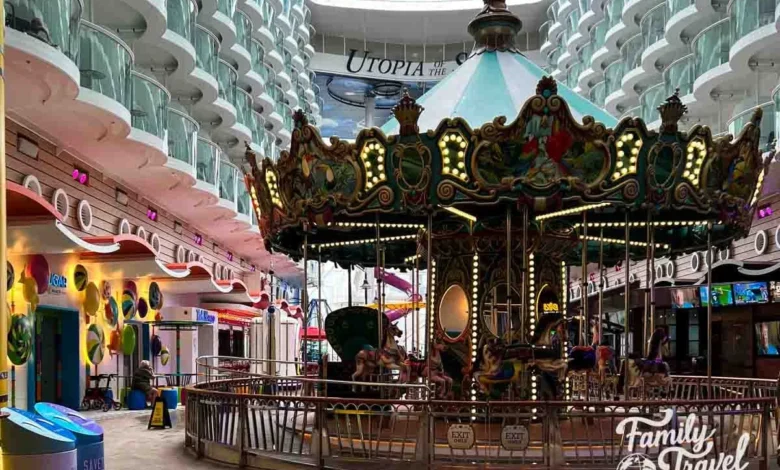
The defining characteristic of an Oasis Class ship is its architectural layout, which abandons the traditional linear hotel-corridor structure in favor of distinct "neighborhoods." This design innovation was engineered specifically to disperse passenger crowds and prevent bottlenecking in high-traffic areas.
Central Park serves as a tranquil, open-air sanctuary in the middle of the vessel, featuring thousands of live plants, upscale specialty dining venues, and quiet walking paths beneath the open sky. In contrast, the Boardwalk offers a nostalgic, seaside-amusement-park atmosphere complete with a handcrafted carousel, casual eateries, and the open-air AquaTheater at the stern. Other designated zones include the vibrant Royal Promenade, the action-packed Pool and Sports Zone, the serene Vitality Spa and Fitness Center, the Youth Zone for children and teenagers, and exclusive Suite Neighborhoods found on select ships. This compartmentalization creates the psychological illusion of being in a bustling urban district on land rather than confined to a traditional maritime vessel.
Culinary Diversity and Dining Logistics

Feeding thousands of guests daily requires sophisticated logistical planning and a wide spectrum of culinary options. Oasis Class ships typically feature dozens of dining venues, balancing massive complimentary facilities with specialized, fee-based specialty restaurants.
The Main Dining Room and the Windjammer Marketplace serve as the primary complimentary hubs, accommodating the bulk of the passenger manifest for breakfast, lunch, and multi-course dinners. However, the culinary footprint extends far into specialty dining concepts that cater to diverse global palates. Depending on the specific vessel, guests can access venues such as Chops Grille (steaks), Giovanni’s Italian Kitchen & Wine Bar, Izumi (sushi and hibachi), Hooked Seafood, and Wonderland, an imaginative molecular gastronomy restaurant. Cruise line operations management emphasizes that while complimentary venues handle high-volume demand efficiently, reservations for specialty dining and peak-time main dining slots are critical to maintaining service quality and guest satisfaction.
Onboard Entertainment Infrastructure and Logistics

Entertainment aboard an Oasis Class ship is decentralized across multiple specialized venues, allowing the vessel to run simultaneous productions ranging from Broadway-style musicals to high-diving aquatic performances.
The entertainment ecosystem is anchored by three primary venues: the Royal Theater for large-scale theatrical productions, Studio B for competitive ice-skating shows featuring professional figure skaters, and the open-air AquaTheater at the stern for acrobatic and synchronized swimming performances. Additionally, smaller lounges host live comedy acts, acoustic sessions, and tribute bands.
Because demand for premier entertainment frequently exceeds seating capacity, Royal Caribbean implements a digital reservation system via its mobile application. Passengers are encouraged to secure show reservations prior to boarding or immediately upon embarkation—typically opening the month before sailing—to avoid sold-out performances. Maritime operations experts note that pre-cruise entertainment scheduling significantly reduces guest friction and improves onboard crowd management.

Accommodations and Strategic Stateroom Selection
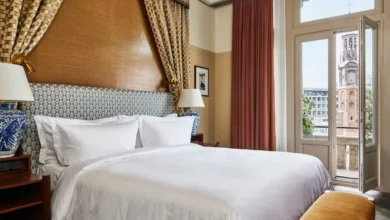
Stateroom categories across the Oasis Class span traditional interior rooms, oceanview rooms, standard balcony staterooms, and multi-level luxury suites. What distinguishes the Oasis Class is the inclusion of inward-facing balcony staterooms that overlook either the Central Park or Boardwalk neighborhoods. These rooms provide a unique architectural perspective, allowing guests to observe the dynamic activity of the ship’s interior spaces rather than the open ocean.
When selecting a stateroom on an Oasis Class vessel, travel industry analysts recommend evaluating location relative to vertical transit systems, such as elevators and stairwells, given the ship’s immense length. Furthermore, passengers are advised to review deck plans carefully to avoid booking cabins directly beneath high-traffic public areas, such as the pool deck or buffet restaurants, where early morning or late-night noise may impact the guest experience. Royal Caribbean also utilizes the RoyalUp program, a blind-bidding system that allows booked guests to submit monetary offers for potential stateroom upgrades prior to departure, subject to availability.

Demographics, Family Travel, and Accessibility
Oasis Class ships are engineered primarily with multi-generational families in mind. The integration of dedicated youth facilities, such as Adventure Ocean for children and specialized teen clubs, ensures age-appropriate programming. Adventure-based amenities—including zip lines, rock-climbing walls, escape rooms, laser tag, and the multi-deck Ultimate Abyss slide—cater heavily to teenagers and active adults.
Concurrently, accessibility standards across the fleet comply with international maritime regulations and the Americans with Disabilities Act (ADA), featuring wheelchair-accessible staterooms, automated doors, zero-threshold showers, and comprehensive elevator access throughout all public neighborhoods.
Operational Scale, Economic Implications, and Broader Industry Impact
Operating vessels of this magnitude—often exceeding 230,000 gross registered tons and accommodating over 5,000 passengers at double occupancy—requires sophisticated port infrastructure. Homeports such as Port Canaveral, Miami, and Fort Lauderdale have invested heavily in dedicated cruise terminals capable of processing rapid passenger turnarounds.
The economic implications of the Oasis Class are profound. These ships generate substantial revenue streams through onboard spending, including specialty dining, shore excursions, beverage packages, and retail purchases. From an environmental perspective, Royal Caribbean has integrated advanced wastewater purification systems, energy-efficient hull designs, and waste-reduction initiatives across newer Oasis Class hulls to mitigate the ecological footprint associated with mega-ship operations.

Ultimately, whether an Oasis Class vessel feels excessively large remains subjective. While first-time cruisers accustomed to smaller, more intimate ships may require an adjustment period to navigate the vast layout, the sheer diversity of amenities ensures that passenger density is effectively absorbed across the ship’s numerous distinct environments. For travelers seeking variety, constant activity, and expansive resort-style amenities at sea, the Oasis Class remains a defining achievement in contemporary cruise tourism.