Google Expands AI-Powered Universal Commerce Protocol to Hotel Booking, Signaling Major Shift in Travel and Local Delivery Sectors

MOUNTAIN VIEW, CA – Google on Tuesday publicly committed to extending its nascent agentic commerce infrastructure, known as the Universal Commerce Protocol (UCP), to the significant verticals of hotel booking and local food delivery. This strategic expansion, announced by Vidhya Srinivasan, Vice President and General Manager of Ads and Commerce, through a blog post coinciding with the company’s annual I/O developer conference, marks a pivotal moment in Google’s ambition to transform search into a transactional platform, allowing its AI agents to handle complex purchases directly within its ubiquitous interfaces. The move underscores Google’s deepening integration into the e-commerce lifecycle, potentially reshaping competitive dynamics in the multi-trillion-dollar travel and local services industries.
The announcement was a highlight amidst a flurry of shopping and AI-related updates unveiled at Google I/O, the company’s premier event for developers and a traditional showcase for its most ambitious technological advancements. Srinivasan explicitly stated in her post that UCP, the underlying system designed to empower AI agents to facilitate purchases within Google’s search and chat environments, is set to expand "to even more verticals, starting soon with hotel booking and local food delivery." This declaration signals a calculated step beyond its initial retail applications, pushing Google further into service-oriented transactions where user convenience and seamless integration are paramount.
Understanding Google’s Universal Commerce Protocol (UCP)
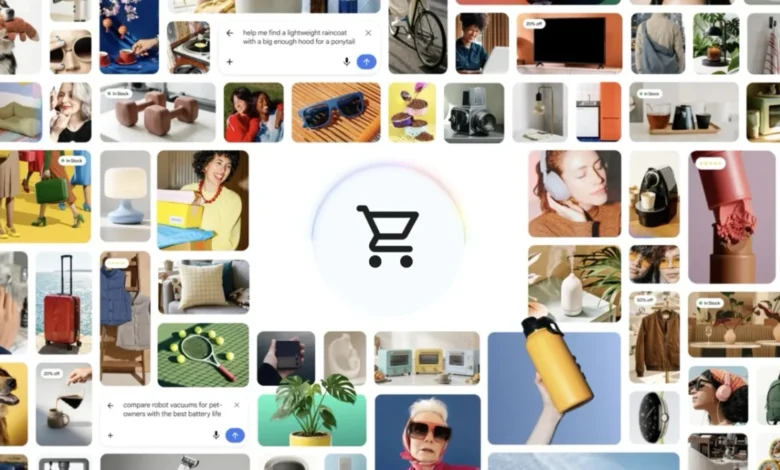
At its core, the Universal Commerce Protocol represents Google’s vision for "agentic commerce," a paradigm where artificial intelligence takes on a more proactive and comprehensive role in the purchasing journey. Unlike traditional search results that merely provide links to external vendor websites, UCP enables Google’s AI agents to understand user intent, search for products or services across various providers, compare options, and ultimately execute transactions on behalf of the user, all without leaving the Google ecosystem. This capability moves Google from being primarily a referrer to a direct facilitator of commerce, fundamentally altering the user experience by reducing friction and simplifying complex multi-step processes.
For instance, a user might prompt Google’s AI, "Book me a pet-friendly hotel in San Francisco for the first weekend of October under $300," and the AI, powered by UCP, would not only identify suitable options but also proceed to book the chosen hotel, managing payment details and confirmation, potentially leveraging stored user preferences and payment information. This seamless integration is designed to make transactions feel intuitive and effortless, akin to having a personal shopping assistant. While the full rollout details and the specific AI models underpinning these agents (likely variations of Gemini) are still emerging, the intent is clear: to make Google’s AI not just an information provider but a powerful transactional engine.
The Strategic Context: Google I/O and AI-First Imperative
The choice of Google I/O for this announcement is highly symbolic and strategic. The annual conference serves as Google’s primary platform to articulate its long-term vision, particularly regarding its "AI-first" strategy. In the wake of the generative AI revolution spearheaded by OpenAI’s ChatGPT, Google has intensified its efforts to integrate advanced AI capabilities, particularly its Gemini family of models, across its entire product suite. The expansion of UCP is a direct manifestation of this imperative, demonstrating how generative AI can be leveraged not just for information synthesis but for tangible, real-world actions and commerce.
Google I/O 2024, like its predecessors, emphasized a future where AI is deeply embedded in every user interaction, from coding assistance to creative generation and, crucially, commerce. The UCP announcement aligns perfectly with this narrative, showcasing how AI can move beyond conversation to actual task completion, directly impacting user behavior and potentially increasing Google’s utility and stickiness. This move also reflects Google’s broader strategy to defend and extend its dominance in search and advertising by integrating more valuable, high-intent transactional capabilities directly into its core products, thereby capturing more value at different stages of the consumer journey.
A Chronology of Google’s Commerce Evolution
Google’s foray into commerce is not new, but its approach has evolved significantly over time. Initially, Google’s role in commerce was largely indirect, serving as a powerful conduit for users to find products and services, driving traffic to retailers and service providers through search ads.
- Early 2000s: Google’s search engine becomes the primary discovery tool for online commerce, with AdWords (now Google Ads) monetizing this intent by allowing businesses to bid on keywords.
- Mid-2000s: Introduction of Google Shopping (originally Froogle) to aggregate product listings, aiming to provide a more structured shopping experience.
- Late 2000s – Early 2010s: Google begins to integrate more directly into travel with Google Flights and Google Hotels, initially as metasearch engines, aggregating data from airlines and online travel agencies (OTAs). This marked a shift from pure referral to offering comparison tools within Google’s own interface.
- Mid-2010s: The "Book on Google" feature emerges, allowing users to complete hotel and flight bookings directly on Google’s platform, often facilitated by partner OTAs or direct hotel integrations, streamlining the booking process. This was a critical precursor to UCP, showing Google’s willingness to host transactions.
- Late 2010s – Early 2020s: Google further integrates local services, restaurant search, and delivery options into Google Maps and Search, often linking out to third-party delivery apps or reservation platforms.
- 2023: The concept of Universal Commerce Protocol begins to take shape, initially applied to general retail shopping, allowing AI to assist with product discovery and purchase completion. This was a response to the rapid advancements in generative AI and Google’s commitment to embed AI deeply into transactional flows.
- 2024: The expansion of UCP to hotel booking and local food delivery, as announced at I/O, signifies a significant acceleration and broadening of its agentic commerce ambitions, targeting high-value, recurring transaction categories.
This chronology illustrates a clear progression: from merely indexing the web to facilitating comparisons, then hosting transactions, and now, leveraging advanced AI to execute transactions with minimal user input, transforming Google into an increasingly powerful commerce platform.
The Global Travel Market: A Prime Target
The decision to target hotel booking first with UCP is strategically sound, given the immense size and complexity of the global travel market. The online travel market alone is estimated to be valued at over $1.5 trillion globally, with significant growth projected. This sector is characterized by high transaction values, frequent repeat purchases, and a fragmented supply side (thousands of hotels, airlines, etc.) alongside dominant online travel agencies (OTAs) like Booking Holdings (Booking.com, Agoda, Priceline) and Expedia Group (Expedia, Hotels.com, Vrbo).
Google already plays a monumental role in travel planning, with Google Flights and Google Hotels serving as essential metasearch tools that direct billions of queries and clicks to airlines, hotels, and OTAs. For years, Google has been a significant traffic driver, often referred to as the "largest OTA by proxy" due to its search dominance. However, its previous "Book on Google" features, while providing a direct booking option, still largely relied on partnerships and redirects for fulfillment. UCP represents a more profound integration, where Google’s AI agents could potentially manage the entire transaction end-to-end, further solidifying Google’s position in the transactional funnel.
Impact on Online Travel Agencies (OTAs)
The expansion of UCP into hotel booking is expected to have significant implications for established Online Travel Agencies. OTAs like Booking.com and Expedia have built empires by aggregating inventory, offering comparison tools, and facilitating bookings, often charging commissions ranging from 15% to 30% or more. Google, by directly enabling AI-driven bookings, could potentially disintermediate these players.
- Increased Competition: Google would transition from being primarily a marketing channel for OTAs to a direct competitor for hotel bookings. While hotels might prefer direct bookings to avoid OTA commissions, Google’s platform could become an unavoidable distribution channel.
- Data Implications: If bookings are completed within Google’s ecosystem, Google gains more direct access to valuable transaction data, user preferences, and booking patterns, further enhancing its AI and personalization capabilities. This could be a significant competitive advantage over OTAs, which currently hold much of this direct customer data.
- Shifting Ad Spend: OTAs currently spend billions annually on Google Ads to acquire customers. If Google facilitates bookings directly, the efficacy and necessity of this ad spend might shift, potentially forcing OTAs to rethink their marketing strategies and value proposition.
- Analyst Perspectives: Industry analysts widely interpret this as Google leveraging its immense user base, AI capabilities, and control over search to capture a larger share of the transactional value in travel. While some argue that OTAs will adapt by focusing on loyalty programs, unique inventory, or niche markets, the threat of Google becoming a dominant booking engine is undeniable.
Implications for Hoteliers
For individual hotels and hotel chains, Google’s UCP expansion presents both opportunities and challenges:
- Opportunity for Direct Bookings: Hotels have long sought to increase direct bookings to reduce reliance on high-commission OTAs. If Google’s AI can drive direct bookings to hotels (bypassing OTAs), it could potentially lower distribution costs, provided Google’s own commission or fee structure is competitive.
- Increased Reliance on Google: However, it also means an even greater reliance on Google as a primary distribution and customer acquisition channel. Hotels will need to ensure their inventory and pricing are accurately reflected and optimized within Google’s system to be discovered by AI agents.
- Data Access and Personalization: Hotels may gain more direct customer data from bookings made via Google’s UCP, allowing for better personalization and loyalty programs, assuming Google shares relevant customer information with them.
- Marketing Strategy Adjustments: Hoteliers will need to adjust their digital marketing strategies to optimize for Google’s AI-driven search and booking process, potentially focusing more on structured data, real-time inventory updates, and competitive direct pricing.
The Local Food Delivery Vertical
The expansion to local food delivery, while distinct from travel, shares similar strategic underpinnings. The global online food delivery market is also substantial, estimated to be worth over $300 billion, and is dominated by major players like Uber Eats, DoorDash, Grubhub, and Deliveroo. Google already integrates restaurant search and ordering links within Google Maps and Search, but UCP aims to streamline this further.
- Seamless Ordering: Similar to hotels, UCP could allow users to order food directly through Google’s AI without navigating to a separate app. This would leverage Google’s extensive local business listings and mapping capabilities.
- Competition with Aggregators: This move directly challenges existing food delivery aggregators by offering a potentially more integrated and friction-free experience, particularly for users already interacting with Google for local search.
- Advantages for Restaurants: For local restaurants, it could offer another channel for orders, potentially with different fee structures than existing aggregators, or a way to reach Google’s vast user base directly.
- Logistics Challenge: The primary challenge for Google would be to manage the logistics of delivery, which is a complex operational undertaking. Google could partner with existing delivery services (as it has done in the past) or integrate with restaurant-owned delivery fleets.
Broader Implications of Agentic Commerce and AI
The expansion of UCP beyond retail to services like travel and food delivery highlights several broader implications for the digital economy and the future of AI:
- Future of Search: This is a definitive step in the evolution of search from an information retrieval tool to a proactive task-completion engine. Users will increasingly expect Google to not just tell them what to do, but to do it for them.
- Personalization and User Experience: Agentic commerce promises unparalleled personalization, as AI can learn user preferences, payment methods, and historical behavior to offer highly tailored and efficient transactional experiences.
- Data Privacy and Security Concerns: As Google’s AI agents handle more personal and financial data, concerns around data privacy, security, and algorithmic bias will intensify. Users will need assurances that their information is protected and that AI agents are acting in their best interest.
- Regulatory Scrutiny: Google’s increasing market dominance across multiple verticals, coupled with its control over search, has already attracted significant antitrust scrutiny from regulators globally (e.g., U.S. Department of Justice, European Union). The expansion of UCP into high-value sectors like travel and local delivery will likely intensify these concerns, as it could be perceived as leveraging its search monopoly to gain an unfair advantage in adjacent markets.
- Impact on Small and Medium-sized Businesses (SMBs): While UCP offers SMBs a potentially powerful new channel to reach customers, it also centralizes more control within Google’s ecosystem. SMBs will need to adapt to ensure their offerings are discoverable and competitive within this AI-driven commerce framework.
Industry Reactions and Future Outlook
Industry reactions to Google’s UCP expansion are varied but largely acknowledge its strategic significance. Analysts generally agree that this move is a clear signal of Google’s long-term commitment to agentic commerce and its intention to become an even more central player in online transactions. While established players in travel and food delivery will likely seek to differentiate themselves through unique offerings, loyalty programs, and superior customer service, the gravity of Google’s reach and AI capabilities cannot be understated.
The success of UCP will ultimately depend on user adoption, the seamlessness of the AI-driven experience, and Google’s ability to navigate potential regulatory challenges. Looking ahead, it is plausible that Google will continue to expand UCP into other service verticals, such as car rentals, event ticketing, and perhaps even professional services, further solidifying its position as a comprehensive AI-powered commerce platform. The battle for the future of online transactions is increasingly being fought through intelligent agents, and Google has just made a decisive move to claim its territory.