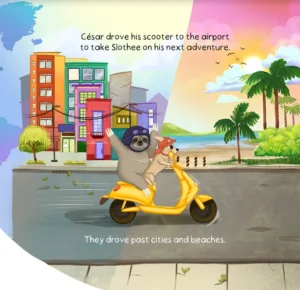
The highly anticipated second installment of the "Slothee and Friends" book series, "Slothee Still Wants Coffee," has been released, charting an ambitious global journey for its titular character in pursuit of the world’s finest coffee. This new publication promises to extend its educational and adventurous narrative beyond its initial target audience of children, aiming to engage adult readers with its exploration of diverse cultures and the universal appeal of coffee. Building upon the success of its predecessor, the "Slothee and Friends" series is designed as a recurring vehicle for introducing young minds, and indeed their guardians, to the intricacies of international travel, cultural immersion, and the development of meaningful friendships across borders. Future installments are already in development, with plans to further delve into the nuanced worlds of coffee and tea production and consumption, alongside a continuing commitment to global exploration and interpersonal connections.
The Global Coffee Pilgrimage: A Detailed Itinerary
"Slothee Still Wants Coffee" meticulously chronicles Slothee’s extensive travels across seven distinct coffee-producing nations, each offering a unique facet of the coffee experience. The narrative unfolds as Slothee embarks on a meticulously planned itinerary that spans:
- Costa Rica: A nation renowned for its high-quality Arabica beans and its pioneering sustainability initiatives in coffee cultivation. Costa Rica’s coffee industry, which dates back to the early 19th century, is a significant contributor to its national economy and cultural identity. The country has consistently prioritized environmental stewardship, with a substantial portion of its coffee farms adhering to stringent ecological standards. According to the International Coffee Organization (ICO), Costa Rica has been a consistent exporter of premium coffee, often commanding higher prices due to its quality and ethical production methods.
- Peru: South America’s third-largest coffee producer, Peru is celebrated for its organic and fair-trade coffee, particularly from the Chanchamayo region. Peruvian coffee production has seen a significant boom in recent decades, driven by a growing global demand for specialty and ethically sourced beans. The country’s diverse microclimates, from the Andes mountains to the Amazon basin, allow for a wide variety of coffee profiles. The Peruvian National Coffee Board has reported steady growth in production volume and export value, with a strong emphasis on improving quality and supporting smallholder farmers.
- Mexico: With a history of coffee cultivation dating back to the 18th century, Mexico is a major producer, particularly in the southern states of Chiapas and Veracruz. Mexican coffee is often characterized by its mild, balanced flavor profile. The country’s coffee sector has faced challenges, including climate change impacts and fluctuating global prices, but there is a concerted effort to promote specialty coffee and improve farmer livelihoods through cooperatives and direct trade initiatives. The Mexican Institute of Coffee (Inmecafe) works to support farmers and enhance the quality and competitiveness of Mexican coffee.
- Jamaica: Famous for its exquisite Blue Mountain coffee, Jamaica’s coffee industry is smaller in scale but highly regarded for its premium quality. The specific terroir of the Blue Mountains, with its rich volcanic soil, cool temperatures, and abundant rainfall, contributes to the coffee’s smooth, mild, and aromatic profile, making it one of the most sought-after coffees globally. The Coffee Industry Board of Jamaica strictly regulates the cultivation and processing of Blue Mountain coffee to maintain its esteemed reputation.
- Uganda: As the second-largest producer of coffee in Africa, Uganda primarily cultivates Robusta beans, known for their strong flavor and higher caffeine content, but is increasingly diversifying into specialty Arabica. Uganda’s coffee sector is a vital source of income for a significant portion of its population, with the Uganda Coffee Development Authority (UCDA) playing a crucial role in its development. The country has seen a renewed focus on improving quality, enhancing processing techniques, and expanding market access for its beans.
- Vietnam: The world’s second-largest coffee exporter, Vietnam is predominantly known for its Robusta production, which is a key ingredient in many espresso blends and instant coffees. However, the country is also exploring the cultivation of Arabica beans to diversify its offerings and cater to the specialty coffee market. Vietnam’s coffee industry experienced rapid growth following government reforms in the 1980s, transforming it into a global powerhouse. The country’s coffee production is deeply intertwined with its agricultural economy and cultural practices.
- Australia: While not traditionally a major coffee-producing nation on the scale of others, Australia has emerged as a significant player in the specialty coffee scene, particularly in regions like Queensland and Western Australia, where unique microclimates allow for small-scale cultivation of high-quality Arabica. Australia’s strength lies more in its sophisticated coffee culture and its innovative approach to roasting and brewing, making it a discerning market for coffee from around the globe. The focus here is often on artisanal production and direct relationships with growers.
Throughout this extensive journey, Slothee does not merely observe; he actively engages with the local communities, forging new friendships and gaining invaluable insights into the cultural significance of coffee within each region. This element of cultural exchange is a cornerstone of the "Slothee and Friends" series, aiming to instill in young readers an appreciation for global diversity and the interconnectedness of human experience.
Educational Framework and Narrative Objectives
The overarching objective of "Slothee Still Wants Coffee" is to serve as an educational tool disguised as an engaging adventure story. The book meticulously weaves factual information about coffee cultivation, processing methods, historical context, and the economic importance of coffee into Slothee’s narrative. For instance, readers might learn about the specific altitude and rainfall required for high-quality Arabica beans in Costa Rica, or the traditional methods of harvesting and processing in Peru. The book also touches upon the social impact of coffee production, including the lives of farmers and the challenges they face.
The series aims to foster a sense of global citizenship by exposing children to different ways of life, traditions, and perspectives. By encountering new characters and navigating unfamiliar environments, Slothee’s journey encourages empathy, curiosity, and an understanding of cultural nuances. The "and Friends" aspect of the series highlights the importance of collaboration and mutual respect in building relationships across diverse backgrounds.
Anticipated Reception and Broader Implications
The release of "Slothee Still Wants Coffee" is expected to resonate with a broad audience. For parents and educators, it offers a valuable resource for teaching children about geography, culture, agriculture, and global economics in an accessible and entertaining manner. The book’s emphasis on exploration and discovery aligns with contemporary pedagogical approaches that prioritize experiential learning.
From a publishing perspective, the "Slothee and Friends" series represents a strategic expansion into the educational children’s literature market, with a clear vision for sustained growth and brand development. The established formula of combining adventure, education, and relatable characters provides a strong foundation for future titles. The series’ commitment to exploring global themes and diverse cultures also positions it favorably in an increasingly interconnected world, where intercultural understanding is highly valued.
The series’ potential to inspire a lifelong interest in coffee and its origins among young readers is another significant implication. As global consumers become more discerning about the provenance and quality of their food and beverages, books like "Slothee Still Wants Coffee" can play a crucial role in shaping informed and responsible consumers of the future. By demystifying the journey of a coffee bean from farm to cup, the book encourages an appreciation for the labor, dedication, and environmental considerations involved in its production.
Ultimately, "Slothee Still Wants Coffee" seeks to answer the age-old question of whether its intrepid protagonist will find the "best" cup of coffee. However, the true success of the book lies not solely in the resolution of this quest, but in the rich tapestry of experiences, knowledge, and friendships Slothee garners along the way, offering readers a truly educational and thoroughly enjoyable global adventure. The narrative implicitly suggests that the "best" cup of coffee might be as much about the journey and the company as it is about the brew itself.