The Quiet Renaissance of Swedish Luxury: How the Bjäre Peninsula Became the New Nordic Gold Standard

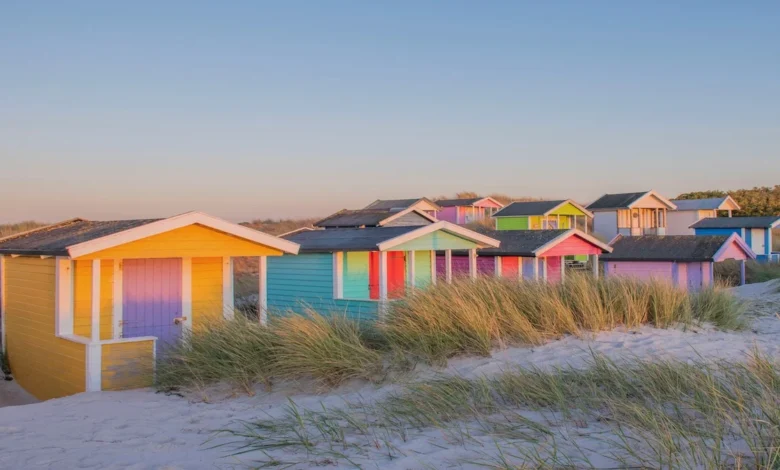
The Bjäre Peninsula, a lush stretch of land on Sweden’s southwestern coast, has long been a historical footnote, remembered primarily as the summer playground for Scandinavian royalty over a century ago. Today, however, it is the epicenter of a profound shift in the definition of high-end travel. In an era where "luxury" is increasingly synonymous with digital noise and overt displays of wealth, this region—and the broader Swedish countryside—is quietly pioneering a movement centered on intentionality, hyper-locality, and the preservation of heritage.
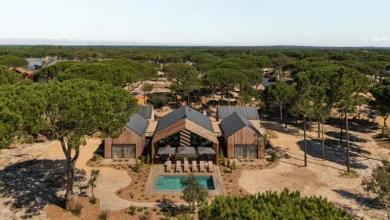
The recent opening of Furuhem, a guesthouse that has garnered a three-month waiting list before its doors fully settled into the season, serves as the primary catalyst for this trend. Housed in a structure that appears deceptively modest with its kale-green shutters and weathered red-tile roof, the inn is the latest project from Magnus Nilsson. Nilsson, widely regarded as the most influential chef of his generation, previously redefined global gastronomy at Fäviken, a restaurant that held two Michelin stars and functioned as a pilgrimage site for culinary purists.
From Fäviken to the Coast: The Evolution of an Icon
To understand the significance of the current shift in Swedish hospitality, one must look back at the "New Nordic" movement that dominated the global food conversation from 2010 to 2019. During this period, the manifesto penned by René Redzepi and his peers prioritized pure, regional ingredients. Nilsson’s Fäviken, located in the remote evergreen forests of Jämtland, was the movement’s most extreme proponent.

At Fäviken, the dining experience was a 32-course immersion into the stark reality of the northern wilderness. Guests were served dried pig’s blood, bone marrow with diced cow’s heart, and arctic char caught in the frigid waters of Lake Kallisjön. The price point, often exceeding $350 per person, was justified by the logistical impossibility of the ingredients. When Nilsson closed Fäviken in 2019, it marked a turning point in high-end dining—a transition from the performative intensity of the "destination restaurant" to a more grounded, sustainable model of hospitality.
At Furuhem, co-managed by chef Frida Nilsson and Noma alumnus Daniella Rebelo, the philosophy has evolved. While the craftsmanship—visible in the restored vintage lighting and bespoke furniture—is world-class, the ethos is intentionally "ordinary." There are no Murano chandeliers or grand, marble-clad lobbies. Instead, the luxury lies in the restoration of a century-old structure and the seamless integration of a high-functioning, farm-to-table bakery and restaurant that serves the local community as much as it serves the global traveler.
The Rise of the Swedish Countryside Retreat
The trend toward "quiet luxury" is not isolated to the Bjäre Peninsula. It is part of a broader economic pivot in Sweden, where the traditional allure of Mediterranean vacations is being challenged by a desire for local, nature-integrated tourism.
An hour’s drive from Furuhem lies Åstad Vingård, a property that epitomizes the evolution of the agricultural estate. Once a third-generation dairy farm, the estate has been transformed by siblings Linda, Daniel, and Mattias Carlsson into a sophisticated winery and spa. The site serves as a nexus for a diverse demographic: high-net-worth individuals from Stockholm, affluent Danish families, and international travelers seeking a respite from the fast-paced urban lifestyle.

The estate features eight saunas and Restaurant Äng, which holds a Michelin star and is housed in a glasshouse overlooking the Åkulla Bokskogar nature reserve. The irony of the setting—fine dining in a space that once housed cattle—is not lost on the owners. Guests regularly dine on a 19-course tasting menu while wearing casual resort attire, surrounded by a wine collection that includes rare vintages like Krug Clos du Mesnil Blanc de Blancs Brut and Montrachet Grand Cru.
"The idea of quiet luxury has been shaping things globally for a few years now," says Daniel Carlsson. "In many ways, it shares DNA with the Nordic cultural approach, which is inherently wary of overt displays of status. Walking through the parking lot and seeing an old, worn vehicle parked next to a Bentley is a perfect snapshot of our current ethos."
Economic and Cultural Implications
The investment landscape in the region reflects this shift. The Carlsson family’s acquisition and subsequent renovation of the 1822-built Varbergs Kusthotell, a historic bathhouse, is indicative of a broader trend of private capital moving into historic preservation. By integrating million-dollar spa facilities into 19th-century infrastructure, developers are betting that the modern traveler values historical narrative over brand-name opulence.
This trend is echoed further south in Skåne county at Vyn Restaurant and Hotel, helmed by the celebrated chef Daniel Berlin. Since its opening in 2023, Vyn has become perhaps the most exclusive reservation in Sweden. The hotel provides a sensory-focused retreat, emphasizing the hyperlocal output of the Skåne fields and coastline. With dinner packages starting at $410 and wine pairings at $460, the economic barrier to entry remains high, yet the focus is entirely on the quality of the experience—the "Berlin breakfast" has already earned a reputation as a standalone reason for international travel.

The Psychology of Nature-Based Luxury
Mathias Dahlgren, a Michelin-starred chef and a foundational figure in Swedish culinary history, views this movement as a natural response to the pressures of the modern world. "We Swedes are born as nature romantics," says Dahlgren, who recently opened Ateljé Vita duken – Tornhuset in his hometown of Umeå. "Nature is our way to heal from industrialization and modern stress. The ultimate luxury for us isn’t a five-star hotel with gold plating; it’s picking wildflowers, cooking over an open fire, and swimming in a lake."
This perspective is corroborated by luxury travel consultants. Janel Carnero of Embark Travel notes that the Swedish market is defining a new standard for high-end experiences. "Luxury in Sweden isn’t loud—it’s intentional," she explains. "It is found in the extreme purity of the experience, such as foraging with a master chef or participating in a private ice-bath ritual. It’s an understated elegance that feels grounded."
Chronology of a Shift
- 2010–2019: The "New Nordic" movement, led by Fäviken and Noma, establishes the global prestige of Scandinavian ingredients and hyper-seasonal, remote-location dining.
- 2019: Magnus Nilsson closes Fäviken, signaling a shift away from high-pressure destination dining.
- 2020–2022: The COVID-19 pandemic accelerates the preference for domestic travel and outdoor-centric, wellness-focused vacations among Nordic populations.
- 2023: Vyn Restaurant and Hotel opens in Skåne, marking the return of Daniel Berlin and setting a new benchmark for luxury coastal hospitality.
- 2024–2025: Furuhem opens to immediate critical acclaim, further cementing the Bjäre Peninsula as the premier destination for understated, high-end travel.
Conclusion: The Future of the Nordic Hospitality Model
While Sweden does not compete with the party-heavy scenes of Saint-Tropez or the high-gloss glamour of the French Riviera, it has successfully carved out a market niche that is arguably more resilient. By prioritizing the "quiet luxury" of the countryside, the region is attracting a demographic that values substance over spectacle.
The success of these properties—Furuhem, Åstad Vingård, and Vyn—suggests that the modern luxury traveler is undergoing a fundamental shift in values. Whether it is a bowl of porridge, a locally baked äggakaka, or a rare vintage wine served in a glasshouse on a former dairy farm, the emphasis is on the authenticity of the moment. As the Mediterranean faces rising temperatures and increasing commercialization, the Swedish countryside offers an alternative that is both historically rooted and undeniably modern. The quiet, intentional, and nature-first approach to hospitality is no longer a niche preference; it is the new standard for the high-end travel industry in Northern Europe.