The Unseen Frontier of Travel Profitability: Why Spotnana CEO Steve Singh Believes Post-Booking Servicing is the Industry’s Next Great Margin Driver

For decades, the travel industry’s primary focus has been locked firmly on the front end of the funnel. From the rise of early online travel agencies (OTAs) in the late 1990s to the current explosion of generative AI search tools, the prevailing wisdom has been that the "win" happens at the point of discovery and transaction. However, a significant pivot is underway, led by industry veterans who argue that the real economic battleground—and the primary source of long-term customer trust—resides in the unglamorous, often chaotic world of post-booking servicing.
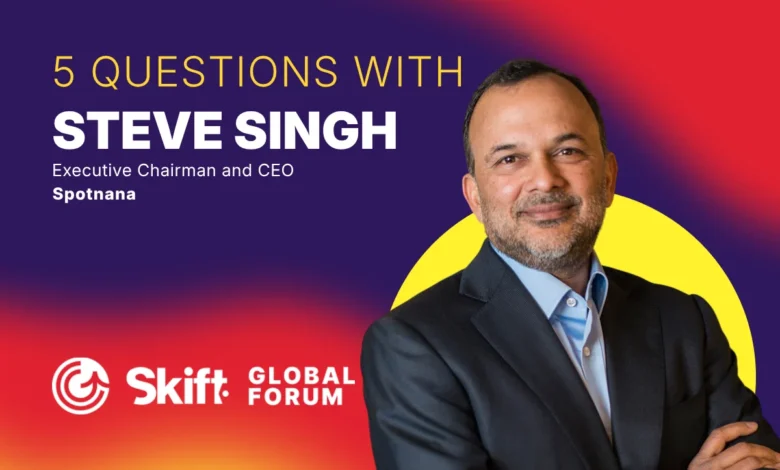
Steve Singh, executive chairman and CEO of Spotnana, is at the forefront of this shift. Ahead of his appearance at the Skift Global Forum in New York City, scheduled for September 22–24, 2026, Singh has articulated a compelling case: the industry has spent billions optimizing how people buy travel, but it has neglected the far more expensive and complex process of managing travel when things go wrong.
The Economic Case for Servicing Automation
The fundamental challenge in travel servicing is its labor-intensive nature. Historically, cancellations, re-bookings, refund requests, and schedule changes have been the domain of human agents. This creates a massive overhead burden for travel management companies (TMCs) and airlines alike. According to recent industry benchmarks, the cost per interaction for a human-serviced travel booking can range from $25 to $100 depending on the complexity of the issue.
Singh posits that by integrating sophisticated artificial intelligence directly into the servicing workflow, companies can reduce these costs by 50% or more. This isn’t merely a matter of cutting headcount; it is about reallocating human capital. By offloading routine tasks—such as reissuing tickets for a cancelled flight or managing automated refunds—to AI agents, human employees are freed to focus on high-touch, complex scenarios where empathy and nuanced problem-solving are required.
"We talk endlessly about search, distribution, and booking," Singh noted in recent commentary. "What really matters is what happens after the trip is purchased. Spotnana is seeing tremendous savings in labor costs across our customers and partners due to the combination of AI and investments in automating servicing workflows."
The Chronology of Industry Transformation
To understand the current shift, one must look at the evolution of travel technology over the past quarter-century.
1990s–2000s: The Era of Distribution. The industry focused on digitizing the Global Distribution System (GDS) and moving inventory online. The goal was simple: get the traveler to book online rather than through a physical agency.
2010s: The Mobile and Personalization Era. Travel tech moved toward mobile apps and user experience (UX) design. Companies competed on the aesthetics of their booking engines and the ability to surface personalized recommendations based on past purchase behavior.
2020s: The Generative AI and Servicing Era. As AI models matured, the focus shifted from "discovery" to "resolution." Companies began realizing that a customer’s lifetime value is defined not by how easily they bought a ticket, but by how easily they were rescued during a mid-trip crisis.
The current transition is marked by the industry’s move toward "conversational front ends." Rather than navigating complex filter-based forms, travelers are increasingly using natural language. This shift places a new premium on data accuracy. If an AI agent is tasked with finding a hotel with "ocean views and early check-in," the backend system must have real-time, verified data. This is where Spotnana’s strategy of direct connections—bypassing legacy middleware—becomes a competitive advantage.
Supporting Data and Market Implications
The push for automation is underscored by a volatile global travel landscape. With extreme weather events, labor strikes, and geopolitical shifts becoming more frequent, the volume of "exceptions"—the industry term for disrupted travel—has reached historic highs.
Data from the Bureau of Transportation Statistics and international aviation bodies suggests that while booking volumes have normalized to pre-pandemic levels, the number of flight cancellations and delays has remained stubbornly high compared to the 2010-2019 average. For a travel provider, every exception is a potential point of churn.
By utilizing AI to handle the "servicing queue," companies are seeing a decrease in wait times. In the traditional model, a surge in flight cancellations could lead to a backlog of thousands of callers waiting for human agents. In an AI-integrated environment, those thousands of tickets can be processed in seconds, with the AI re-booking passengers based on their stated preferences and loyalty status.
The Role of Trust in the Conversational Era
As the industry moves toward conversational booking interfaces, the role of curation has changed. When a traveler asks a chatbot for a recommendation, they are effectively asking the AI to perform a role previously held by a travel agent. If the AI suggests a hotel that fails to meet expectations, the traveler’s trust in that brand is eroded.
Singh emphasizes that the "solve for the traveler" approach is paramount. If a platform is not surfacing the options that the traveler would have chosen 95% of the time, the trust gap widens. This creates an implicit demand for more robust, direct integrations between providers and platforms. It is no longer enough to have basic availability data; providers must now push rich, ancillary-heavy data directly into the servicing platform to ensure the AI has a complete, accurate picture.
Broader Industry Reactions and Perspectives
While Singh’s focus is on the efficiency of servicing, the broader industry is watching with interest. Competitors and analysts have noted that the move toward automated servicing is a necessary evolution, though some express caution regarding the loss of human nuance.
"The efficiency gains are undeniable," says one industry analyst. "However, the challenge for companies like Spotnana will be maintaining the ‘human touch’ in cases of extreme distress. While AI can handle 90% of routine refunds, the 10% of cases involving medical emergencies or complex multi-leg international repatriations will always require a human who can make exceptions and offer reassurance."
Industry leaders convening at the Skift Global Forum this year are expected to debate these exact parameters. Alongside Singh, the event features key figures such as Booking Holdings CEO Glenn Fogel and Expedia Group CEO Ariane Gorin. The collective consensus appears to be shifting toward a "bimodal" service model: a high-speed, automated infrastructure for the majority of transactions, and a high-value, human-led tier for the exceptions that define the brand relationship.
Conclusion: The Future of Margin
The pivot toward servicing is a move toward long-term profitability. In a commoditized market where booking fees are being squeezed by competition, the margin is increasingly found in the "after-booking" experience. Companies that can effectively automate the mundane while elevating the human-centric service will be the ones that capture the loyalty of the modern traveler.
As Steve Singh prepares to take the stage at Skift Global Forum, his message serves as a strategic roadmap for a sector at a crossroads. The search for the next booking engine is over; the new frontier is the service center. By treating servicing as a core competency rather than a back-office cost, the travel industry stands to fundamentally transform its economic profile, turning the most stressful parts of the traveler experience into the most reliable touchpoints for brand growth.
For the attendees in New York, the takeaway is clear: the future of travel isn’t just about where you go or how you get there—it’s about who you can trust to get you home when the journey doesn’t go as planned.