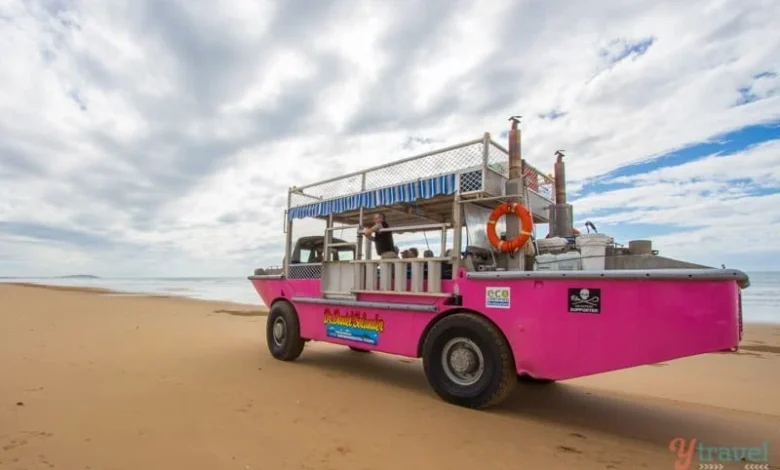
The coastal settlement of the Town of 1770, situated in the Gladstone Region of Queensland, remains a focal point for Australian maritime history and ecological tourism. Central to the region’s identity is the operation of the LARC! amphibious tours, a unique transport and educational service that traverses the remote coastlines of Bustard Bay and the Eurimbula National Park. Utilizing modified military hardware to navigate terrain inaccessible to conventional vehicles, these tours serve as a primary link between contemporary tourism and the preservation of Queensland’s colonial and Indigenous heritage.
Historical Context and Regional Significance
The Town of 1770 holds a distinct position in the chronology of European exploration in Australia. Named after the year of Lieutenant James Cook’s arrival, the area is widely recognized as the site of Cook’s second landing on the Australian continent and his first within the borders of what is now Queensland. On May 24, 1770, Cook and members of the HMS Endeavour crew, including botanist Joseph Banks, landed at Round Hill Creek. This event has led the town to claim the title of the "Birthplace of Queensland."
Before European contact, the region was the ancestral home of the Gooreng Gooreng people, who served as the traditional custodians of the land for thousands of years. The intersection of these two histories—Indigenous heritage and colonial discovery—forms the narrative backbone of the regional tourism industry. Today, the Town of 1770 and its neighbor, Agnes Water, represent the northernmost surf beaches on the Australian east coast and serve as a gateway to the Southern Great Barrier Reef.
The LARC-V: From Military Logistics to Eco-Tourism
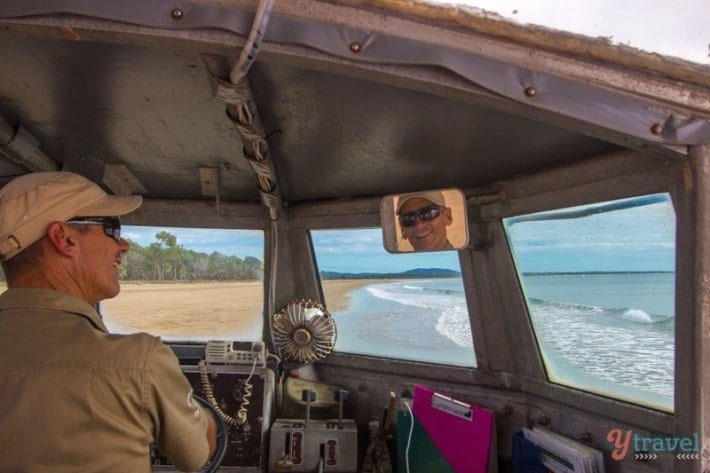
The primary vehicle utilized for these coastal expeditions is the LARC-V (Lighter, Amphibious Resupply, Cargo, 5-ton). Originally developed by the United States in the 1950s and utilized extensively during the Vietnam War, these amphibious vessels were designed to transport cargo from ships at sea across difficult beachheads to inland distribution points.
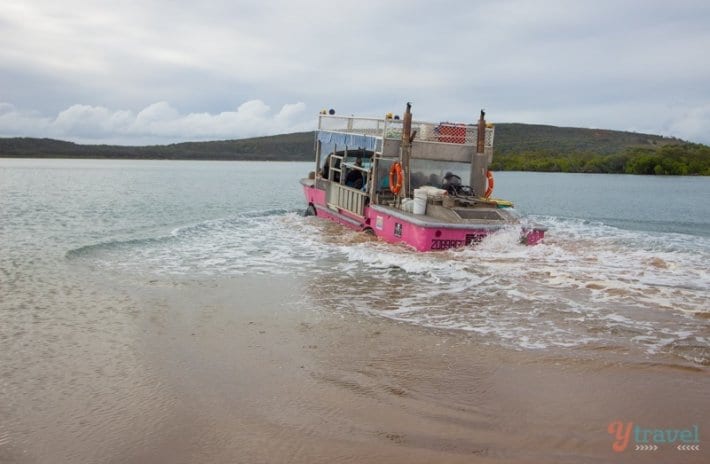
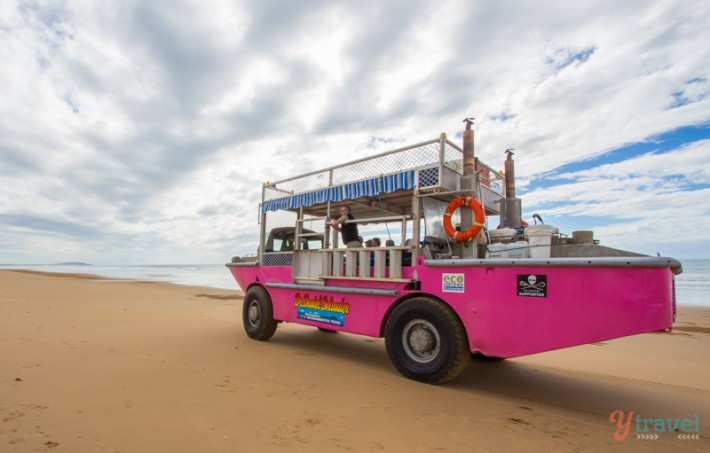
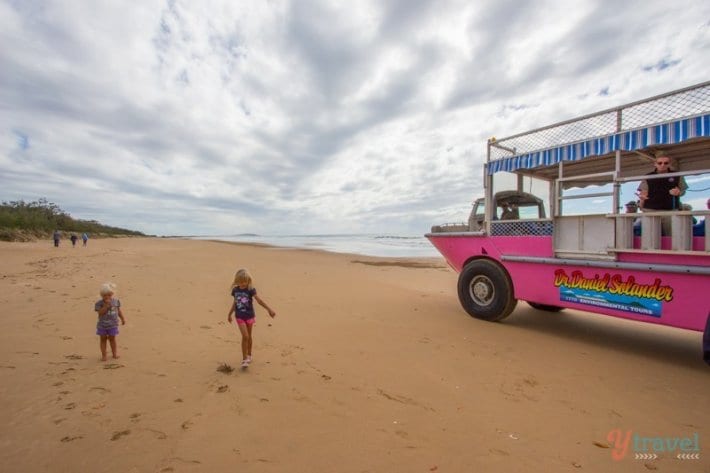
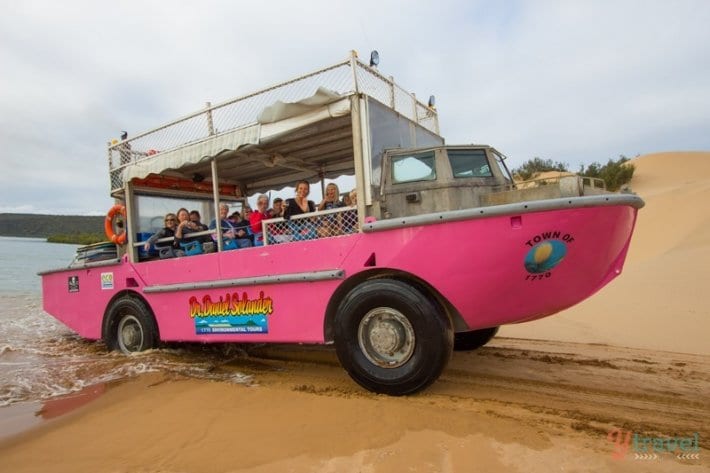
Constructed with an aluminum hull and powered by high-capacity diesel engines, the LARC-V is uniquely suited for the Gladstone Region’s geography. The vessel’s ability to transition seamlessly from maritime navigation to 4WD land travel allows it to cross tidal creeks, navigate mangrove-fringed estuaries, and scale steep sandy inclines. In the context of the Town of 1770, the LARC! vessels have been repainted in a distinctive pink livery, becoming a localized icon. The use of these vehicles is not merely a novelty but a logistical necessity; much of the Eurimbula National Park and the Bustard Headland remains inaccessible to standard four-wheel-drive vehicles due to the shifting sands and deep tidal crossings of Round Hill and Pancake Creeks.
Chronology of the 1770 LARC! Tours Operation
The 1770 LARC! Tours was established in 1994 by the Mergard family. Over the course of three decades, the operation has evolved from a niche transport service into a multi-award-winning tourism enterprise.
- 1994: Inaugural tours commence, focusing on the environmental beauty of Bustard Bay.
- Early 2000s: Expansion of tour offerings to include the "Paradise Tour," a full-day excursion incorporating the Bustard Head Lightstation.
- 2002–2003: Formal partnerships established with the Bustard Head Lighthouse Association to facilitate public access to the historic site.
- 2024: The operation celebrates 30 years of continuous service, maintaining a fleet of four LARC vehicles and contributing significantly to the Gladstone regional economy.
Ecological Exploration of Bustard Bay and Eurimbula National Park
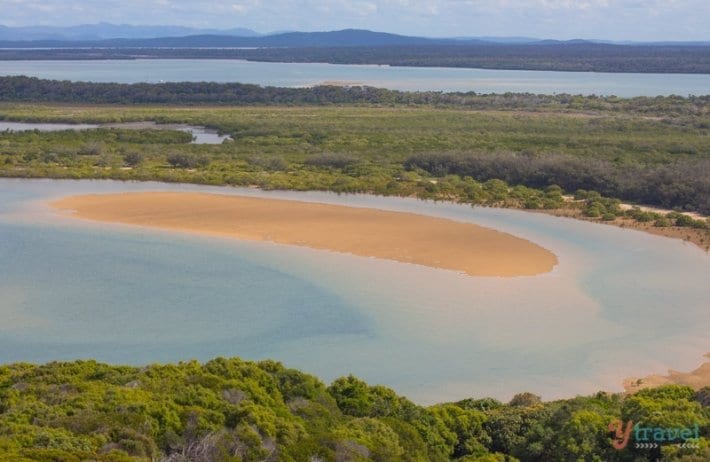
The environmental component of the LARC tours focuses on the biodiversity of the Eurimbula National Park. This protected area encompasses a variety of ecosystems, including coastal dunes, eucalyptus woodlands, and mangrove forests.
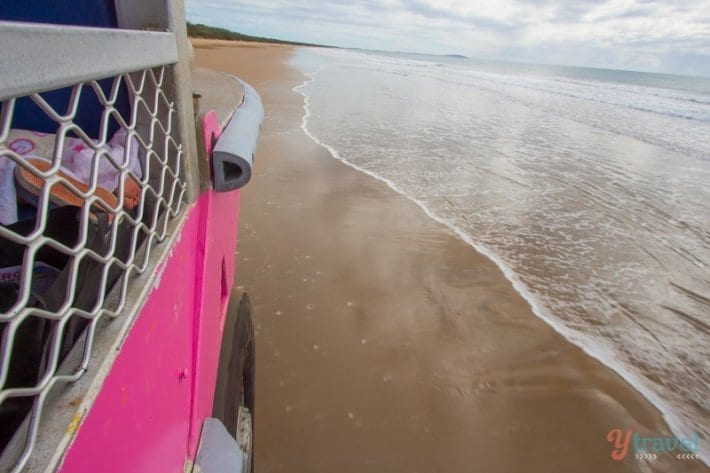
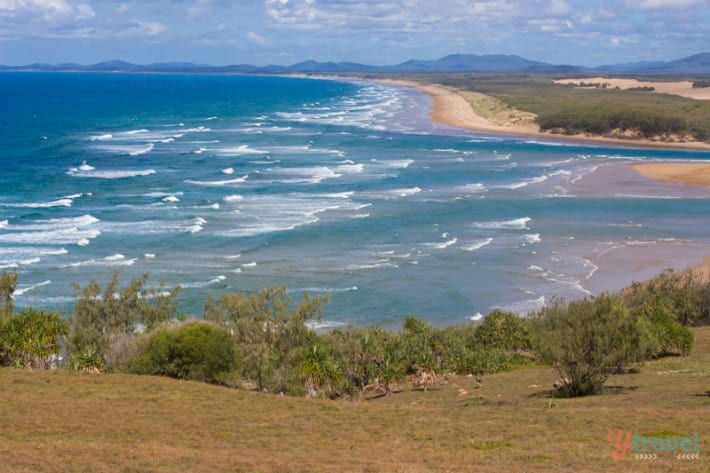
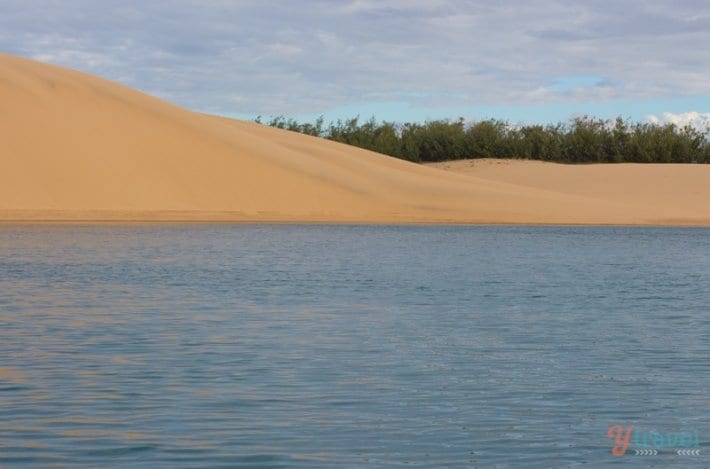
During the transit across Bustard Bay, a 20-kilometer stretch of pristine coastline, the amphibious nature of the tour allows for close-range observation of local fauna. The region is a known habitat for several significant species:

- Avian Life: Sightings often include Brahminy kites, white-bellied sea eagles, and various species of pelicans.
- Marine Life: The tidal flats are populated by vast colonies of soldier crabs, which are known to "march" in large formations during low tide. The estuaries also support populations of green sea turtles and dolphins.
- Flora: The mangroves of the region play a critical role in the coastal ecosystem, acting as nurseries for fish species and providing shoreline stabilization.
The tours operate under strict environmental guidelines to ensure that the passage of the heavy amphibious vehicles does not disrupt the nesting sites of shorebirds or the integrity of the dune systems.
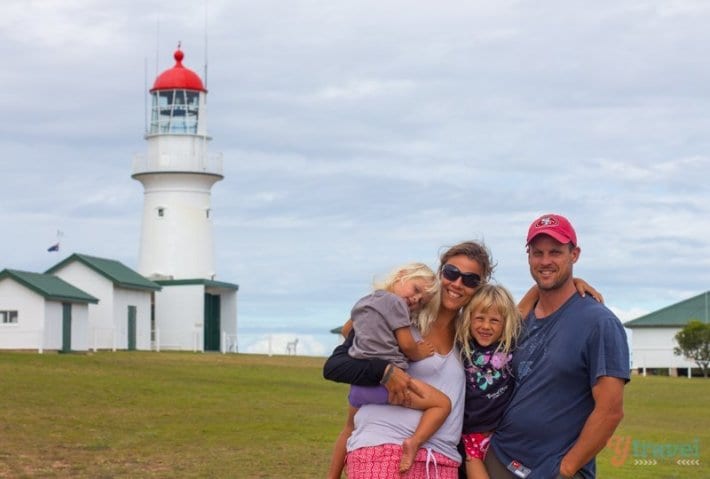
The Bustard Head Lightstation: A Cultural Heritage Pillar
A central feature of the extended LARC expeditions is the visit to the Bustard Head Lightstation. Established in 1868, it was the first coastal lighthouse built in Queensland. The station was essential for navigating the treacherous waters of the Southern Great Barrier Reef, which had claimed numerous vessels during the mid-19th century.
The history of the lightstation is marked by isolation and tragedy, earning it the moniker "The Lighthouse of Tragedy." Historical records and oral histories recounted during the tours detail a series of grim events, including mysterious deaths, drownings, and the social hardships faced by the lighthouse keepers and their families. One notable account involves the disappearance of a lightkeeper’s daughter and a subsequent search that highlighted the extreme remoteness of the station in the 19th century.
The lightstation was automated in 1986, leading to a period of neglect and vandalism of the original dwellings. However, a significant restoration project led by former lightkeeper Stuart Buchanan and the Bustard Head Lighthouse Association has returned the site to its former state. The LARC! Tours hold the exclusive commercial license to transport visitors to the station, providing access to the museum housed in the restored signal station and the lighthouse tower itself. This partnership is a vital component of the site’s ongoing maintenance and financial viability.
Technical Challenges and Maintenance of Amphibious Craft
Maintaining a fleet of vintage military amphibious vehicles presents significant engineering challenges. Operating in a high-salinity maritime environment requires rigorous maintenance protocols to prevent hull corrosion and engine failure. The 1770 LARC! Tours employs specialized mechanics to oversee the daily inspection of the vessels’ seals, hydraulic systems, and 4WD transmissions.
The sustainability of such an operation depends on the availability of parts and specialized knowledge of Cold War-era military engineering. By keeping these vessels operational, the company preserves a piece of functional mechanical history while providing a service that modern civilian vehicles cannot replicate in the specific terrain of Bustard Bay.
Economic and Tourism Impact
The LARC! Tours represent a significant contributor to the tourism economy of the Gladstone Region. According to data from Tourism and Events Queensland, the Southern Great Barrier Reef region attracts hundreds of thousands of domestic and international visitors annually. The presence of a "signature experience" like the LARC! tours acts as a drawcard, encouraging longer stays in the Agnes Water and 1770 area.

The economic ripple effect includes:

- Employment: The operation employs local skippers, guides, and maintenance staff.
- Hospitality: Visitors to the tours provide a steady stream of revenue for local accommodation providers, cafes, and retail outlets.
- Education: The tours provide an outdoor classroom for school groups, focusing on maritime history, geography, and environmental science.
Broader Implications and Future Outlook
The continued success of the 1770 LARC! Tours reflects a broader trend in Australian tourism toward "experiential" and "slow" travel. Rather than high-speed transit, the tours emphasize immersion in the landscape and a deep dive into local history.

As climate change continues to impact coastal geomorphology, the role of amphibious vehicles may become even more relevant. Increasing sea levels and more frequent storm surges can alter sandy coastlines rapidly, making fixed road infrastructure difficult to maintain in remote areas. The flexibility of the LARC! platform ensures that access to sites like Bustard Head can be maintained regardless of minor topographical changes.
In conclusion, the Town of 1770 LARC! Tours serves as more than a recreational attraction. It is a sophisticated logistical operation that bridges the gap between the region’s complex past and its ecologically focused future. By integrating military technology, colonial history, and environmental conservation, the tours provide a comprehensive overview of the factors that have shaped the Queensland coast over the last 250 years. As the operation enters its fourth decade, it remains a testament to the viability of specialized heritage tourism in regional Australia.
Related posts: