San Francisco Bay Area Activists Launch Burma Spring Benefit Film Festival to Support Democracy and Humanitarian Aid in Myanmar

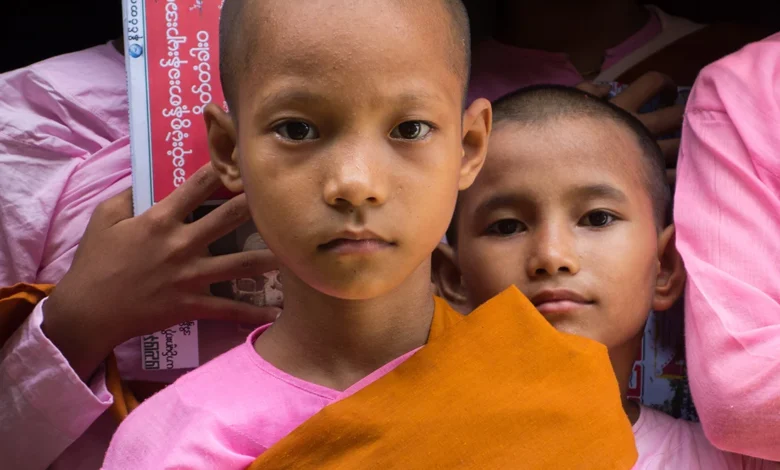
In a powerful convergence of art, activism, and international solidarity, a coalition of San Francisco Bay Area artists and human rights advocates has launched the Burma Spring Benefit Film Festival. This curated event, scheduled to stream online from June 3rd through June 20th, serves as a direct response to the escalating humanitarian and civil rights crisis in Myanmar following the military coup on February 1, 2021. The festival features a comprehensive lineup of more than thirty films, supplemented by live panel discussions with prominent observers, activists, and representatives of Myanmar’s democratic movement. All proceeds from the event are earmarked for grassroots humanitarian organizations currently operating on the ground in Myanmar, providing essential aid to those involved in the non-violent resistance against military rule.
The festival emerges at a critical juncture in Myanmar’s history. Since the military, known as the Tatmadaw, seized power and detained civilian leaders, the nation has been gripped by a widespread Civil Disobedience Movement (CDM) and a subsequent brutal crackdown by security forces. By utilizing the medium of film, the festival organizers aim to amplify the voices of the Burmese people and provide an international platform for stories that are often suppressed by state-sponsored censorship and internet blackouts.
A Cinematic Window into Resistance and Identity
The Burma Spring Benefit Film Festival offers a diverse selection of narratives, ranging from historical documentaries to contemporary dramas. The programming is designed to provide viewers with a nuanced understanding of Myanmar’s complex social landscape, covering themes such as ethnic identity, environmental conservation, Buddhism, LGBTQ+ rights, and the pivotal role of women in the current uprising.
Among the featured works is Burma Spring 21, a collaborative short film that captures the immediate aftermath of the February coup and the emergence of the CDM. Kenneth Wong, a Burmese-American author and language teacher at UC Berkeley who serves on the festival’s organizing team, emphasizes the importance of viewing contemporary works alongside historical documentaries like Burma VJ. The latter documents the 2007 Saffron Revolution led by Buddhist monks, providing a stark contrast between the analog reporting of the past and the digital-age resistance of the present.
The festival also tackles the harrowing reality of ethnic cleansing and systemic oppression. I Am Rohingya: A Genocide in Four Acts features fourteen young refugees who re-enact their families’ experiences during the military-led violence against the Rohingya Muslim minority. Other notable inclusions are The Black Zone, which follows a medical team providing clandestine care in conflict-ridden jungle regions, and A Peaceful Land, a documentary chronicling the resistance of farmers against government land confiscations. These films highlight that while the current coup is a recent flashpoint, the struggle for land rights and ethnic self-determination has been a decades-long battle in Myanmar’s borderlands.
Organizing for a Cause: The Bay Area Connection
The festival is the result of a volunteer effort by a diverse group of experts and filmmakers with deep ties to Myanmar. The organizing committee includes Gaetano Kazuo Maida, executive director of the Buddhist Film Foundation; award-winning filmmaker Ellen Bruno; Jeanne Marie Hallacy, a filmmaker dedicated to refugee youth; Hozan Alan Senauke, abbot of the Berkeley Zen Center; and Gregg Butensky, operations director of Kirana Productions and co-founder of Ethical Traveler.
Maida notes that while many are initially drawn to Myanmar for its rich Buddhist heritage and the architectural wonders of the Bagan valley, the current crisis has forced a deeper engagement with the country’s internal diversity. The festival seeks to honor the many ethnic communities, languages, and creative energies that define the nation. This sentiment is echoed by the broader Bay Area community, which has long served as a hub for Burmese diaspora activity and academic study of Southeast Asian politics.
Chronology of a Crisis: From Election to Coup
To understand the urgency of the festival, one must look at the timeline of events that led to the current state of emergency. On the morning of February 1, 2021, the Tatmadaw arrested State Counsellor Aung San Suu Kyi, President Win Myint, and other senior members of the National League for Democracy (NLD). The coup took place just hours before the newly elected parliament was set to convene.
The military justified its seizure of power by alleging widespread fraud in the November 2020 general elections, in which the NLD won a landslide victory. However, domestic and international election observers maintained there were no significant irregularities that would have affected the outcome. Lee Morgenbesser, an expert on authoritarian politics at Griffith University, describes the coup as a violent termination of Myanmar’s "faulty and fragile" decade-long transition toward democracy.
Since February, the situation has devolved into a cycle of protest and lethal violence. According to data from the Assistance Association for Political Prisoners (AAPP), more than 800 civilians have been killed by security forces, and nearly 12,000 individuals have been arrested, charged, or sentenced. The military has not only targeted political leaders but has also systematically hunted cultural icons, including actors, models, and poets.
The Targeting of the Creative Community
The festival organizers highlight a disturbing trend: the deliberate persecution of artists and intellectuals. Among those detained early in the coup was Min Htin Ko Gyi, the founder of the Human Rights Human Dignity Film Festival. Subsequent arrests have included Zarganar, Myanmar’s most famous comedian; Paing Takhon, a popular model and actor; and dozens of poets.
Kenneth Wong points out that the creative community has been on the frontlines of the resistance. Filmmakers and actors have used their platforms to encourage protesters, often at great personal risk. The junta’s focus on the arts suggests an attempt to break the morale of the movement by silencing its most influential storytellers. More than 100 professionals from the local filmmaking community are currently in hiding or have been targeted for arrest, underscoring the vital importance of international film festivals in preserving their work and continuing their mission.
Discussion Forums and the Milk Tea Alliance
Beyond the screenings, the Burma Spring Benefit Film Festival hosts a series of "Speaker Forums" to analyze the political and humanitarian dimensions of the crisis. These panels feature members of the National Unity Government (NUG)—the parallel government formed by ousted lawmakers—and experts on the "Milk Tea Alliance," a transnational democratic solidarity movement spanning Hong Kong, Taiwan, Thailand, and Myanmar.
One of the most significant shifts noted by the speakers is the growing unity between the Bamar (Burman) majority in urban centers and the various ethnic minority groups in the border regions. For years, ethnic minorities like the Karen, Kachin, and Rohingya endured military atrocities in isolation. However, as urban residents now face the same brutality from the Tatmadaw, a newfound sense of shared struggle has emerged. Panels such as "Ethnic Nationalities and the Rohingya: A Search for Justice and Peace" explore how this unity could form the bedrock of a future federal democracy.
Broader Implications and Humanitarian Outlook
The implications of the crisis extend far beyond the political sphere. The United Nations has warned of a looming economic collapse and a severe food security crisis in Myanmar. The healthcare system, already strained by the COVID-19 pandemic, has largely buckled as medical professionals joined the strike against the military government.
The funds raised by the Burma Spring Benefit Film Festival are intended to address these urgent needs. By supporting grassroots organizations, the festival ensures that aid reaches the most vulnerable populations, including internally displaced persons (IDPs) in ethnic states and those participating in the CDM who have lost their livelihoods.
While the festival is a response to tragedy, it also serves as a celebration of the enduring spirit of the Burmese people. Kenneth Wong expresses a hope that viewers will see Myanmar as more than just a place of conflict. He describes a nation of vibrant teashops, deep literary traditions, and spiritual richness—the country that once inspired George Orwell.
As the international community grapples with how to respond to the junta’s continued defiance of global norms, events like the Burma Spring Benefit Film Festival provide a template for "citizen diplomacy." By combining cultural education with direct humanitarian support, the organizers are offering a lifeline to a movement that refuses to be silenced. The festival stands as a testament to the belief that while the military may control the streets, they cannot control the narrative of a people determined to reclaim their destiny.