The World of Hyatt Loyalty Program Faces Growing Scrutiny Following Ongoing Point Devaluations and Impending Transfer Ratio Changes

The World of Hyatt, long regarded by frequent travelers and travel hackers as the most lucrative and reliable hotel loyalty program in the industry, is facing significant headwinds. With a major impending change to the 1:1 point transfer ratio from the Chase Sapphire Preferred Card scheduled for October 1, travelers are currently navigating a complex landscape of tightening rules, higher pricing tiers, and shifting valuations. The looming deadline has triggered widespread uncertainty among credit card holders, forcing a reevaluation of how transferrable points are utilized across major travel ecosystems.
Background and Context of the Hyatt Devaluation
The foundation of Hyatt’s reputation as a gold standard in hotel loyalty was built on its predictable award chart, relative affordability, and outsized redemption value compared to competitors like Marriott Bonvoy, Hilton Honors, and IHG One Rewards. However, the travel landscape has experienced profound structural shifts over the past few years as hospitality brands grapple with high demand, inflation, and changing consumer habits.

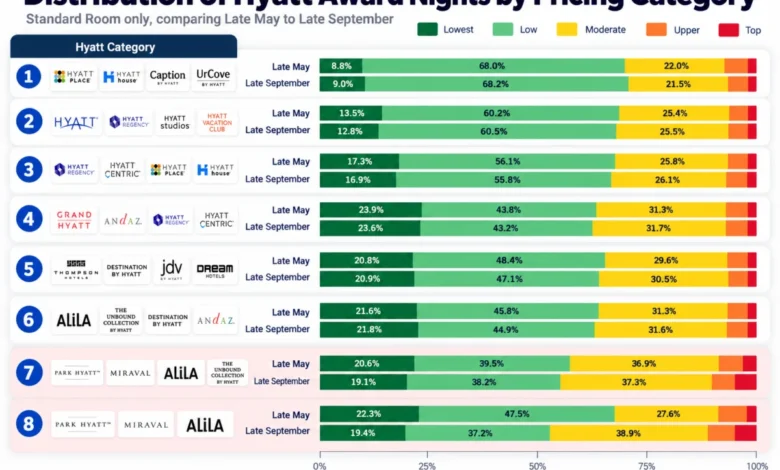
Earlier this year, Hyatt implemented a fundamental restructuring of its reward architecture, moving from a traditional fixed-rate structure to a more dynamic, five-tier award chart. When these changes were initially rolled out in May, hotel executives offered reassurance to loyalty members, indicating that the newly introduced "Upper" and "Top" pricing tiers would be phased in gradually. The stated intention was to cushion the blow for members accustomed to predictable nightly rates.
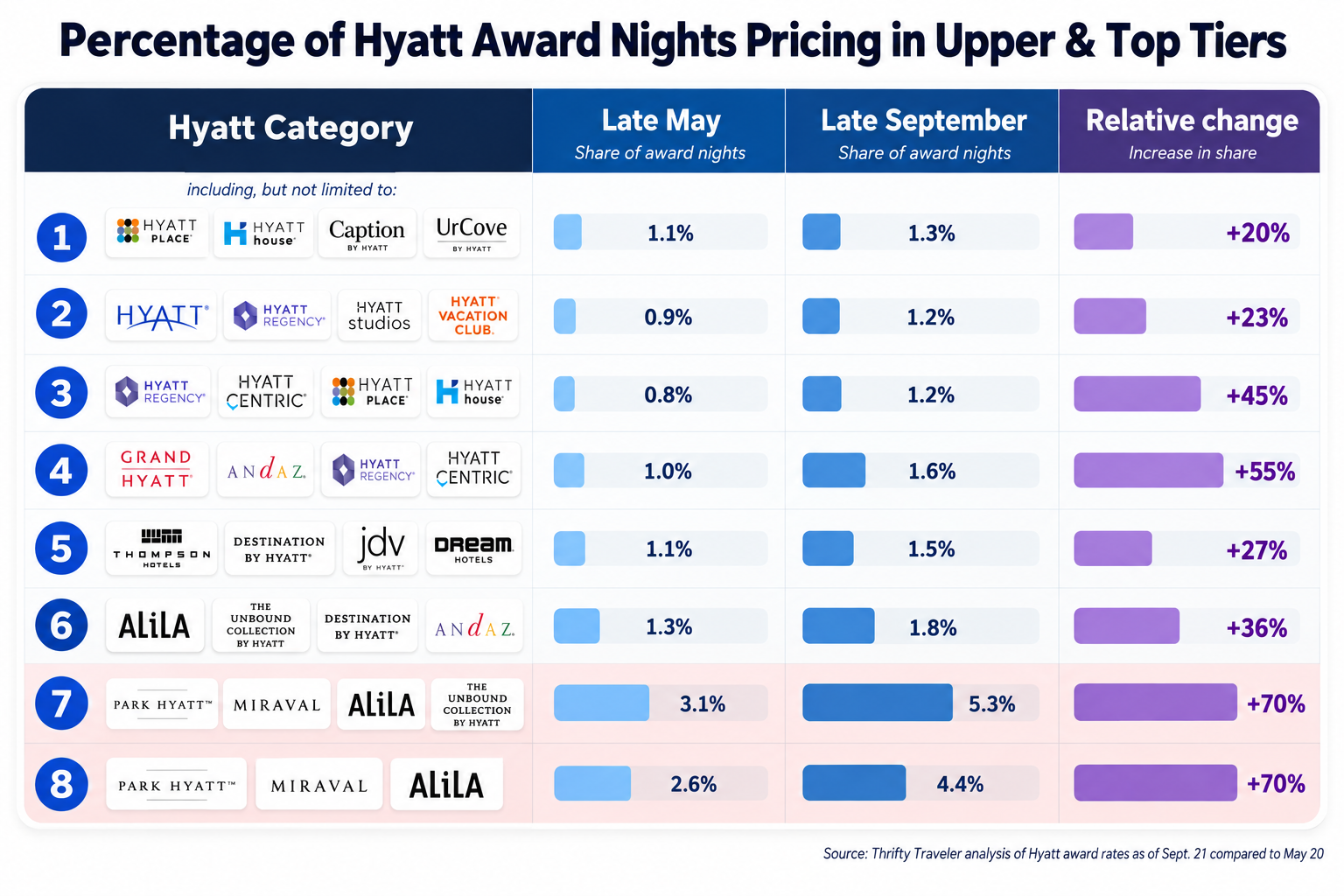
Despite these assurances, subsequent data tracking and portfolio-wide analysis indicate that the transition has accelerated more rapidly than anticipated, leading to an increasing concentration of award nights in higher pricing brackets.
Comprehensive Data Analysis and Portfolio Findings
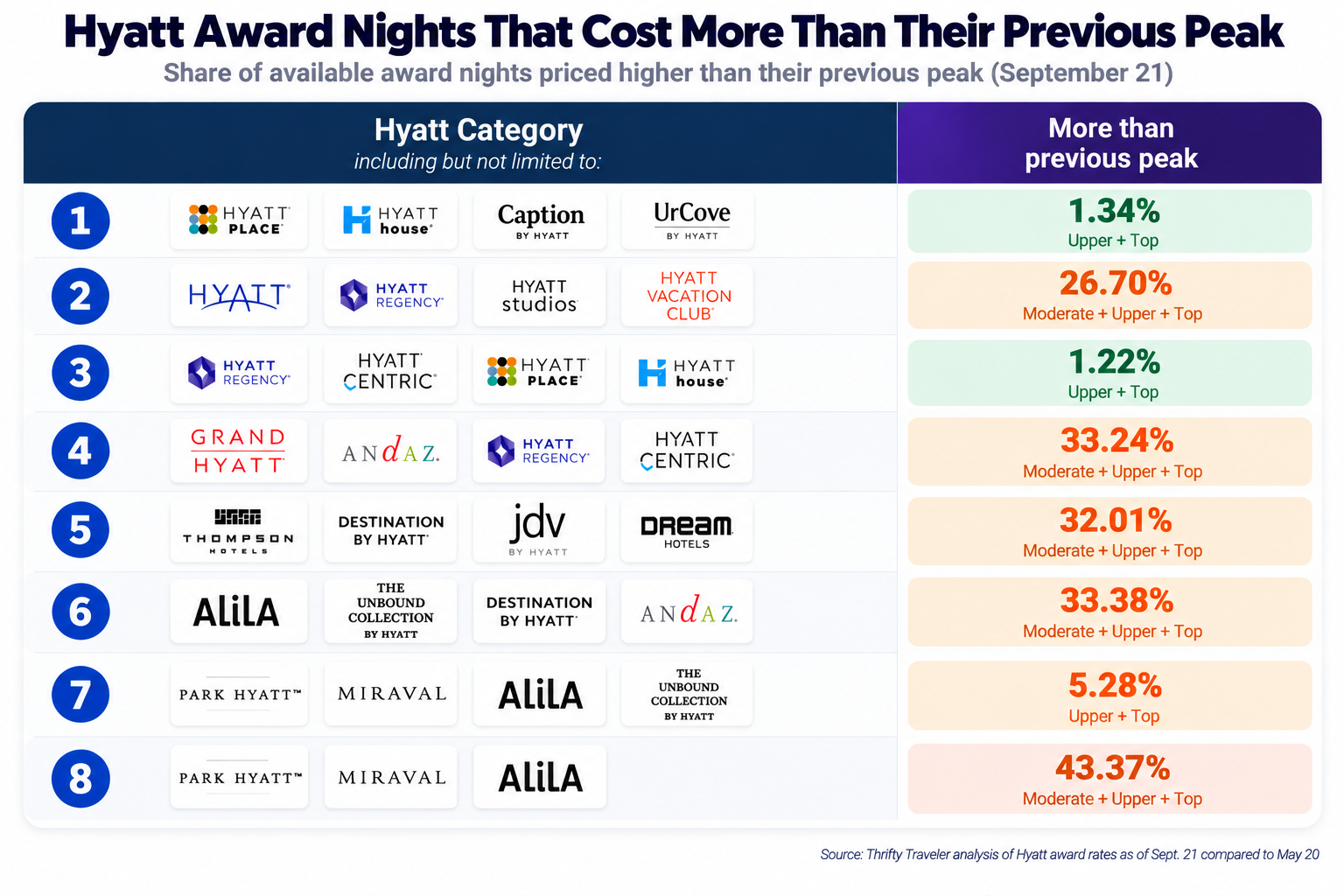
Recent comprehensive studies analyzing nearly 400,000 award nights across more than 1,200 Hyatt properties worldwide provide a clear picture of how the program has evolved since the May rollout. While low-tier redemptions—particularly at Category 1 and Category 2 properties such as Hyatt Place, Hyatt House, and select Hyatt Regency locations—continue to offer reasonable value and occasional price drops, the upper echelons of the portfolio have seen a sharp inflationary trend.
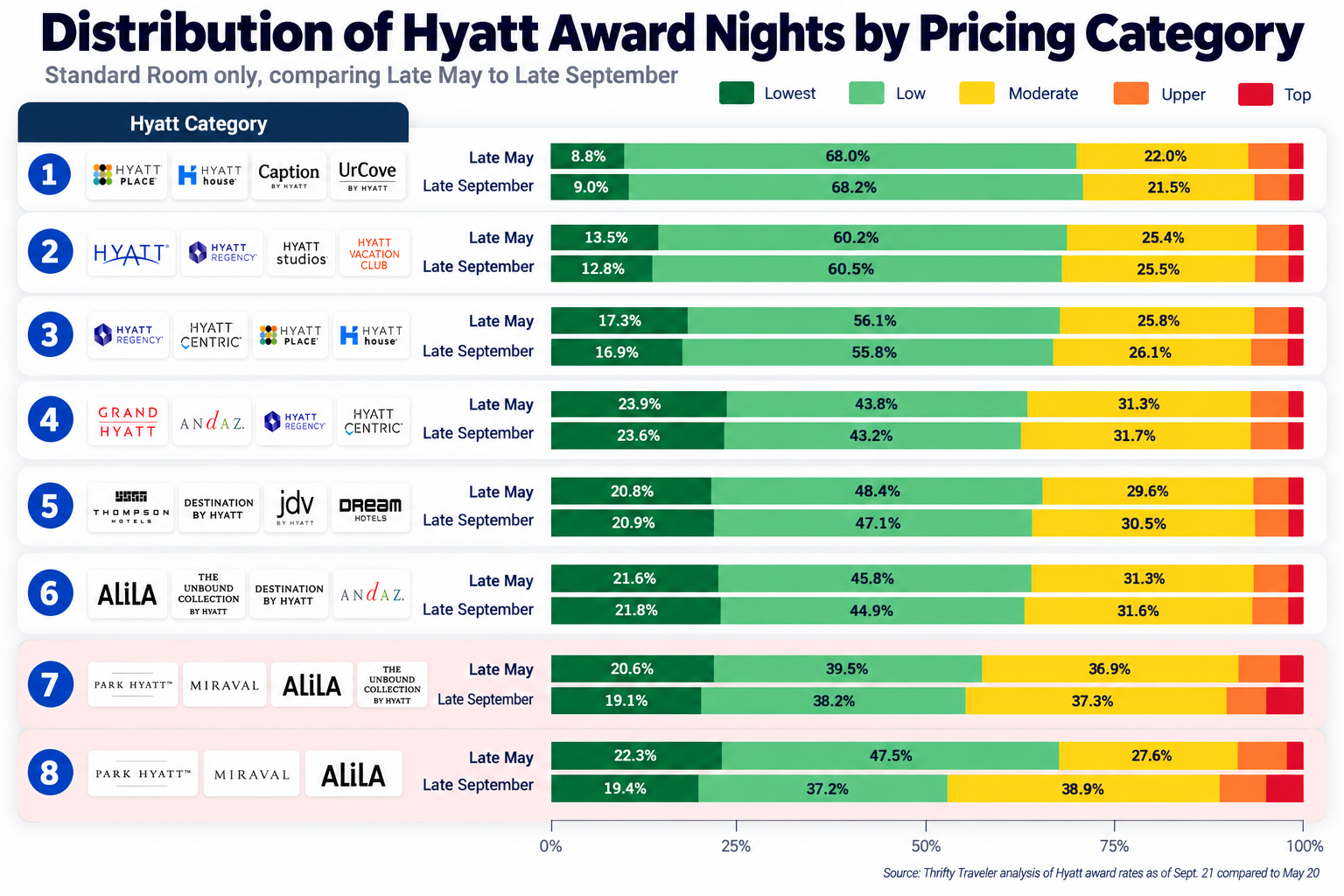
Data covering the peak travel seasons stretching from late spring through early autumn indicates that every single award category has experienced a measurable increase in the frequency of higher pricing rates. Notably, properties situated in the newly minted Category 7 and Category 8 tiers have seen a dramatic shift. More than 43% of all award nights at top-tier Category 8 hotels are now pricing out at 55,000 points or more per night, approaching nearly half of all available dates. This represents a significant jump from the roughly 30% observed when the five-tier chart was first introduced.
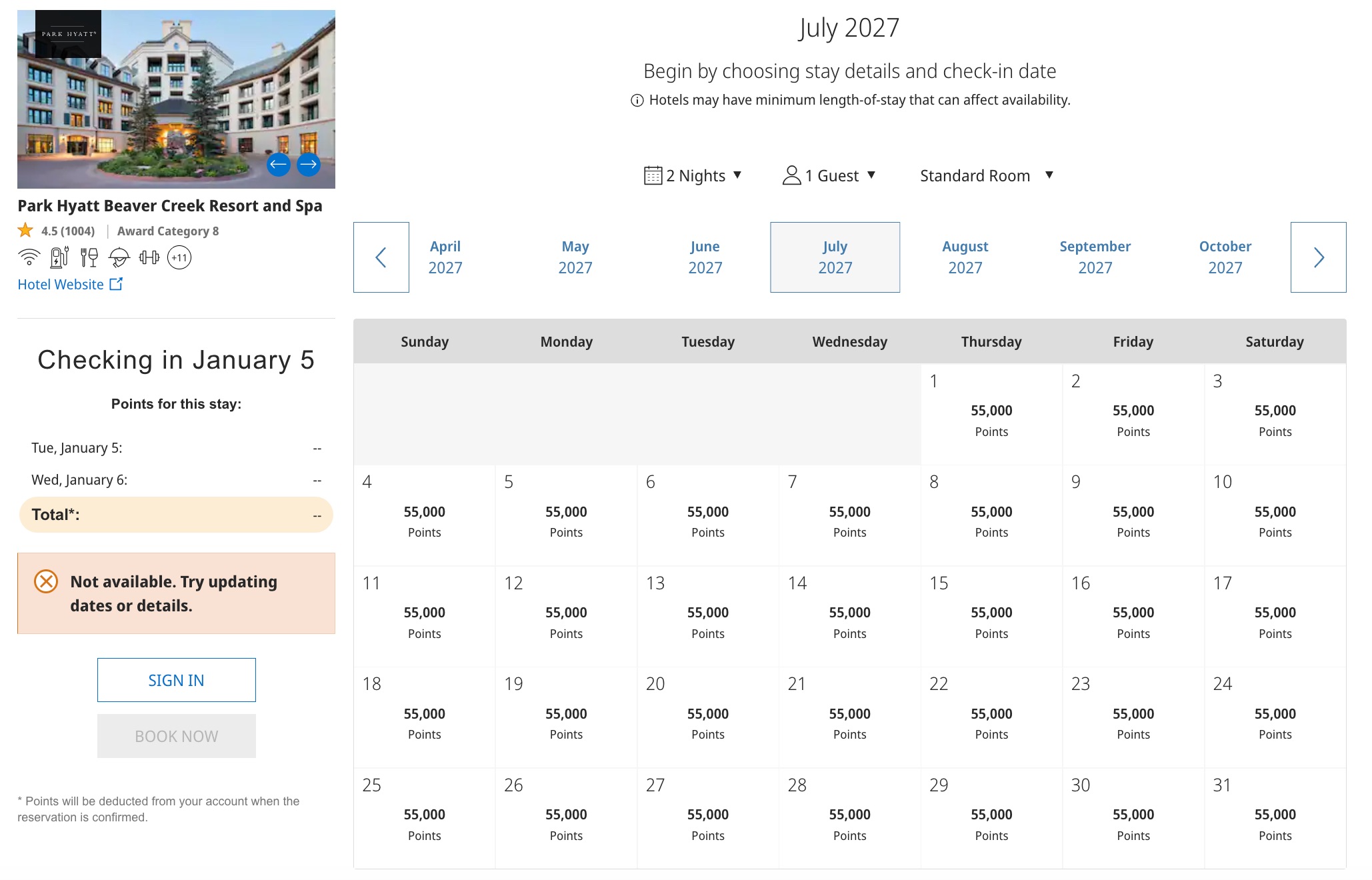
Flagship luxury properties have been particularly impacted. At the Park Hyatt New York, approximately two-thirds of all available award nights now require a minimum of 55,000 points. Similar trends are visible at marquee international and domestic destinations, including the Park Hyatt Beaver Creek Resort & Spa in Colorado, the Park Hyatt Cabo del Sol, the Hyatt Centric Park City, and the Park Hyatt Milan. Even during traditional off-peak windows or summer months, these properties frequently price out at elevated point levels.
Furthermore, a significant portion of award stays falling under Hyatt’s "Moderate" pricing tier now exceed the absolute peak rates charged under the legacy pricing system earlier in the year. For instance, the probability of encountering a Category 8 property pricing in the moderate bracket or higher has more than tripled compared to previous operational periods.
The Impact on Chase Transfer Partners and Credit Card Strategy
The urgency surrounding the World of Hyatt program is heavily compounded by external financial partnerships, most notably with Chase Ultimate Rewards. The Chase Sapphire Preferred Card and the Chase Sapphire Reserve have long served as primary engines for accumulating Hyatt points due to the frictionless 1:1 transfer ratio.
However, upcoming adjustments to the Chase Sapphire Preferred card ecosystem set for October 1 have created a compressed timeline for cardholders. This has sparked intense debate within the travel community regarding whether members should engage in speculative point transfers—moving large balances of flexible Chase points into Hyatt accounts before the rules change—or pivot toward alternative cards and competing loyalty programs.
Financial analysts and travel experts generally advise caution regarding speculative transfers. Moving transferable bank points to a specific hotel or airline program locks those assets into a single ecosystem subject to unilateral devaluations, loss of transfer value, and tightening award availability. Industry consensus suggests that point transfers are most prudently executed when an immediate, confirmed booking is ready to be made, rather than as a protective measure against program degradation.
Award Availability and Market Realities
A common industry justification for implementing higher point prices in loyalty programs is an accompanying expansion in award space. When hotel groups or airlines increase the cost of a redemption, members traditionally expect greater availability, making it easier to book standard rooms during high-demand periods. Similar strategies were observed when Hilton Honors raised its standard award ceilings, scaling costs up to 250,000 points per night in exchange for broader inventory access.
However, data indicates that Hyatt’s increased pricing has not corresponded with a meaningful, portfolio-wide improvement in award availability. While select properties have maintained or slightly improved inventory levels, marquee international destinations have seen the opposite effect. A prominent example is the Park Hyatt Paris-Vendôme, where award availability has tightened noticeably, making it increasingly difficult for members to secure standard room redemptions despite the higher point requirements.
Despite these headwinds, pockets of value remain. Certain international properties continue to offer outsized redemption value relative to their cash rates, shielding point collectors from the worst of the devaluations. However, these sweet spots are becoming harder to identify and secure as dynamic pricing algorithms adjust inventory in real time.
Broader Industry Implications and Future Outlook
The trajectory of the World of Hyatt program reflects a broader, industry-wide trend toward revenue-based loyalty models and dynamic award pricing. As major hotel brands seek to balance operational costs, surging travel demand, and owner profitability, the traditional fixed-value redemption sweet spots that defined the golden age of travel hacking are steadily being phased out.
For consumers, the evolving Hyatt ecosystem underscores the inherent volatility of relying too heavily on a single loyalty currency. While World of Hyatt points still generally outpace the relative value offered by Marriott Bonvoy, Hilton Honors, and IHG One Rewards in standard comparisons, the margin of superiority is narrowing.
As the October 1 deadline approaches for Chase cardholders, travelers are urged to carefully audit their point balances, evaluate upcoming travel itineraries against real-time availability, and prioritize flexibility over brand loyalty. The era of unquestioned, high-value Hyatt redemptions is giving way to a more complex calculus, requiring greater diligence and strategic planning from frequent travelers.
Related posts: