Shadow Over the Wilds: The Battle Over the Johnson Tract Mine Threatens Alaska’s National Parks

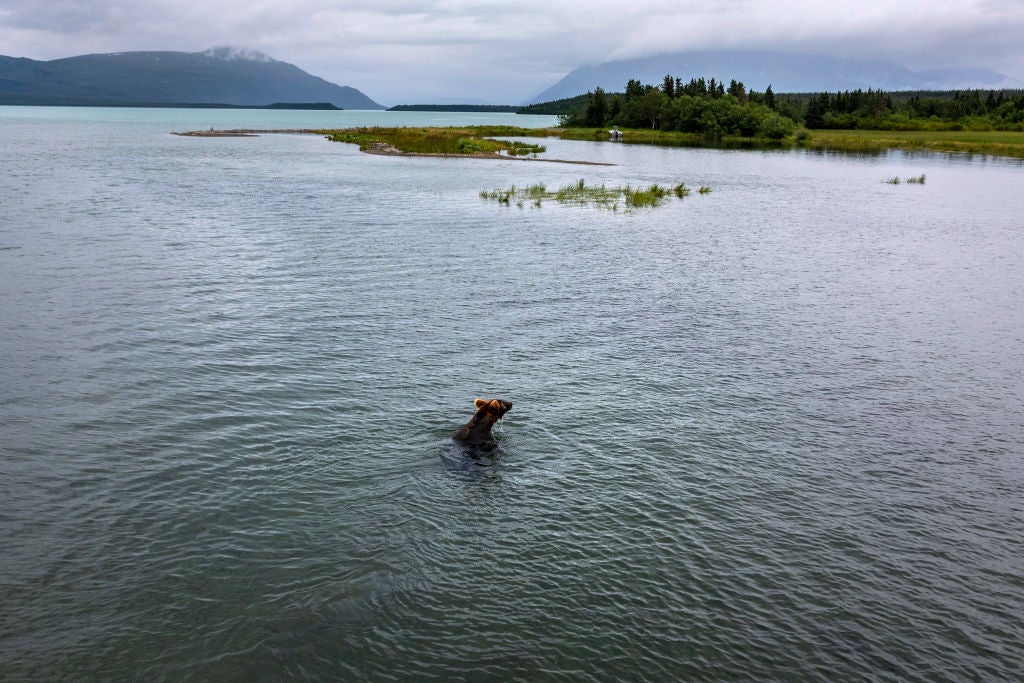
As millions of internet users turn their attention to Katmai National Park and Preserve for the annual celebration of Fat Bear Week 2026—a global phenomenon highlighting the robust health and survival of coastal brown bears—a contrasting reality unfolds roughly 100 miles up the Alaska coastline. Within the boundaries of neighboring Lake Clark National Park and Preserve, a controversial mining project is steadily advancing through the regulatory and judicial systems, setting off alarms among conservationists, local business owners, and wildlife advocates.
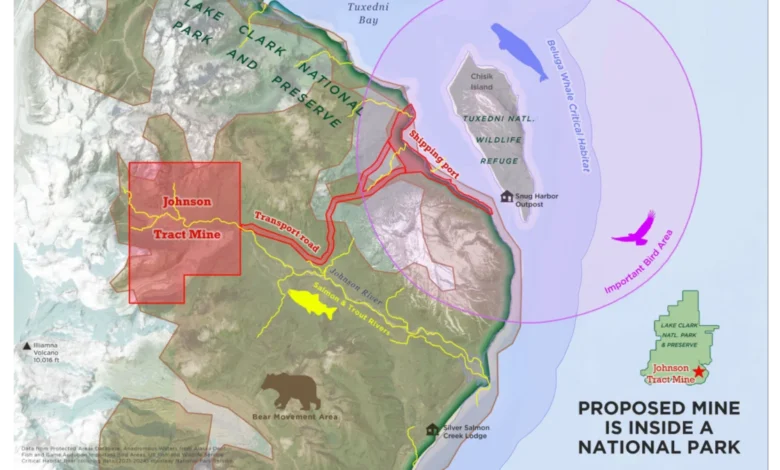
The proposed Johnson Tract mine targets a 21,000-acre private parcel situated deep inside Lake Clark’s federally protected landscape. While the mineral rights are privately owned, transforming the remote prospect into an active, industrial-scale extraction site requires extensive infrastructure development across surrounding public lands. The unfolding conflict represents a high-stakes legal and environmental battleground, testing the boundaries of federal conservation laws enacted more than four decades ago and threatening the ecological integrity of some of the last truly wild ecosystems in North America.
Anatomy of the Johnson Tract Project
The Johnson Tract project centers on an ambitious mining venture aimed at extracting high-grade polymetallic deposits—including gold, silver, copper, zinc, and lead—nestled within the headwaters of the Johnson River. The land itself is owned by Cook Inlet Region Inc. (CIRI), an Alaska Native Regional Corporation established under the Alaska Native Claims Settlement Act (ANCSA) of 1971. CIRI has contracted Fairbanks-based development firm Contango Ore to spearhead the project, with commercial extraction tentatively slated to begin around 2029.
To make the operation economically viable, developers plan to construct a complex logistics network. This infrastructure includes a heavy-haul transportation road cutting through public parklands, a shipping port on Tuxedni Bay to facilitate maritime transport, and the expansion and heavy utilization of an existing airstrip currently restricted to site exploration.
Contango Ore utilizes a specialized operating model already deployed at other high-profile extraction sites across Alaska, such as the Manh Choh mine. Rather than constructing massive ore-processing mills, tailings storage facilities, or dedicated power plants directly at the remote mine site, the company plans to truck raw, unprocessed mined material away from Lake Clark for processing elsewhere. While this strategy reduces the industrial footprint directly at the extraction point, critics argue that the constant convoy of industrial trucks across pristine wilderness corridors introduces severe environmental vulnerabilities.
Historical Roots and the ANILCA Paradox
The legal foundation of the conflict dates back to a complex era of federal land management and indigenous land claims in the 1970s. The private holding came into CIRI’s possession through the Cook Inlet Land Exchange, a government-sanctioned agreement designed to settle regional land entitlements. Crucially, the deal granted CIRI not only surface and subsurface mineral rights on the Johnson Tract but also provisions regarding the negotiation of access across public lands to bring those resources to market.
These arrangements were formally cemented in 1980 with the passage of the landmark Alaska National Interest Lands Conservation Act (ANILCA). Signed into law by President Jimmy Carter, ANILCA resulted in the largest expansion of the National Park System in American history, setting aside roughly 43.5 million acres of public lands to protect Alaska’s distinct ecosystems, wildlife populations, and subsistence resources.
Today, conservation groups point out a fundamental irony within the legislation: Lake Clark National Park and Preserve exists because of ANILCA, yet the very same statutory compromises that allowed for private enclaves within the park’s perimeter now threaten its long-term preservation. Environmental advocates argue that Congress never intended for these historical enclaves to serve as gateways for large-scale, heavy industrial corridors bisecting pristine national park units.
Recent Legal Battles and Judicial Outcomes
The pathway toward commercial extraction cleared a significant hurdle last week when the U.S. District Court for the District of Alaska issued a crucial ruling. The decision dismissed a lawsuit brought forward by the Center for Biological Diversity in 2025, which had challenged permits issued by the U.S. Army Corps of Engineers under Section 404 of the Clean Water Act and the Endangered Species Act (ESA).
The plaintiffs argued that the federal agency failed to conduct an adequate analysis regarding the project’s potential impacts on endangered Cook Inlet beluga whales, particularly concerning marine traffic and acoustic disturbance near Tuxedni Bay. Furthermore, the lawsuit challenged the sufficiency of federal reviews concerning the risks of acid rock drainage and heavy metal contamination in the pristine watersheds of the Johnson River.
Despite these concerns, the federal court ruled in favor of the government and developers, handing a major victory to Contango Ore and its federal regulators.
"This decision protects responsible mineral exploration on private land," stated Principal Deputy Assistant Attorney General Adam Gustafson of the Justice Department’s Energy and Natural Resources Division (ENRD). "The court’s decision reaffirms that federal agencies are entitled to deference when they make scientific and predictive judgments, and it keeps an important Alaska project moving forward."
With the legal challenge dismissed, Contango Ore holds the necessary judicial clearance to proceed with upgrading its airstrip and conducting further exploratory roadwork, though comprehensive permits for full-scale commercial mine construction still require extensive regulatory evaluation.
Environmental Concerns and Local Opposition
While federal attorneys and corporate executives champion the ruling as a validation of rigorous administrative process, local stakeholders and conservation organizations view the impending development with deep apprehension. The primary concerns center on water quality, habitat fragmentation, and the irreversible transformation of a pristine wilderness.
Dorien Coray and her family operate a seasonal bear photography and sportfishing business situated at the mouth of the Johnson River, roughly 12 miles downstream from the proposed mining site. For Coray, the industrialization of the upper watershed poses a direct threat to her livelihood and the surrounding ecosystem.
"I think there’s worry about water quality for the Johnson River itself, obviously. I mean, we’ve got acid rain, acid mine drainage, but also just turbidity," Coray stated in previous interviews with regional media. "I mean, there’s going to be trucks, there’s going to be industrial activity, you know. It’s going to affect the water quality and also the wildlife."
The Johnson River watershed is a vital biological artery, supporting rich runs of Pacific salmon and trout that form the base of the food web for apex predators, including coastal brown bears and bald eagles. Further downstream, the marine environment of Cook Inlet provides critical summer and winter habitat for the critically endangered Cook Inlet beluga whale population, which currently numbers fewer than 350 individuals. Conservationists contend that increased vessel traffic, industrial runoff, and noise pollution associated with the Tuxedni Bay shipping port could push this vulnerable cetacean population closer to extinction.
Broader Implications for the National Park System
Beyond the immediate local footprint in Lake Clark, environmental watchdogs warn that the Johnson Tract project establishes a perilous legal and operational precedent for national parks across Alaska and the broader United States.
Under an Obama-era federal infrastructure initiative known as FAST-41 (Federal Permitting Improvement Steering Council), development projects deemed of strategic economic importance can qualify for expedited federal environmental review processes. Advocates for the project argue that this streamlined approach provides regulatory certainty for private property owners exercising their legal rights. Conversely, groups like the National Parks Conservation Association (NPCA) argue that expediting permits undermines the foundational mandate of the National Park Service: to conserve unimpaired the natural and cultural resources and values of the national park system.
Jen Woolworth, the NPCA Regional Program Manager for Alaska, expressed grave concern over the trajectory of the project following the recent court ruling.
"This would set a terrible precedent for our beloved national parks," Woolworth said in a public statement. "Our national parks were created to protect natural wonders just like this. If we can’t protect Lake Clark, how can we protect its sister park, Katmai?"
Conservation analysts note that if private entities successfully carve out industrial transport corridors and supply chains through the heart of a national park unit, it could encourage similar development proposals on other inholdings throughout Alaska’s vast protected areas. Such a trend could progressively fracture contiguous wilderness tracts, disrupting traditional migration corridors and introducing heavy industrial stressors into ecosystems specifically set aside to remain wild.
Chronology of Key Events
- 1971: Congress passes the Alaska Native Claims Settlement Act (ANCSA), establishing regional corporations and setting the stage for land exchanges.
- 1976: The Cook Inlet Land Exchange is enacted, transferring mineral rights on the Johnson Tract to Cook Inlet Region Inc. (CIRI).
- 1980: Congress passes the Alaska National Interest Lands Conservation Act (ANILCA), significantly expanding the National Park System and formally establishing Lake Clark National Park and Preserve.
- 2025: The Center for Biological Diversity files a federal lawsuit against the U.S. Army Corps of Engineers, challenging permits issued for the Johnson Tract exploration project under the Endangered Species Act and Clean Water Act.
- September 2026: The U.S. District Court for the District of Alaska dismisses the lawsuit, allowing Contango Ore to proceed with access road development and airstrip upgrades as Fat Bear Week gets underway in neighboring Katmai National Park.
- 2029 (Projected): Contango Ore targets the commencement of commercial mineral extraction operations at the site.
Looking Ahead
As regulatory phases continue to unfold, the Johnson Tract mine stands at the intersection of private property rights, historical federal land agreements, and modern environmental conservation. While corporate developers and federal lawyers maintain that the project can proceed under strict scientific oversight without compromising the surrounding environment, local residents and conservation coalitions remain steadfast in their opposition.
For now, as wildlife enthusiasts worldwide celebrate the resilience of Alaska’s thriving brown bear populations during Fat Bear Week, the long-term future of the wilderness just miles away hangs in a delicate balance, carrying profound implications for the sanctity of the American national park system.