Beyond the Postcard: Why Repeat Travelers Are Redefining the Barcelona Experience

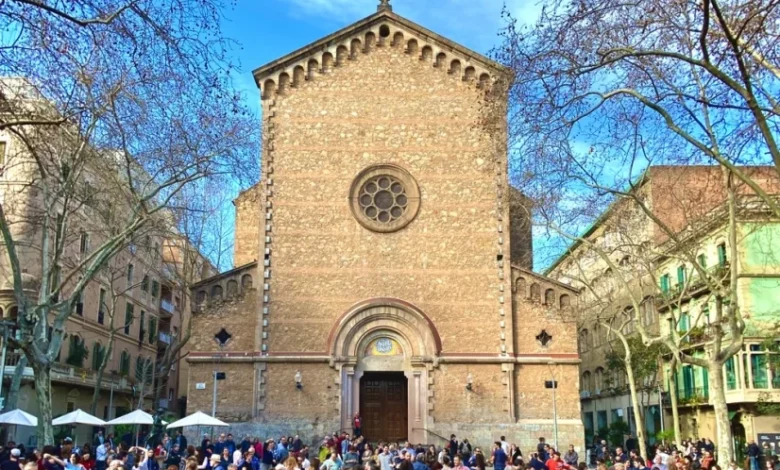
Barcelona remains one of Europe’s most heavily visited urban destinations, welcoming millions of international tourists annually to marvel at Antoni Gaudí’s architectural masterpieces, stroll the historic Gothic Quarter, and navigate the bustling promenades of La Rambla. For first-time visitors, these iconic landmarks form the standard pilgrimage of Catalan tourism. However, as global travel patterns shift toward sustainable tourism and deeper cultural immersion, an increasing number of repeat visitors are bypassing the traditional sightseeing checklist in favor of neighborhood-level exploration, culinary tourism, and regional excursions across Catalonia.
This evolution in travel behavior reflects a broader trend within the European tourism sector. Visitors returning to major cultural hubs are actively seeking alternatives to overcrowded city centers, distributing economic benefits to lesser-known districts, and engaging more authentically with local communities. Rather than repeating the itinerary of their initial journey, veteran travelers to Barcelona are utilizing the city as a gateway to unheralded neighborhoods, specialized gastronomic districts, coastal waters, and nearby wine regions.
The Shift from Mass Tourism to Neighborhood Exploration
The standard initial itinerary for Barcelona typically focuses on a concentrated geographical footprint: the Plaça de Catalunya, the Gothic Quarter, the beachfront of Barceloneta, and select architectural wonders. While these sites hold immense historical and cultural significance, they also generate severe pedestrian congestion and strain municipal infrastructure.

Travel industry analysts note that repeat visitors frequently reject the high-density tourist circuit. By redirecting their focus toward residential and historically working-class districts, these travelers contribute to a more balanced distribution of tourism revenue. This localized approach not only alleviates pressure on the historic core—known locally as Ciutat Vella—but also offers a more nuanced understanding of Barcelona’s complex socio-economic history.
Local tourism boards and urban planners have increasingly encouraged this dispersion, recognizing that neighborhoods outside the immediate center possess rich architectural, culinary, and cultural assets that remain largely insulated from mass tourism.
Uncovering El Raval: History, Diversity, and Contemporary Art
Positioned directly across La Rambla from the Gothic Quarter, El Raval presents a stark contrast to the medieval solemnity of its neighbor. Historically recognized as a working-class enclave and a primary port of entry for generations of migrant communities, El Raval is today one of Barcelona’s most ethnically diverse and culturally dynamic zones.
While the neighborhood retains a raw, unpolished aesthetic that occasionally startles first-time visitors, it operates as a vibrant nexus for independent commerce, avant-garde dining, and street art. El Raval also anchors the city’s modern cultural landscape as the home of the Museu d’Art Contemporani de Barcelona (MACBA). Situated in the expansive Plaça dels Àngels, the museum and its surrounding plaza serve as a popular gathering point for skateboarders and residents, encapsulating the district’s energetic public life. Urban sociologists emphasize that El Raval’s charm lies not in monumental architecture, but in its organic streetscapes and multicultural identity.

Gràcia: Preserving the Village Identity within a Metropolis
North of the city center lies Gràcia, a distinct municipality that maintained its independence until its annexation by Barcelona in 1897. More than a century later, Gràcia retains a palpable village-like atmosphere that sharply distinguishes it from the grid systems and broad avenues of the Eixample district.
Characterized by narrow streets, restricted vehicular traffic, and a network of intimate public squares—such as Plaça del Sol—Gràcia fosters a community-centric lifestyle. The neighborhood is celebrated for its thriving artisan sector, independent bookstores, and local cooperative establishments. For returning travelers, spending an afternoon in Gràcia offers an authentic glimpse into local Catalan daily routines, far removed from the commercialized tourist hubs.
Gastronomic Evolution: Moving Beyond La Boqueria
While the Mercat de Sant Josep de la Boqueria remains a mandatory stop on most initial itineraries, its overwhelming popularity has transformed the historic market primarily into a sightseeing attraction. Consequently, culinary tourists are increasingly turning their attention to alternative municipal markets, most notably the Mercat de Sant Antoni.
Following a comprehensive multi-year restoration project that concluded in 2018, the Mercat de Sant Antoni reopened to showcase its impressive 19th-century iron architecture while modernizing its commercial offerings. Situated in a district less saturated by mass tourism, the market surrounds itself with a dense network of bakeries, traditional Catalan bodegas, and contemporary dining establishments. Furthermore, the Sunday book and collectors’ market held outside the facility draws bibliophiles and local residents, reinforcing the area’s community focus.

Further diversifying the city’s culinary offerings, the Poble Sec neighborhood—specifically Carrer de Blai—has emerged as a premier destination for casual dining. Renowned for its concentration of pintxos bars, where patrons select bite-sized Basque delicacies displayed along counters before moving to the next venue, Poble Sec exemplifies Barcelona’s vibrant social dining culture.
Montjuïc and Poblenou: Green Spaces and Industrial Heritage
Beyond the culinary and architectural appeal of the neighborhoods, repeat travelers are allocating significantly more time to transitional and historical zones such as Montjuïc and Poblenou.
Rising above the southwestern edge of the city, Montjuïc is frequently reduced to a brief cable-car ride for panoramic views. However, the hill contains a complex layered history. At its summit stands Montjuïc Castle, a fortification bearing a somber political legacy as a military prison and execution site during various periods of Spanish history, including the Francoist regime. The area also hosts legacy infrastructure from the 1929 International Exposition and the 1992 Summer Olympics, alongside extensive botanical gardens and forested walking trails that provide respite from the urban density.
In contrast, Poblenou occupies the eastern coastline and represents Barcelona’s industrial past. Once heavily concentrated with textile factories and manufacturing warehouses, the district has undergone significant urban regeneration. Historic industrial structures have been repurposed into design studios, technology incubators, and cultural hubs, coexisting with modern residential developments and quieter stretches of coastline. Guided architectural tours in Poblenou offer valuable context regarding the city’s transition from an industrial powerhouse to a modern knowledge economy.

Expanding the Horizon: Maritime Perspectives and Regional Excursions
For visitors seeking perspectives beyond the urban grid, Barcelona offers substantial opportunities for maritime exploration and regional day trips across Catalonia.
Viewing the city skyline, the Olympic port, and the beaches of Barceloneta from the waters of the Mediterranean provides an essential geographical context that land-based sightseeing often obscures. Numerous maritime operators offer sailing excursions and coastal cruises, appealing to both recreational tourists and those seeking lower-impact, scenic experiences.
Beyond the municipal boundaries, Catalonia’s infrastructure facilitates seamless day excursions. Alella, situated just north of Barcelona between the coastal hills and the Mediterranean, represents one of Spain’s smallest designated wine regions (Denominació d’Origen). Specializing in crisp white wines produced from the local Pansa Blanca grape, Alella offers boutique vineyard tours and tastings within a 30-minute commute of the city center.
For travelers prioritizing architectural and historical depth, high-speed rail and regional transit networks provide rapid access to key Catalan destinations:

- Montserrat: Located approximately one hour inland, this multi-peaked mountain range houses the Santa Maria de Montserrat abbey, a spiritual and cultural epicenter for Catalonia, surrounded by extensive hiking trails and dramatic geological formations.
- Girona: Situated roughly 40 minutes north via high-speed rail, Girona features a well-preserved medieval old town, ancient defensive walls, a prominent cathedral, and the historic Jewish Quarter.
- Sitges: Located down the coast to the south, this seaside town combines coastal promenades, modernist architecture, and a distinct cultural identity developed over decades as an artistic sanctuary.
Economic and Strategic Implications of Repeat Tourism
The diversification of travel itineraries in Barcelona aligns closely with municipal strategies aimed at managing tourism saturation. Local authorities have increasingly emphasized the promotion of decentralized tourism to mitigate the negative impacts of overcrowding in the Ciutat Vella district.
By dispersing visitor spending into peripheral neighborhoods like Gràcia, Sant Antoni, El Raval, and Poblenou, the local economy benefits more equitably, supporting small businesses, family-owned eateries, and cultural institutions outside the traditional tourist core. Furthermore, regional excursions to Alella, Montserrat, Girona, and Sitges distribute economic activity throughout the broader Catalan territory.
Ultimately, travel industry experts emphasize that repeat visitation transforms the nature of tourism in major European metropolises. By moving past the mandatory checklist of monuments, travelers engage in a more sustainable, educational, and culturally resonant form of exploration, proving that a city like Barcelona yields new discoveries long after the initial impressions have faded.
Related posts: