The Evolution of Arctic Logistics
The history of Heebink’s exploration is, in many ways, a history of the evolution of winter survival gear. Arriving in the Yukon from the United States in 1972, Heebink initially viewed the vast, snow-covered interior through the lens of a downhill skier. However, the scarcity of developed alpine slopes forced a pivot toward cross-country and backcountry exploration. His early efforts were characterized by trial and error, a process that necessitated a complete overhaul of traditional wilderness techniques.
In the mid-1970s, the concept of "lightweight" travel was non-existent. During his inaugural long-form expedition in 1975, Heebink and his team faced the brutal reality of deep, uncompacted snow. Lacking modern technical equipment like climbing skins, the group found their heavy skis to be impractical. They were forced to abandon their skis in favor of snowshoes, carrying the dead weight of their equipment for the duration of the trip.
This failure prompted a decade of innovation. By 1977, the group experimented with rudimentary sleds, starting with thin plastic sheets—locally known as "Crazy Carpets"—tethered to backpacks. It was a crude solution that proved unstable in uneven terrain. It was not until 1984, during a 400-kilometer trek from Old Crow to Herschel Island, that Heebink perfected the "pulking" method. By utilizing a chain of three small, connected pulks, he discovered a configuration that resisted flipping and allowed for the transport of supplies that would be impossible to carry in a pack. This shift to manhauling allowed his teams to increase their daily mileage significantly and extended the range of their potential routes.
A Chronology of Exploration
Heebink’s career can be categorized into three distinct eras. The first, from 1972 to 1980, was the "Exploratory Phase," where the primary objective was simply navigating the terrain and refining survival systems. The second, from 1980 to 2000, was the "Range Expansion Phase," where the logistical mastery gained from manhauling allowed for more ambitious, multi-week journeys into remote Arctic corridors. The final phase, from 2000 to 2020, focused on cultural and historical routes, where Heebink often integrated traditional indigenous travel corridors with his own geographical curiosities.
Throughout these years, he maintained a strict policy of autonomy. Every trip was self-supported; there were no supply drops, no satellite support teams, and no commercial guides. This level of self-reliance, while standard for early 20th-century explorers, became increasingly rare in the era of modern high-tech adventure, marking Heebink’s career as a holdover from a more rugged era of exploration.
The Social Dynamics of Isolation
Over the course of 70 expeditions, Heebink was joined by more than 160 companions. Contrary to the high-stakes, high-stress atmosphere often depicted in professional mountaineering, Heebink’s expeditions prioritized camaraderie and psychological endurance over pure speed. Heebink famously eschewed formal screening processes for his team members. His philosophy was simple: if an individual was willing to endure the physical and mental toll of the Arctic winter, they were qualified.
Heebink’s insights into the social psychology of expedition travel are particularly notable. He identified a phenomenon he dubbed "the hate-the-person-in-front syndrome." This condition, common in long-distance ski trekking, occurs when the monotony of single-file travel leads to irrational resentment toward the lead skier. To combat this, Heebink instituted a culture of radical transparency. Any friction, whether regarding route selection or pacing, was addressed immediately. This deliberate focus on interpersonal health allowed his groups to maintain cohesion under conditions that would typically fracture less stable teams.
Wilderness Kitchens and the Dingle Stick
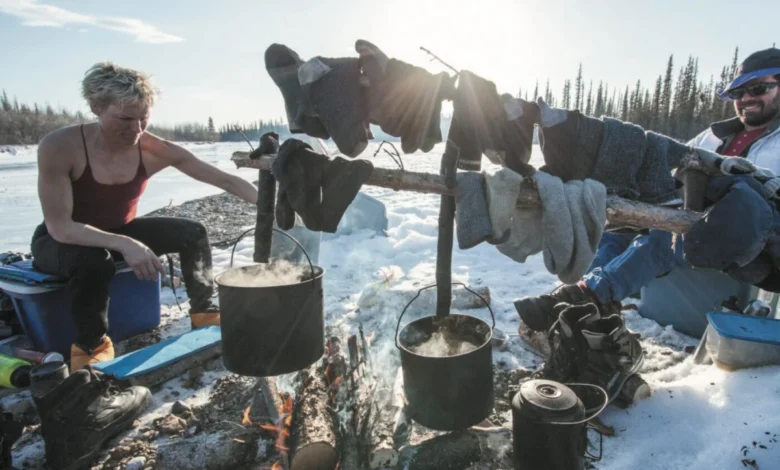
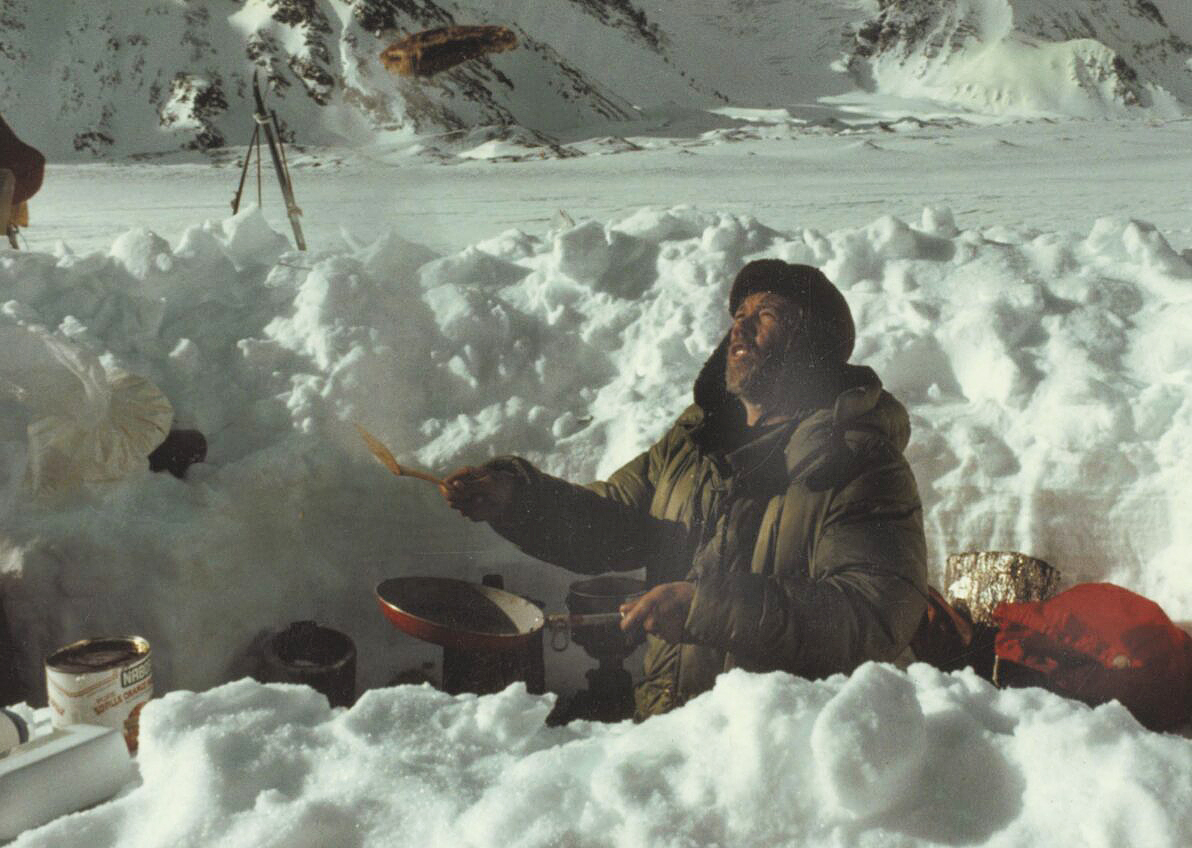
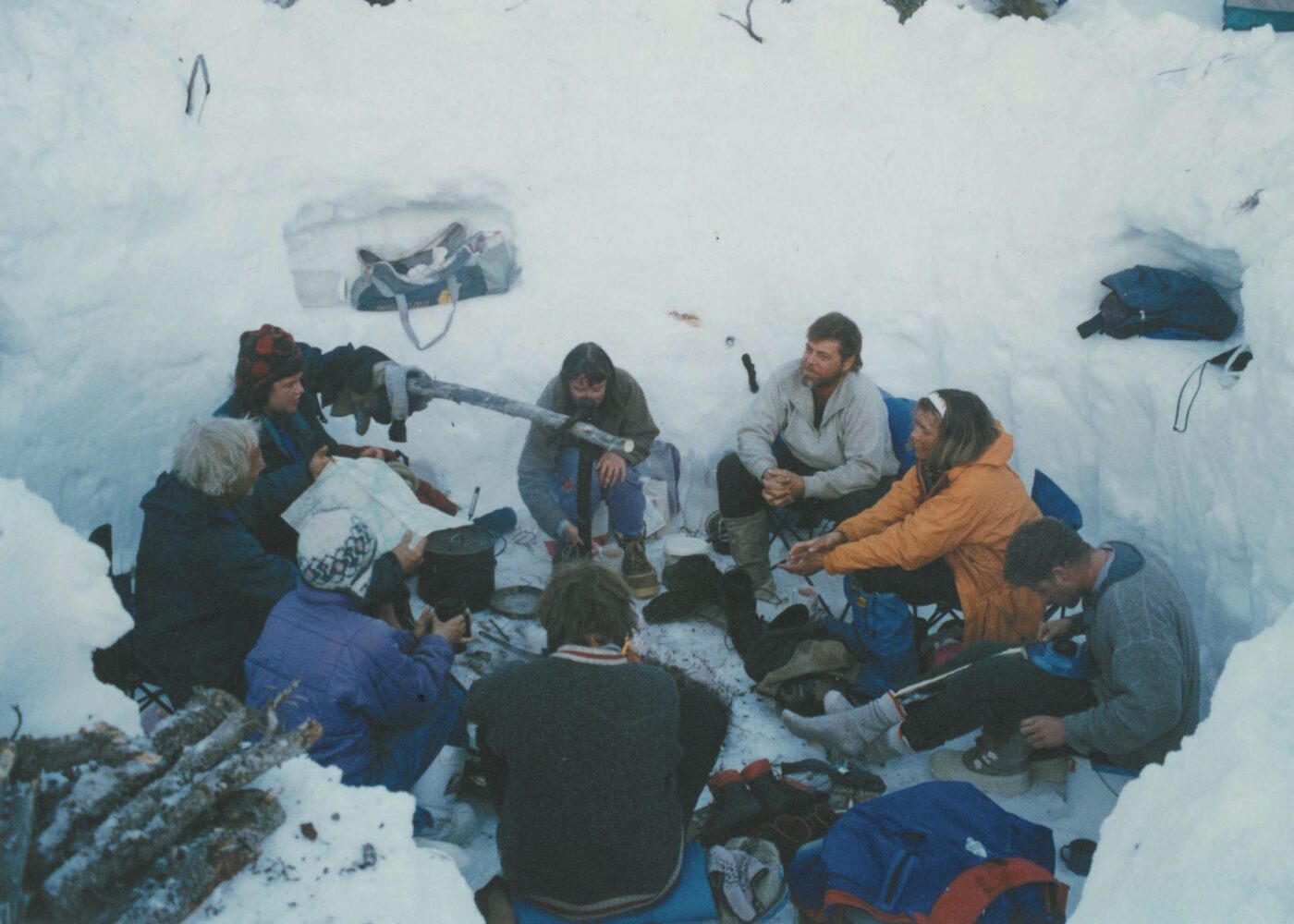
The logistical rigor of Heebink’s camps was matched only by the ritualistic nature of his wilderness kitchen. The group developed a sophisticated method for managing fire in sub-zero environments, which involved excavating pits up to two meters deep to reach the ground. By constructing these pits, they created a wind-shielded environment that allowed for actual heat generation rather than the mere smoldering common to fires built on snow.
Central to this setup was the "dingle stick," a carved piece of wood notched to hold cookware at various distances from the heat source. This simple, effective tool served as the heart of the camp, functioning as a stove, a drying rack, and a social focal point. It was here, over a fire fed by wood harvested from the landscape, that the group would share meals and, inevitably, overproof rum—a staple of every expedition.
Legacy and Broader Impact
While Heebink maintains that his journeys were never intended to be "expeditions" in the professional, record-breaking sense, the sheer scale of his accomplishment is indisputable. His longest recorded journey, spanning 800 kilometers over 35 days, stands as a testament to human endurance.
In the broader context of wilderness conservation and outdoor education, Heebink’s work serves as a record of a changing North. As climate patterns shift and the Arctic environment becomes increasingly volatile, the routes he documented and the techniques he refined provide a valuable baseline for modern researchers and enthusiasts. His decision to document these experiences in his book, Slogging North of 60, ensures that his knowledge—ranging from fire-pit excavation to the psychological management of team dynamics—is preserved for future generations.
Experts in outdoor recreation have noted that Heebink’s legacy lies not in the "conquest" of nature, but in the harmonious integration of the traveler within it. His rejection of commercialism and his focus on the "slow" experience of the Arctic offer a counter-narrative to the modern trend of high-speed, social-media-driven adventure. By prioritizing the quality of the campfire and the company of his peers, Heebink demonstrated that the value of an expedition is often found in the process rather than the destination.
At 83, Heebink continues to venture into the backcountry, though he acknowledges that the era of month-long winter hauls has concluded. His transition from active explorer to chronicler marks the closing of a chapter in Canadian wilderness history. He leaves behind a legacy that challenges the modern obsession with world-firsts and extreme sports, reminding a new generation of adventurers that sometimes the most profound journeys are those undertaken quietly, with a heavy sled, a dingle stick, and a trusted group of friends.
Related posts: