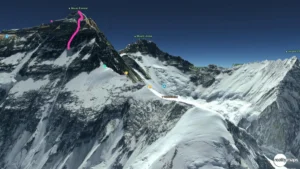
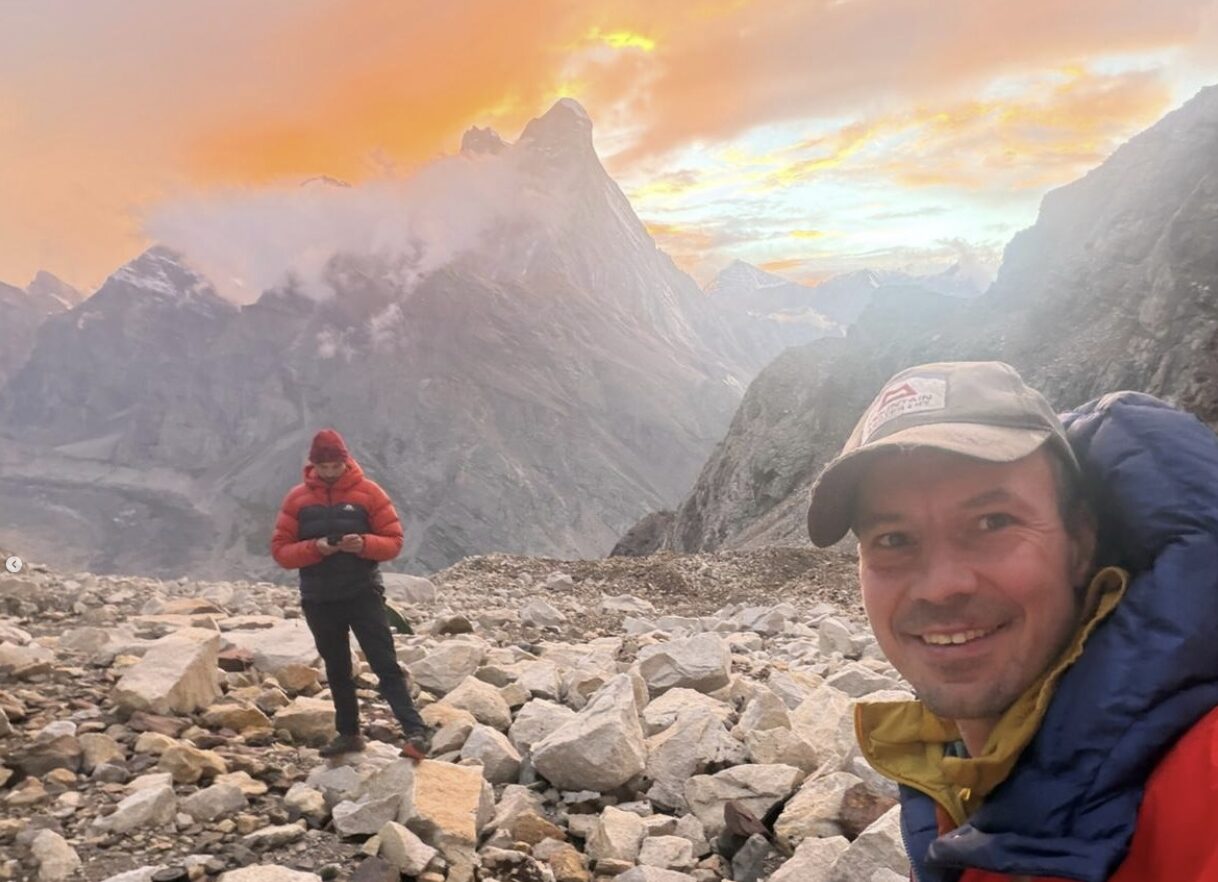
High-altitude mountaineering in India’s Garhwal Himalaya is often defined as much by the bureaucratic and environmental hurdles as by the vertical challenges of the terrain. A four-man expedition, comprising Slovakian climbers Martin Krasnansky, Tomas Bcek, and Michal Mikusinec, alongside Czech alpinist Pavel Nesvadba, is currently preparing for a definitive summit push on the 6,454-meter peak of Baghirathi III. Their objective is to complete a free ascent of the challenging Stairway to Heaven route, which traverses the mountain’s formidable Southwest Pillar.
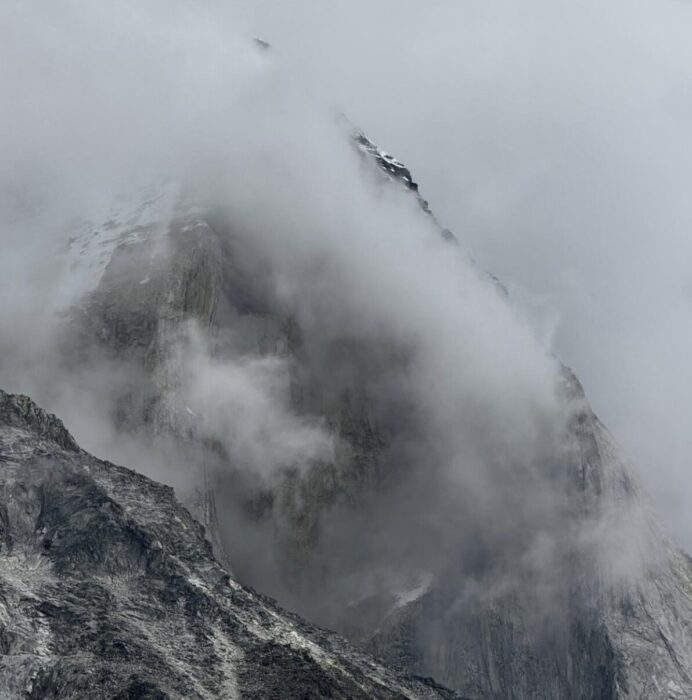
The Baghirathi massif, located in the Gangotri region of Uttarakhand, is a collection of three distinct granite peaks that have long served as a testing ground for elite alpinists. Baghirathi III, while not the highest of the trio, is widely considered the most aesthetic and technically demanding, characterized by massive, near-vertical granite walls that reach toward the clouds.
A Challenging Start and Forced Retreat
The expedition’s journey began with a series of atmospheric and logistical complications. Upon establishing their initial Camp 1 at an altitude of 5,400 meters, the team was met with severe weather. A heavy, relentless downpour subjected the base camp to hazardous conditions, including frequent rockfall, which forced the climbers to relocate their camp to a lower, safer position in the valley.
The ensuing days brought no respite from the weather, forcing the team to make the difficult decision to withdraw to the village of Gangotri. This 24-kilometer trek back to civilization provided a necessary, if unwelcome, period of recovery. During this three-day hiatus, the climbers sought to dry their saturated gear and recover from upper respiratory ailments, including colds and sinus congestion, that had been exacerbated by the high-altitude dampness and physical strain of the initial scouting phase.
Logistical Constraints in the Indian Himalaya
The team’s experience highlights the growing complexities of operating in the Indian Himalaya. Communication is a persistent challenge for modern expeditions in the region; cellphone coverage is nonexistent in the remote high-altitude valleys, and the Indian government maintains strict regulations regarding satellite communication technology. The use of devices such as Garmin InReach or standard satellite phones—often considered essential safety equipment in other mountain ranges like the Karakoram or the Andes—is currently restricted or forbidden in many parts of India.
These regulations create a “blackout” effect for teams on the mountain, limiting their ability to receive real-time meteorological data or coordinate emergency evacuations. The necessity of physical endurance and self-reliance is therefore magnified, as the climbers must rely on their own assessments and the guidance of local support teams waiting at base camp. In this instance, Zolo Demjan, an experienced climber, is stationed at the base camp to provide logistical support and act as a liaison during the team’s absence from the high mountain.
The Technical Challenge: Water Scarcity
The Stairway to Heaven route is a 900-meter vertical ascent that presents a significant physiological challenge beyond the technical climbing difficulty. The team has noted that the entire face is comprised of dry, high-quality granite with a total absence of snow or ice features that would typically serve as a water source for high-altitude climbers.
In traditional alpine-style climbing, melting snow is the primary method for maintaining hydration during a multi-day push. Because this route lacks such resources, the team must adopt a "heavy-load" strategy, carrying all required water from the base of the route to the summit. This added weight significantly alters the climber’s center of gravity and increases the metabolic cost of every movement, particularly on the more technical sections of the pillar. The logistical requirement to haul several liters of water up a 900-meter face adds a layer of complexity that is rarely encountered on ice-heavy Himalayan routes.
Chronology of the Expedition
The following timeline details the progression of the Czech-Slovak expedition:
- Early September: Arrival in the Gangotri region and initial reconnaissance of the Southwest Pillar.
- Mid-September: Establishment of Camp 1 at 5,400 meters.
- Late September: Severe weather triggers rockfall; the team retreats to the valley floor.
- Late September (3-day window): Withdrawal to Gangotri village to recover from illness and dry out technical equipment.
- Late September (Sunday): Resumption of the approach with an improved weather window.
- Current status: Final preparations for the summit push, with the team aiming to begin the ascent on Tuesday.
Cultural and Spiritual Integration
Before returning to the mountain, the team engaged in a traditional Puja ceremony in Gangotri. This ritual, presided over by a local priest, is a cultural cornerstone of Himalayan expeditions, intended to seek the blessings and protection of the mountain deities. For the international climbing community, these ceremonies serve as an acknowledgment of the local culture and the respect due to the peaks, which are often held in high spiritual regard by the people of the Garhwal region. The climbers participated in the ceremony, receiving traditional bead necklaces as a symbol of their safe passage.
Analysis of Implications for High-Altitude Alpinism
The attempt on Baghirathi III is emblematic of a shift in elite mountaineering toward "pure" free-climbing objectives. By eschewing fixed ropes and prioritizing a continuous, fluid ascent, the team is looking to push the boundaries of what is possible on technical granite in a high-altitude environment.
The implications of this expedition extend beyond the individual athletic achievement. The success of a four-man team on such a route would provide valuable data on the viability of lightweight, self-sufficient tactics in the Garhwal Himalaya. Furthermore, the team’s adherence to local regulations and their integration with local customs underscores the importance of diplomatic relations in mountaineering. As access to various peaks becomes increasingly regulated globally, the ability of climbers to operate within local frameworks while maintaining high standards of safety and ethics remains a critical topic of discussion within the International Mountaineering and Climbing Federation (UIAA) and other governing bodies.
Future Outlook and Weather Prospects
The team reports that the meteorological forecast has improved significantly as they approach their mid-week summit window. Having already established their supply caches at the base of the route, the climbers are well-positioned to make an efficient start. Their primary objective remains the completion of the 900-meter pillar in a single, sustained push, provided their health holds and the conditions on the rock face remain stable.
As of the latest reports, the team expressed cautious optimism. The physical toll of the initial retreat, combined with the extreme demands of carrying a multi-day water supply, will test their endurance throughout the coming days. If successful, the ascent of the Stairway to Heaven will mark a significant milestone for the Slovak-Czech team, further cementing their reputation in the niche, high-stakes world of technical Himalayan mountaineering. The international community, currently deprived of the real-time tracking data typically available via satellite devices, awaits word of their success upon their return to the lower elevations of the Gangotri valley.