Federal Court Temporarily Blocks Bureau of Land Management Order to Remove Nearly 1,000 Bison from Montana’s American Prairie

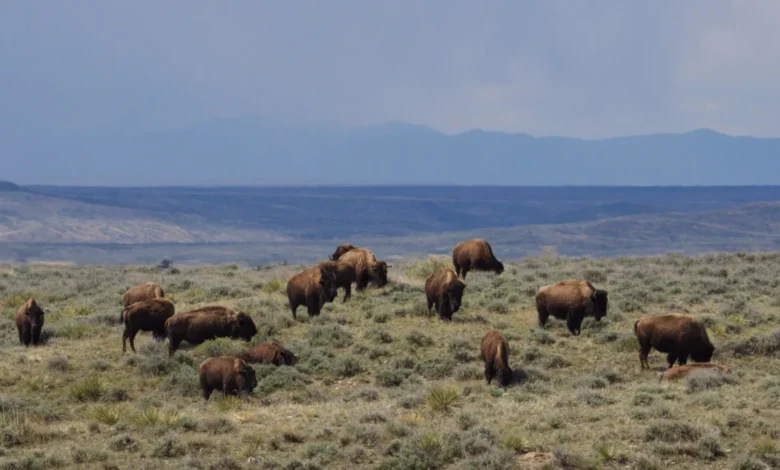
A federal judge has issued a preliminary injunction temporarily halting a Bureau of Land Management (BLM) directive that sought to compel the removal of nearly 1,000 bison from public grazing leases in Montana. The ruling, delivered by U.S. District Court Judge Brian Morris, provides immediate relief to the nonprofit conservation organization American Prairie, preventing an enforcement deadline that would have required the mass removal or culling of the herd by September 30.
The legal battle centers on the interpretation of federal public land laws, specifically the Taylor Grazing Act of 1934, and highlights the ongoing friction between ecological restoration initiatives and traditional agricultural interests in the American West. While the court’s decision ensures that the bison can remain on their established grazing allotments while the litigation proceeds, the underlying dispute underscores deep-seated disagreements regarding how public lands should be managed, who qualifies for grazing permits, and what role native wildlife should play in modern conservation.
Origins of the Conflict and the Taylor Grazing Act
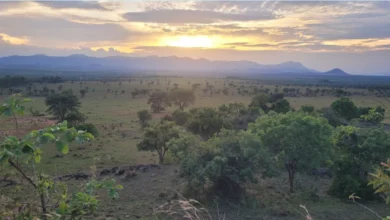
The genesis of the current legal challenge dates back to May 2026, when the BLM issued an administrative order directing American Prairie to remove its bison herd from public grazing allotments located within the organization’s sprawling 600,000-acre preserve in Montana. The preserve spans a mix of private deeded lands and public grazing leases across the state’s shortgrass prairie, serving as a hub for public recreation, including hiking, wildlife-watching, and camping.
The BLM’s removal order was rooted in a distinct policy shift regarding the interpretation of the Taylor Grazing Act. Originally enacted to halt injury to the public grazing lands by preventing overgrazing and soil deterioration, the statute authorizes the Department of the Interior to issue permits for livestock grazing on public domains. However, the BLM’s recent regulatory reinterpretation sought to narrowly redefine "livestock" to mean animals explicitly utilized for "production-oriented" purposes—specifically, generating marketable commodities such as meat, milk, or fiber, or assisting directly in the management of production animals, such as horses used by cattle ranchers.
Under this narrower definition, conservation-focused bison herds managed primarily for ecological restoration, biodiversity enhancement, and cultural preservation fell outside the agency’s acceptable parameters for public land grazing permits, triggering the administrative revocation.
Judicial Rejection of the BLM’s Reinterpretation
In his decisive preliminary injunction, Judge Morris firmly rejected the agency’s narrow reading of the statute, questioning both its legal grounding and its disregard of historical precedent.
“No statutory language or judicial precedent exists that requires a livestock operation to focus exclusively on production and entirely ignore conservation, range improvement, preservation, or other values,” Judge Morris stated in his written decision. He further emphasized that legislative intent has long accommodated multiple uses of public rangelands: “Congress recognized livestock grazing and livestock management often includes and considers preservation, improvement, and thoughtful development, hand-in-hand with other uses.”
Furthermore, the court expressed skepticism regarding the procedural integrity of the BLM’s decision-making process. Judge Morris noted that he struggled to see how the agency could justify imposing a sweeping new regulation while seemingly ignoring comprehensive scientific evidence submitted by American Prairie regarding the ecological benefits of bison grazing on the same parcels.
Timeline of Events and Escalation
The conflict over American Prairie’s bison permits has unfolded through a series of significant regulatory, ecological, and legal milestones over the past two decades:
- 2005: The BLM initially grants grazing permits to American Prairie, authorizing bison to graze on designated public allotments within the Montana shortgrass prairie without generating major administrative conflicts or grazing violations.
- 2022: The BLM completes a comprehensive environmental assessment and formally concludes that bison grazing on these specific federal lands actively improves rangeland productivity, watershed health, and riparian conditions.
- January 2026: Tribal leaders step into the debate. J. Garret Renville, chairman of the Coalition of Large Tribes and Sisseton-Wahpeton Oyate of the Lake Traverse Reservation, pens a letter to the Secretary of the Interior defending American Prairie. Renville points out that the organization works collaboratively with Native American tribes seeking to establish and expand their own bison herds, utilizing management techniques that closely mirror traditional tribal practices.
- May 2026: The BLM reverses its course from previous assessments, issuing an order to revoke the grazing permits based on the reinterpretation of the Taylor Grazing Act. American Prairie representatives warn that the mandate threatens the survival of hundreds of animals and forces the cancellation of the organization’s planned 2026 public bison harvest.
- September 9, 2026: U.S. District Court Judge Brian Morris grants a preliminary injunction, halting the BLM’s September 30 removal deadline and allowing the bison to remain on three active federal allotments while the lawsuit moves forward.
Stakeholder Perspectives and Regional Divide
The legal dispute reflects a stark ideological divide in Montana between agricultural advocacy groups and conservation organizations, with tribal nations also playing a prominent role in advocating for the preservation of the herds.
Local ranching interests and agricultural trade associations, most notably the Montana Stockgrowers Association, have historically voiced strong support for the permit revocations. Ranchers frequently express concern that large-scale bison conservation initiatives on public lands could interfere with traditional cattle operations, introduce competition for limited forage, or complicate disease management protocols, such as monitoring for brucellosis. For legacy ranching communities, maintaining strict regulatory definitions that prioritize commercial livestock production is viewed as essential to protecting the economic viability of the state’s cattle industry.
Conversely, conservationists and tribal partners view the return of bison as a vital ecological and cultural imperative. Alison Fox, CEO of American Prairie, emphasized the historical legitimacy of the herd following the court’s ruling. “Bison belong on this landscape, and today’s ruling gives them a chance to stay,” Fox said. “For more than 20 years, our bison have grazed these lands under federal authorization and without grazing violations. The court recognized the concrete harm that removing them would cause, not just to our work, but to our Tribal partners and the broader effort to return bison to their native home.”
Beth Saboe, American Prairie’s director of public relations, previously highlighted the existential threat the removal order posed to the organization’s operations. Beyond the heavy financial toll of relocating or culling a significant portion of the herd, Saboe noted that stripping the landscape of a foundational keystone species would undermine decades of restoration work.
Ecological Implications: Bison Versus Cattle on Native Grasslands
At the heart of the scientific debate are the fundamentally different ways that bison and cattle interact with prairie ecosystems.
Bison are native ungulates that co-evolved with the North American shortgrass prairie over thousands of years. Behavioral studies indicate that bison graze more continuously and gradually across the landscape, frequently traveling up to two to three miles per day. This nomadic grazing pattern prevents over-utilization of localized forage, distributes organic fertilizer more evenly, and stimulates native plant root growth. Research published in prominent scientific journals has demonstrated that these natural grazing behaviors can significantly enhance overall biodiversity, soil health, and drought resilience on native grasslands.
In contrast, domestic cattle tend to exhibit more localized grazing habits, often lingering and heavily grazing specific riparian zones or small pastures before being moved by handlers. If American Prairie were ultimately forced to remove its bison, regulatory frameworks would theoretically allow the organization to replace them with cattle on the leased public lands. However, conservation scientists argue that substituting cattle for bison could compromise the delicate ecological recovery achieved on the shortgrass prairie over the past two decades.
Current Legal Status and Future Outlook
While Judge Morris’s preliminary injunction grants temporary protection to the bison currently roaming the three federal allotments where American Prairie holds active permits, the legal victory is incomplete. The court declined to extend the injunction to three additional tracts where bison do not currently graze, leaving those areas outside the immediate scope of the protective order.
As the lawsuit proceeds through the federal court system, the ultimate fate of the American Prairie herd remains uncertain. The litigation is expected to establish a vital legal precedent regarding the discretionary powers of federal land management agencies to alter longstanding permit criteria and redefine statutory terms through administrative policy shifts rather than congressional action. Until a final judgment is rendered, the nearly 1,000 bison will continue to graze the Montana shortgrass prairie, sustaining an ongoing experiment in large-scale ecological restoration.