From Gangs to Grizzlies: How a Former Gang Member Found Redemption in the Montana Wilderness

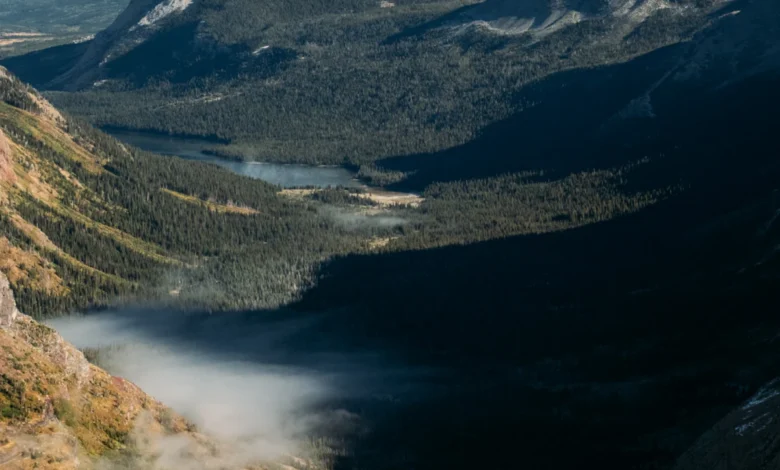
The crisp, high-altitude air of Glacier National Park offers a profound sense of isolation, a stark contrast to the concrete landscapes where many visitors spend their formative years. For one wildlife photographer and former urban gang member, whose gripping personal account was recently published in the Adventure Journal’s print quarterly, the transition from the perilous streets of an American metropolis to the rugged expanse of Marias Pass represents more than a change of scenery—it marks a psychological migration from urban survival to wilderness vigilance.
The narrative, captured in the publication’s 42nd issue, highlights a heart-stopping wildlife encounter that serves as a metaphor for a life defined by constant risk assessment, heightened situational awareness, and the instinctual need for self-preservation. While the published excerpt cuts off mid-crisis as a mother grizzly charges down a Montana trail, the broader implications of the piece touch upon wilderness safety, the psychology of trauma, and the therapeutic capacity of America’s national parks for individuals recovering from high-risk lifestyles.
The Anatomy of a Wilderness Encounter
The incident occurred on a tranquil summer evening near Marias Pass, a critical geographic and ecological corridor within Glacier National Park. The author, returning to a trailhead after hours spent photographing local fauna at an alpine lake, was navigating the transition from relaxation to departure—a mental shift familiar to anyone who spends time in bear country.
Wildlife officials note that encounters along transitional elevation zones in the Northern Continental Divide Ecosystem frequently involve unexpected proximity between humans and grizzly bears (Ursus arctos horribilis). According to the author’s account, the initial phase of the encounter began innocuously:
"I noticed something blondish-brown moving toward me. It barely registered. I felt relaxed, though, truthfully, I’m never fully relaxed."
Moments later, the reality of the situation materialized. A grizzly cub, described as roughly the size of an overgrown Saint Bernard, crossed the photographer’s path. While the initial reaction was one of aesthetic fascination, wilderness protocol dictates that the presence of a juvenile bear inherently signals immediate, critical danger due to the high probability of a protective mother nearby.
Shouting a vocal deterrent—"Hey, bear"—caused the cub to bolt into the timber, but it simultaneously triggered the anticipated maternal response. Seconds later, an adult female grizzly emerged, charging flat to the ground at high speed. The author’s reflex to draw and ready a chest-mounted canister of bear spray highlights the split-second decision-making required in backcountry environments where human-wildlife conflicts occur.
Contextualizing the Montana Wilderness: Statistics and Safety
Glacier National Park spans over one million acres of glacier-carved terrain, dense coniferous forests, and alpine meadows in northwestern Montana. It also represents one of the most robust strongholds for grizzly bears in the contiguous United States. Biologists estimate that the Northern Continental Divide Ecosystem, which encompasses Glacier and surrounding national forests, supports a population of approximately 1,000 grizzly bears.
As visitation to America’s national parks surges—Glacier alone has routinely recorded over three million annual visitors in recent years—the frequency of human-wildlife overlapping spaces has escalated. According to data compiled by the Interagency Grizzly Bear Committee (IGBC), the vast majority of surprise encounters occur suddenly at close range, frequently leaving visitors with less than five seconds to react.
Wildlife management agencies, including the National Park Service (NPS) and Montana Fish, Wildlife & Parks (FWP), consistently emphasize several non-negotiable protocols for recreating in grizzly territory:
- Carrying EPA-registered bear spray in an easily accessible location, rather than buried inside a backpack.
- Making deliberate noise while hiking, particularly near rushing water or in areas with limited line-of-sight visibility.
- Maintaining a minimum distance of 100 yards from bears at all times, and strictly avoiding situations where a human comes between a mother and her offspring.
- Traveling in groups of three or more whenever feasible.
When these protocols are tested, the margin for error is razor-thin. Statistically, however, studies show that bear spray is more than 90% effective in deterring aggressive behavior during close-range encounters, significantly outperforming firearms in preventing injury to both humans and bears.
From Urban Warfare to Ecological Mindfulness
What elevates the Adventure Journal narrative beyond a standard wilderness survival anecdote is the author’s unique psychological lens. Having transitioned from the hyper-vigilant lifestyle of an urban gang member—where threat assessment is a minute-by-minute necessity for survival—to the tranquil yet unpredictable domain of the Northern Rockies, the narrator recognizes a familiar parallel in the wilderness.
In urban environments characterized by gang activity, vigilance is driven by social hostility, turf boundaries, and the constant threat of human violence. This acute state of alertness, often manifesting as chronic hyper-vigilance or post-traumatic stress, can be debilitating when individuals attempt to re-enter mainstream society. However, when redirected into a natural ecosystem, that same mental conditioning transforms into a functional survival mechanism.
Psychologists and wilderness therapy researchers have increasingly explored the parallels between nature-based rehabilitation and trauma recovery. The wilderness demands absolute presence. A momentary lapse in attention in a gang-affiliated neighborhood can have catastrophic consequences; similarly, a failure to read ecological cues in grizzly habitat can prove fatal. By trading the concrete jungle for the alpine wilderness, the author discovered an environment where vigilance is rewarded with clarity, awe, and an ecosystem governed by natural laws rather than arbitrary human conflict.
The Broader Impact of Independent Outdoor Journalism
The story, featured prominently in Adventure Journal’s 42nd print issue, underscores the vital role independent publishing plays in preserving long-form, contemplative outdoor journalism. Founded in 2008 and operating independently with a readership exceeding 7,000 subscribers, the publication relies on tactile, quarterly print editions to deliver deeply reflective narratives that explore the intersection of human psychology, environmental conservation, and outdoor recreation.
In an era dominated by hyper-fast digital consumption and bite-sized social media clips, stories that require deep reading—such as a 2,100-word feature detailing the psychological nuances of an unexpected grizzly charge—offer readers a chance to slow down and reflect on humanity’s place within the natural world.
The physical production of the journal itself—utilizing solar-powered printing facilities, 70lb uncoated paper, and plastic-free shipping materials—reflects an editorial commitment to sustainability that mirrors the ethos of its readership. For outdoor enthusiasts, conservationists, and individuals seeking stories of profound personal transformation, these narratives serve as a reminder of the raw, untamed power of public lands.
Looking Forward: Coexisting with Apex Predators
As Montana’s landscape continues to experience pressures from climate change, shifting seasonal patterns, and expanding human recreation, the imperative for human-wildlife coexistence has never been greater. State and federal wildlife agencies continue to invest heavily in public education campaigns, secure waste management systems, and habitat connectivity projects to ensure that iconic species like the grizzly bear can thrive alongside a growing human population.
For the photographer who stood frozen on the Marias Pass trail, staring down a charging grizzly, the encounter serves as both a sobering reminder of nature’s indifference to human presence and a testament to the healing power of the wild. Whether one is escaping the turbulence of urban streets or simply seeking solace in the backcountry, the mountains demand respect, readiness, and an enduring willingness to bear witness to the raw beauty of the natural world.