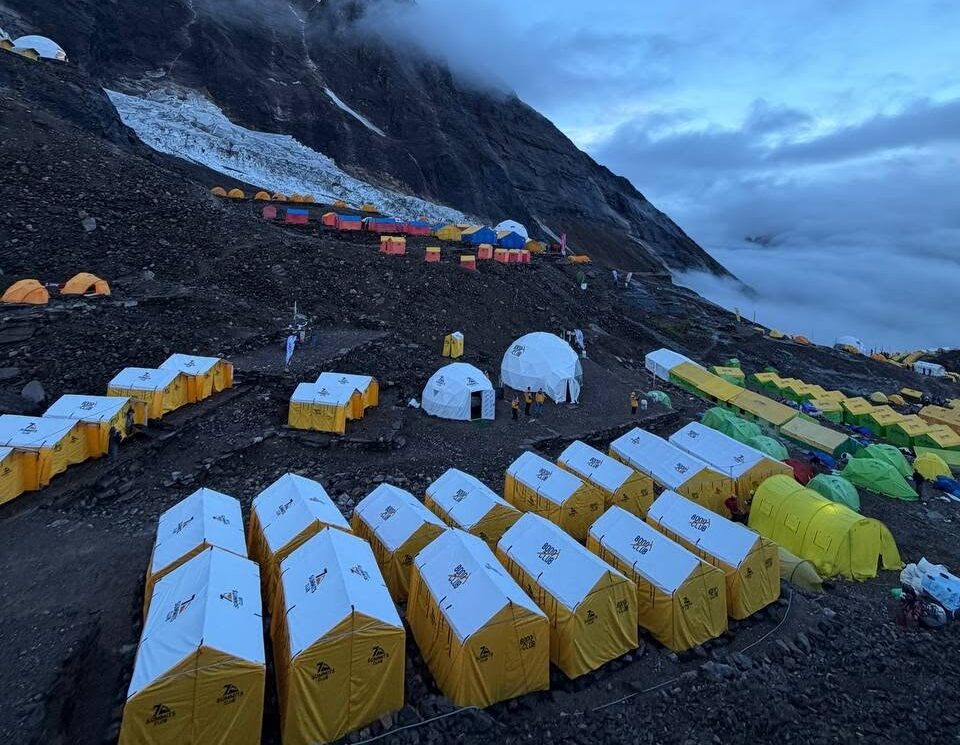
The autumn climbing season on Manaslu, the world’s eighth-highest mountain at 8,163 meters, has reached a point of unprecedented congestion. As of mid-September, a record-breaking 422 foreign climbers have been granted permits to scale the peak, supported by an even larger contingent of local support staff. This influx of mountaineering activity has transformed the mountain’s base camp into a sprawling tent city, second in scale only to the bustling base camp at Mount Everest. However, Mother Nature has momentarily stalled the ambitious plans of these hundreds of climbers, as persistent rain and heavy snowfall force a collective pause in operations.
The Logistics of a Crowded Ascent
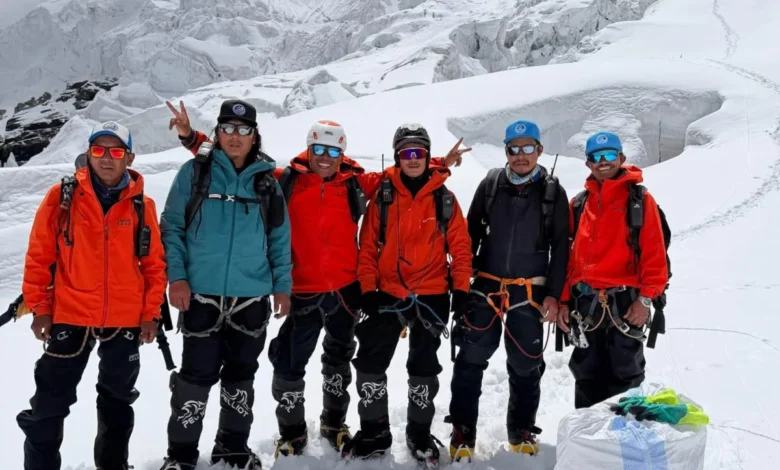
The sheer volume of human presence on the mountain presents a significant logistical challenge. The Expedition Operators Association of Nepal (EOAN) has been tasked with the monumental responsibility of managing the ascent path, particularly the technical sections that serve as bottlenecks for large commercial expeditions. According to EOAN Secretary Rishi Ram Bhandari, the rope-fixing team has successfully navigated the most challenging terrain, including the notoriously unstable serac zone situated between Camp 1 and Camp 2.
With the route now established up to Camp 3, expedition leaders are shifting their focus to the supply chain. Teams are currently in the process of transporting critical gear, sustenance, gas, and supplemental oxygen to the higher camps. This phase is essential for commercial climbers, who typically rely on at least one full rotation to these higher altitudes to acclimatize before attempting a final push for the summit.
Current Meteorological Challenges
The progress made by the rope-fixing teams is currently being tested by adverse weather conditions. A week of heavy precipitation across the region has left the upper slopes of Manaslu laden with fresh, unstable snow. This accumulation has not only hindered the movement of climbers but has also created a heightened risk of avalanches, a perennial concern on this specific Himalayan peak.
Reports from the 7 Summits Club, which has teams currently positioned at the base, indicate that conditions remain dismal, with rain continuing to saturate the camp environment. The moisture has caused significant issues in the valleys below, with localized flooding complicating the logistics of supply delivery and personnel movement. The current weather window is being treated with extreme caution by lead guides, who recognize that the stability of the snowpack is paramount to the safety of the massive number of climbers currently positioned on the mountain.

Chronology of the Season
The progression of the Manaslu season follows a well-defined, albeit high-pressure, timeline. The arrival of hundreds of climbers at base camp typically occurs in the first two weeks of September. Once teams are settled, the focus shifts to the "fixing" phase, where elite Sherpa teams scout and install permanent lines for the climbing season.
By the third week of September, the goal is to have the upper route finalized. EOAN officials have targeted September 19–20 as the window for completing the rope work to the summit. Should the weather clear by this date, the race to the top is expected to begin in earnest. However, the reliance on a single, congested route means that the summit window will likely be tightly packed, potentially leading to human traffic jams that require meticulous coordination among different expedition agencies.
Technical Profile and Mountaineering Context
Manaslu is frequently described as one of the more accessible 8,000-meter peaks, yet it is by no means an easy climb. Its lower altitude relative to Everest—by roughly 700 meters—significantly alters the physiology of the ascent. For many commercial climbers, the reduced time spent in the "death zone" allows for a more streamlined approach, often requiring only one rotation above Camp 1 before a summit attempt.

The normal route via the Northeast Ridge typically necessitates the establishment of four high-altitude camps. This structure allows for a staggered approach, minimizing the time spent at extreme, oxygen-depleted heights. While the technical difficulties of the serac zone have been addressed, the remainder of the route requires steady conditions. Unlike the extreme isolation found on more technical expeditions, the current season on Manaslu is characterized by a "highway" of climbers, where collective safety relies heavily on the success of the rope-fixing team and the cooperation of every operator on the mountain.
Special Projects and Niche Expeditions
While the vast majority of the 422 permits belong to commercial expeditions following the standard route, there remains a small but dedicated contingent of niche climbers. One notable group, led by renowned mountaineer Luke Smithwick, is aiming to achieve a descent from the summit on skis. Such an endeavor requires a high degree of technical skill and a precise window of weather, as skiing down from 8,163 meters demands conditions that are far more forgiving than those required for a standard climbing ascent.
The presence of these specialists among the commercial crowd highlights the diverse, if crowded, nature of modern Himalayan mountaineering. While the commercial operators prioritize a safe, guided path to the top, the presence of independent teams serves as a reminder of the mountain’s enduring status as a site for athletic achievement beyond the standard guided itinerary.

Implications of Increased Traffic
The record number of permits issued for Manaslu raises broader questions about the sustainability and safety of commercial high-altitude climbing. With hundreds of individuals moving through the same narrow corridors, the margin for error is razor-thin. The risk of rockfall, ice collapse, and human-induced avalanches increases exponentially with every person added to the mountain.
Industry observers note that the increasing popularity of Manaslu is likely a byproduct of the "Everest Effect," where the desire for 8,000-meter summits drives climbers to look for more achievable, yet still prestigious, alternatives. This shift has necessitated a more formalized management structure, evidenced by the central role of the EOAN in coordinating logistics. The success of this season will depend largely on the ability of these organizations to maintain order and communicate effectively during the critical final push.
Outlook for the Final Push
As the rain subsides, the focus will turn toward the high-altitude camps. The coming days will be critical. If the rope-fixing teams can successfully reach the summit by the target dates, the base camp will likely empty as climbers move up to the higher camps to wait for a favorable wind window.

The atmosphere in base camp remains one of cautious anticipation. Despite the technological advancements in weather forecasting and the high level of support provided by modern expedition agencies, the fundamental reality of Manaslu remains unchanged: it is a high-stakes environment where the mountain ultimately dictates the schedule. For the 422 foreign climbers and their support teams, the next two weeks will serve as the culmination of months of training, planning, and significant financial investment. Whether the weather permits a safe passage to the summit for all, or forces a collective retreat, the 2026 Manaslu season has already secured its place in the annals of Himalayan mountaineering history as a record-setting event defined by its sheer scale and the shared resilience of its climbers.