Tragedy on Mount Whitney: Search and Rescue Teams Recover Missing Hiker After Weeklong Weather Delay

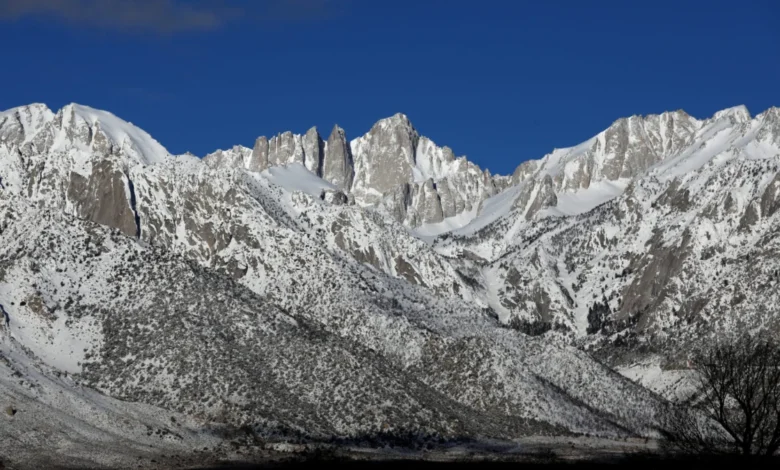
Search and rescue personnel successfully recovered the body of a missing hiker from California’s Mount Whitney on October 25, concluding a harrowing, nearly weeklong operation. The mission, directed by the Inyo County Sheriff’s Office and supported by specialized volunteer teams and aviation units, was significantly complicated by treacherous early-season winter storms that battered the highest peak in the contiguous United States.
The successful recovery operation brings closure to an urgent multi-day search effort, though it also highlights the profound inherent risks associated with high-altitude mountaineering during transitional weather periods. Authorities have withheld the identity of the deceased hiker pending notification of next of kin by the Inyo County Coroner’s Office. However, the incident has reignited ongoing discussions regarding wilderness safety, preparedness, and the unpredictable nature of Sierra Nevada weather systems during the autumn months.
Initial Discovery and Unresolved Welfare Checks
The sequence of events leading to the recovery operation began on October 19, when staff at a motel located in nearby Lone Pine, California, contacted local law enforcement. According to the Inyo County Sheriff’s Office, a guest had failed to check out at the scheduled time, leaving personal belongings behind in the room. Hotel personnel informed deputies that the missing guest had explicitly stated an intention to go hiking, though the specific destination or intended route was unknown at the time.
In response to the hotel’s report, law enforcement initiated standard protocol for a missing person welfare check. Deputies attempted to reach the guest using an official law enforcement messaging system, but their attempts yielded no response. Lacking a specific itinerary, authorities faced the daunting task of identifying where the individual might have gone within the vast expanse of the Eastern Sierra wilderness.
The breakthrough in determining the hiker’s whereabouts came on October 20, when deputies located the missing individual’s vehicle parked at the Whitney Portal trailhead—the primary staging ground for climbers attempting to ascend Mount Whitney. Following this crucial lead, investigators contacted the U.S. Forest Service, which maintains records of wilderness permits. Officials discovered that the missing hiker had officially secured a permit to climb Mount Whitney on October 18, providing search coordinators with a precise target date and location for their investigation.
Aerial Reconnaissance and Severe Weather Interruption
Armed with the knowledge that the hiker had targeted the mountain on October 18, search coordinators mobilized aerial assets to scan the primary climbing routes. Later that same day, an aerial search team flying over the rugged terrain spotted a body along the notorious Mountaineer’s Route at an elevation of approximately 13,600 feet.
The Mountaineer’s Route is widely recognized by the mountaineering community as one of the most challenging and technical lines up Mount Whitney. Spanning roughly five miles one-way, the route demands advanced mountaineering skills, including sustained Class 3 scrambling over steep, exposed rock, and presents severe hazards even under optimal conditions.
However, just as search teams pinpointed the location of the fallen hiker, a severe early-season winter storm system slammed into the Sierra Nevada range. The meteorological event brought hazardous conditions to the upper elevations of Mount Whitney, including gale-force winds, sub-freezing temperatures, and heavy snow accumulations. These hostile weather dynamics immediately rendered the high-altitude recovery site inaccessible, posing an unacceptable risk to search and rescue personnel. Consequently, authorities were forced to postpone the ground and aerial recovery mission until conditions stabilized.
The Multi-Agency Recovery Operation
For nearly a week, hazardous weather hampered any physical approach to the upper reaches of the mountain. By October 25, meteorological conditions finally improved enough to allow a resumption of the mission.
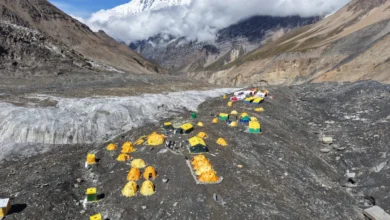
Capitalizing on the clear weather window, a California Highway Patrol (CHP) aviation unit deployed to transport a specialized technical team from Inyo County Search and Rescue (SAR). The helicopter inserted the SAR team into Iceberg Lake, a remote glacial cirque situated at an elevation of approximately 12,600 feet, which serves as a high camp for mountaineers tackling the technical routes of Mount Whitney.
From Iceberg Lake, the rescue personnel undertook a grueling climb on foot to reach the body, which remained stranded at the 13,600-foot mark along the Mountaineer’s Route. Working meticulously in the cold, thin air, the rescue team prepared the remains for extraction. Using a specialized long-line hoist system, the CHP helicopter successfully lifted the body from the precipitous slope. Rescuers then descended back to Iceberg Lake to rendezvous with the aircraft, concluding the complex operation and transporting the individual down the mountain.
A Deadly Month on the High Sierra Peak
The tragic incident underscores a particularly perilous period for mountaineers on Mount Whitney, marking the second fatal accident on the mountain within the span of a single month.
In early October, the Sierra Nevada community mourned the loss of Kalem Peter Kazarian, a Fresno County-based contractor who had previously appeared in a pilot episode for HGTV. Kazarian was in the process of descending from the 14,505-foot summit of Mount Whitney when he suffered a fatal fall. Family members, community leaders, and outdoor enthusiasts subsequently shared tributes honoring his passion for the outdoors, dedication to his trade, and community service.
Furthermore, the latest fatality echoes similar tragedies on the same technical route. In January, another climber lost their life on the "Final 400" section of the Mountaineer’s Route. In that incident, the climber had continued upward on a solo summit push after their climbing partner wisely chose to turn back due to deteriorating conditions.
These successive incidents highlight the unforgiving nature of America’s highest contiguous peak, where even experienced mountaineers can quickly encounter life-threatening hazards.
Broader Implications and Wilderness Safety Recommendations
Mount Whitney attracts thousands of visitors annually, ranging from novice backpackers taking the relatively straightforward Main Trail to elite mountaineers tackling vertical rock faces and ice routes. However, the mountain’s massive elevation—rising to 14,505 feet above sea level—introduces severe environmental challenges that frequently catch unprepared visitors off guard.
Mountain rescue officials and wilderness management agencies consistently emphasize that conditions in the Sierra Nevada can change with terrifying speed, particularly during the shoulder seasons of autumn and spring. Clear, mild weather at the trailhead in Whitney Portal can rapidly devolve into blizzard conditions, sub-zero wind chills, and blinding whiteouts just a few thousand vertical feet higher.
Search and rescue organizations continually urge outdoor recreationists to adhere to strict safety protocols when venturing into alpine environments:
- Detailed Itinerary Sharing: Always leave a comprehensive trip plan with a reliable friend, family member, or lodging provider, including expected return times and specific routes.
- Weather Vigilance: Monitor mountain-specific forecasts closely and be prepared to turn around or postpone trips at the first sign of approaching storms.
- Appropriate Gear: Carry specialized mountaineering equipment—including helmets, traction devices, ropes, and proper layering systems—when tackling technical routes like the Mountaineer’s Route.
- Self-Reliance and Partner Communication: Maintain open communication with climbing partners, respect individual limits, and never hesitate to abort a summit bid if conditions or personal physical states deteriorate.
As the Inyo County Coroner’s Office completes its investigation and formal identification procedures, the recent tragedies on Mount Whitney serve as a stark reminder of the respect commanded by the Sierra Nevada wilderness. Local authorities and search and rescue volunteers continue to urge extreme caution as winter weather patterns begin to firmly establish themselves across California’s high country.