The Psychology of Wilderness Encampment: Why Backpacker Behavior is Hardwired in the Human Brain


The ritual of organizing a backcountry campsite is widely regarded by outdoor enthusiasts as one of the fundamental pleasures of backpacking, yet the precise spatial and behavioral choices made by individuals in the wild are deeply rooted in evolutionary psychology and neurobiology. In the autumn of 2025, a group of ten backpackers and five domestic dogs embarked on a remote expedition into a scenic canyon in southern Utah to celebrate a milestone birthday. The location, selected for its striking geographic features, centered on a massive, one-hundred-foot natural sandstone arch situated at a broad section of the regional gulch. This terrain provided ample space for the party to disperse, establish individual domiciles, maintain acoustic distance from potential snorers, and preserve unobstructed vistas of the geological formation.
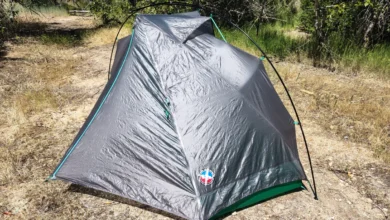
Spatial distribution across the encampment followed distinct behavioral patterns observed broadly among outdoor recreationists. Participants Ace, Devaki, and Walter elected to pitch their tents within the protective thermal and visual shadow of a natural rock alcove. Another member of the party, Axel, accompanied by his canine companion Enzo, established his sleeping quarters atop a geological knoll, utilizing level ground flanked by natural rock outcrops for a sense of perimeter security. Meanwhile, Elliot, a professional photographer, selected an elevated vantage point that offered an expansive perspective of the surrounding landscape. He meticulously organized his equipment beneath a dense canopy of hackberry and maple trees, positioning his back against an imposing orange cliff face while carefully arranging both analog and digital photographic gear on stable sandstone slabs.
This meticulous organization of temporary domestic spaces in the wilderness is far from random. Environmental psychologists and cognitive anthropologists suggest that modern human camping behaviors are direct manifestations of ancestral survival strategies encoded over millennia of human evolution.
Evolutionary Drivers of Wilderness Settlement
From a neurobiological standpoint, the human brain processes natural landscapes through a mechanism known as prospect-refuge theory, originally articulated by environmental geographer Jay Appleton in 1975. The theory posits that human aesthetic and behavioral preferences for certain landscapes are fundamentally tied to survival imperatives: the need for an unobstructed view of one’s surroundings to spot potential hazards or prey (prospect), and the need for a safe, hidden place from which to observe without being seen (refuge).
When backpackers arrive at a potential campsite, unconscious cognitive evaluations occur within seconds. Individuals scan the terrain for indicators of safety, water availability, shelter from the elements, and strategic defensibility. The selection of alcoves, elevated knolls, and cliff-backed perimeters observed in the Utah canyon expedition directly mirrors these ancient survival heuristics. Even in the absence of genuine predatory threats in modern recreational settings, the human nervous system responds to structural landscape features with measurable reductions in cortisol levels and blood pressure when optimal prospect-refuge conditions are met.
Furthermore, anthropological studies indicate that nomadic and semi-nomadic human groups historically organized temporary camps according to strict social and functional hierarchies. Communal fire placement, sleeping orientations relative to prevailing winds, and individual territorial boundaries serve to minimize interpersonal friction and maximize collective security. In contemporary backpacking cohorts, these same subconscious organizational principles manifest as individuals instinctively seek optimal distances from one another—balancing the psychological comfort of a cohesive social unit with the necessary acoustic and visual privacy required for restorative rest.
Chronology of the 2025 Utah Expedition
The planning and execution of the autumn 2025 expedition followed a structured timeline typical of remote backcountry excursions in the American Southwest, where environmental conditions demand rigorous preparation and risk management.
- Months Prior to Departure: Expedition organizers conducted comprehensive route planning, securing necessary wilderness permits from land management agencies, analyzing historical weather patterns for the targeted Utah canyon, and establishing communication protocols for the remote zone lacking cellular network coverage.
- Day One (Arrival and Site Selection): The party of ten hikers and five dogs traversed the final miles of the approach trail, arriving at the natural arch site during the mid-afternoon hours. Following an initial reconnaissance of the widening gulch, group members dispersed to evaluate micro-topography, wind protection, and shade availability.
- Late Afternoon (Camp Architecture): Tents, tarps, and sleeping systems were deployed across distinct ecological zones within the canyon. Spatial separation was established organically, with high-density sleeping arrangements avoided in favor of decentralized pod configurations tailored to individual psychological preferences for solitude or social proximity.
- Evening (Social Integration and Perimeter Security): As ambient temperatures dropped, the group converged on a central communal cooking area situated a safe distance from sleeping zones. Equipment staging areas, particularly for sensitive electronics and sustenance, were secured against local wildlife, including rodents and corvids.
- Subsequent Days: Daily excursions radiated outward from the basecamp, testing the functional efficiency of the chosen spatial layout. The permanence of the temporary infrastructure remained undisturbed, demonstrating the successful alignment between the chosen campsite geography and the group’s domestic requirements.
Quantitative Insights into Outdoor Recreation Behavior
The growth of backcountry recreation over the past decade has provided researchers with extensive data regarding human behavior in wilderness environments. According to statistical reports compiled by the Outdoor Industry Association and federal land management agencies, participation in backpacking and primitive camping has experienced steady upward trajectories, with tens of millions of Americans engaging in overnight backcountry trips annually.
Data regarding campsite selection habits reveal consistent behavioral patterns across diverse demographic cohorts:
| Behavioral Metric | Percentage of Surveyed Backpackers | Primary Determinant |
|---|---|---|
| Proximity to Water Sources | 78% | Hydration logistics and camp hygiene |
| Wind and Weather Shielding | 65% | Thermal comfort and structural tent safety |
| Acoustic Isolation from Others | 52% | Sleep quality and psychological privacy |
| Elevated/Vantage Positioning | 41% | Aesthetic appreciation and landscape awareness |
These statistics underscore that while modern gear—ranging from high-tensile silnylon tents to solar-powered digital cameras—has evolved significantly, the foundational criteria governing where humans choose to sleep remain anchored in basic physical and psychological necessities.
Expert Perspectives and Behavioral Analysis
Behavioral scientists and wilderness rangers emphasize that understanding the psychology behind camping is increasingly vital for managing human impacts on public lands. As wilderness areas experience higher visitor volumes, understanding why humans gravitate toward specific landscape features—such as fragile alcoves, riparian zones, and scenic viewpoints—allows land managers to implement more effective educational programs regarding Leave No Trace principles.
Dr. Elena Vance, a professor of environmental psychology specializing in human-landscape interactions, notes that the urge to organize a campsite is a manifestation of humanity’s innate need for environmental mastery.
"When we enter the wilderness, we step outside our engineered domestic environments, which can trigger subtle, low-level vigilance in the human nervous system," Dr. Vance explains. "The act of pitching a shelter, organizing gear, and defining a perimeter is a deeply therapeutic neurological process. It signals to the brain that stability has been achieved, transforming an unpredictable wilderness into a temporary home."
Wilderness rangers who monitor high-use corridors in the American Southwest observe similar phenomena from a practical standpoint. Rangers report that visitors almost universally attempt to recreate domestic structures—kitchens, bedrooms, and living rooms—using the natural topography of the land. When campsites are poorly organized, visitors frequently experience elevated stress levels, sleep deprivation, and interpersonal conflict, highlighting the functional importance of intuitive camp architecture.
Broader Implications for Wilderness Management and Conservation
The intersection of evolutionary psychology and outdoor recreation holds significant implications for the future of wilderness conservation. As recreational demand places unprecedented pressure on remote ecosystems, recognizing the hardwired nature of human campsite selection can inform better trail design and designated site policies.
Land management agencies, including the Bureau of Land Management and the U.S. Forest Service, frequently grapple with resource degradation caused by dispersed camping in sensitive environments. By understanding that human instinct naturally draws campers toward fragile landscape features like alcoves, overhangs, and riparian corridors, agencies can proactively harden high-use sites or implement strategic zoning that satisfies the psychological need for prospect and refuge while safeguarding cultural and natural resources.
Ultimately, the rituals observed beneath the towering sandstone arches of Utah are part of an unbroken human tradition. Whether arranging cameras on a slab of broken sandstone or pitching a tent in the shelter of an ancient rock wall, modern backpackers are enacting behaviors refined over millennia—seeking solace, safety, and connection within the raw architecture of the natural world.