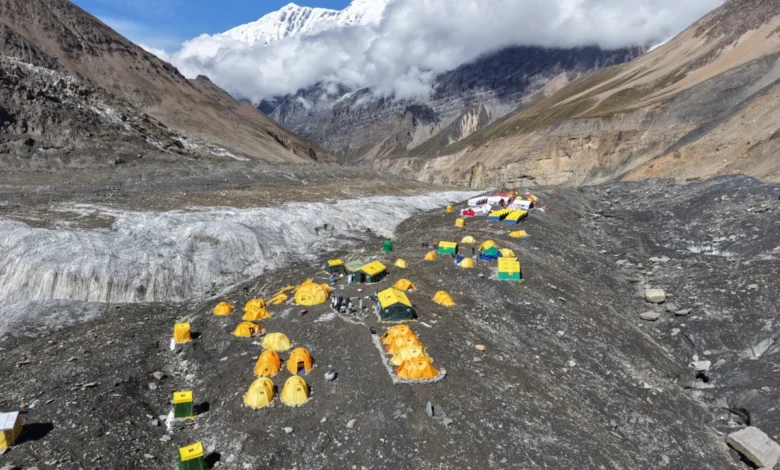
The climbing season on Dhaulagiri, the world’s seventh-highest peak, has reached a critical juncture as an approaching cyclone forces teams to suspend operations. Unlike the recent, abrupt abandonment of the Manaslu expedition—where local outfitters deemed conditions untenable and shuttered the mountain entirely—the community on Dhaulagiri is adopting a "wait and see" approach. As weather models signal an incoming tropical disturbance, climbers are retreating to the relative safety of Base Camp, hoping to preserve the integrity of their expedition while keeping their summit ambitions alive.
A Measured Response to Volatile Weather
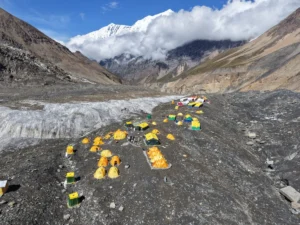
For the 34 foreign climbers currently permitted for the Dhaulagiri ascent, the immediate priority is survival. According to Australian climber Paul Clarke, who is stationed at Base Camp, the mood is one of calculated caution rather than resignation. "A great deal will depend on how much snow the cyclone brings, how stable the mountain is afterward, and whether the route can be safely reopened," Clarke noted in a dispatch from the mountain.
The logistical scale of the effort is significant. Clarke estimates that approximately 20 foreign climbers and 35 high-altitude Sherpas have arrived at the mountain to date. While the mountain is far from its peak traffic capacity, the presence of these teams requires a massive coordination effort, particularly concerning the hazardous, avalanche-prone terrain that defines Dhaulagiri’s slopes.
Chronology of the Expedition and Recent Setbacks
The current state of affairs is the result of a rapidly shifting window of opportunity. The initial plan for the expedition was to expedite the rope-fixing process, led by "Makalu" Lakpa Sherpa of 14 Peaks Expeditions. By mid-week, the climbing teams had successfully managed to secure the route up to Camp 2. However, the plan to launch a swift summit push—originally slated for the coming 48 hours—was derailed by persistent evening snowfalls, which deposited significant, unstable accumulations of powder across all altitudes.
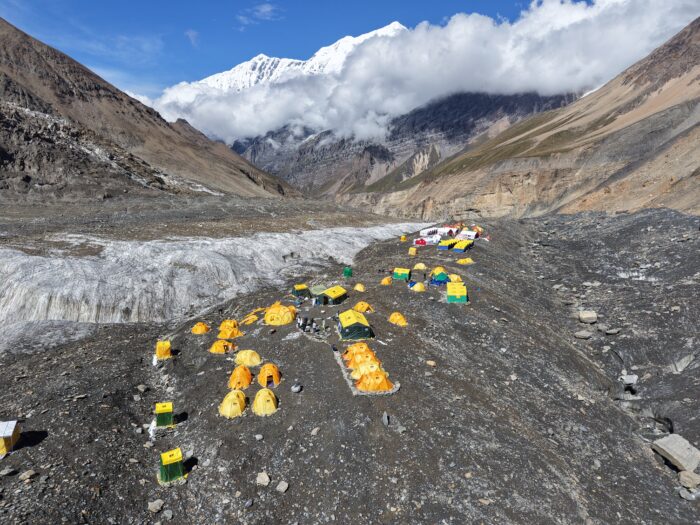
The decision to retreat was not merely based on the current snowfall but on the long-range forecast of an approaching cyclone. By the time this report was filed, a coordinated effort was underway to recover equipment from the higher camps. Sherpas were dispatched to Camps 1 and 2 to retrieve oxygen bottles, tents, and technical gear before the expected heavy precipitation buries the caches or renders them inaccessible.
The Shadow of Broad Peak
The caution being exercised by the current Dhaulagiri cohort is inextricably linked to the traumatic events of late July on Pakistan’s Broad Peak. A massive, high-altitude avalanche claimed the lives of 10 climbers, including elite mountaineers such as Nirmal Purja and Kilu Sherpa. The tragedy sent shockwaves through the global mountaineering community and served as a sobering reminder of the lethal potential of Himalayan and Karakoram peaks during unseasonable weather shifts.
Industry analysts suggest that the recent decision by outfitters on Manaslu to evacuate their clients was a direct reaction to the heightened risk profile following the Broad Peak disaster. The "safety-first" mentality has shifted from a best practice to a mandatory standard for major expedition operators who are under increased pressure to manage liability and ensure the security of their Sherpa staff.
Operational Logistics and Independent Climbers
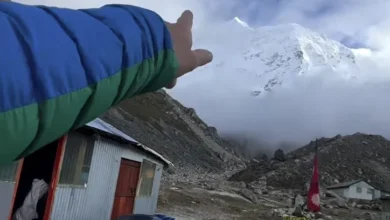
While most major commercial teams are preparing to evacuate their clients to Pokhara or Kathmandu for the duration of the storm, a few independent climbers are choosing to remain on-site. Paul Clarke and his climbing partner, Xenia Santha of Hungary, have elected to ride out the storm at Base Camp.
The pair, who are utilizing 8K Expeditions only for base camp logistics, are pursuing a pure, non-supplemental oxygen ascent. Their preparation for this endeavor was rigorous; before arriving in Nepal, they completed high-altitude training on Khan Tengri in Kyrgyzstan, reaching altitudes near 7,000 meters. Their approach to the mountain was equally distinct, opting for an overland trek via the French Pass (5,400m) rather than the standard helicopter transport to base camp.
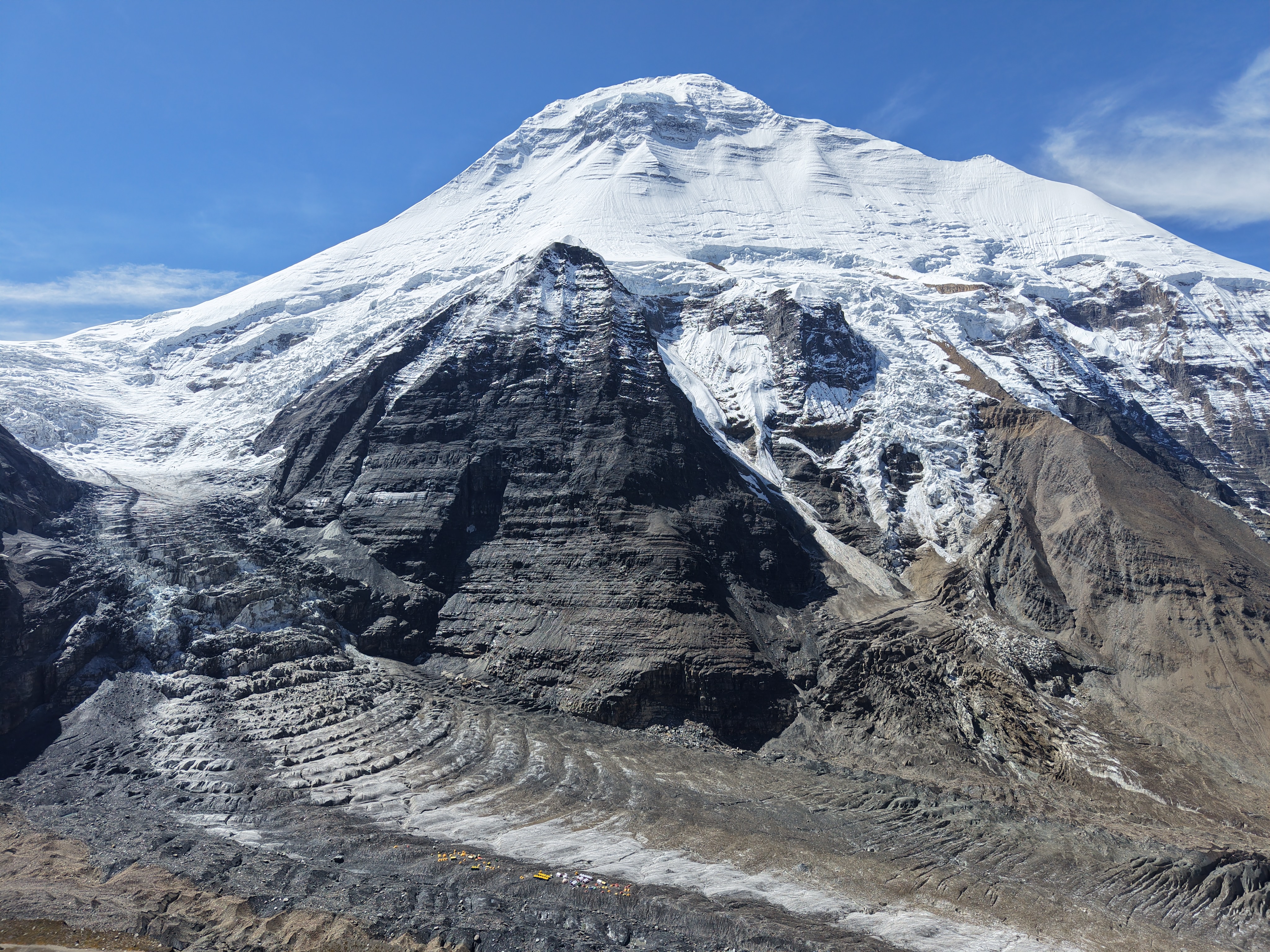
This tactical delay could ironically work in their favor. By avoiding an "accelerated" summit push—which, due to the limited time window, would have likely forced them to utilize supplemental oxygen—the storm-induced hiatus provides them the necessary time to conduct a proper, high-altitude acclimatization rotation once the weather stabilizes. Their plan includes the support of one Sherpa to assist with logistical contingencies and carry emergency oxygen, a prudent compromise for independent, high-altitude athletes.
Official Outlook and Future Projections
Makalu Lakpa, a central figure in the coordination of the current climbing season, has provided a clear roadmap for the next week. "We will wait for one week, and on September 29, we will reassess the situation, check fresh forecasts, and decide what to do next," Lakpa stated.
The implications of this pause are substantial for the local economy and the climbing industry. Dhaulagiri remains one of the more challenging 8,000-meter peaks, and a successful season depends heavily on the maintenance of fixed ropes. If the cyclone causes significant damage to the established routes or triggers widespread instability, the window for a summit push may close entirely for the season.
Fact-Based Analysis: The Risk/Reward Dynamic
The situation on Dhaulagiri serves as a microcosm for the broader challenges facing high-altitude mountaineering in an era of climate instability. Meteorological patterns in the Himalayas are becoming increasingly difficult to predict, with unseasonal cyclones and erratic precipitation becoming more frequent.
- Safety Infrastructure: The reliance on fixed ropes makes these expeditions vulnerable to early-season weather events. If the ropes are buried, the entire commercial model collapses.
- The "Sherpa Factor": As evidenced by the retrieval operations, the safety of the clients is entirely dependent on the willingness of local guides to engage in high-risk work. The consensus among the community to retreat indicates a shift toward prioritizing human life over commercial milestones.
- Professionalization: The move by larger teams to abandon operations entirely suggests that the insurance and legal frameworks governing these expeditions are becoming more stringent, leaving less room for the "summit-at-all-costs" mentality that characterized the sport in previous decades.
As the base camp at the foot of Dhaulagiri empties out, the silence in the coming days will be punctuated only by the sound of the storm. Whether the mountain will offer a second chance to those who remain, or whether this marks the premature end of the season, remains a question that only the weather will answer. For now, the climbing community waits, tethered to the reality that in the high mountains, the peak does not concede to schedules—it dictates them.