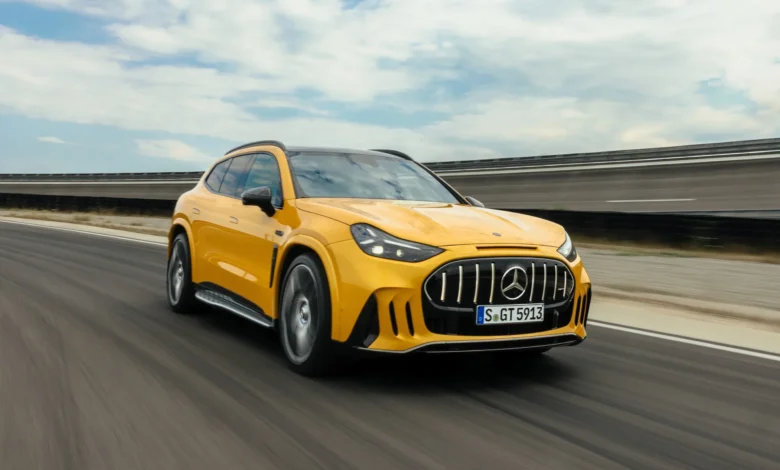
The automotive landscape is witnessing a seismic shift as Mercedes-AMG, the performance-oriented subsidiary of Mercedes-Benz, unveils the GT63 SUV, a vehicle that fundamentally challenges the physics of mass and momentum. With a staggering output of 1,153 brake horsepower, this machine eclipses the Mercedes-AMG One hypercar—a vehicle defined by its direct lineage to Formula 1 technology—by 100 horsepower. As the first SUV engineered entirely in-house by the AMG division, the GT63 marks a departure from the practice of tuning existing Mercedes platforms, signaling a new era for the brand’s transition to electrification.
Chronology of Development and Testing
The gestation of the GT63 SUV began within the high-security confines of the AMG headquarters in Affalterbach. Unlike previous models that leveraged the modular architectures of the wider Mercedes-Benz portfolio, the GT SUV and its stablemate, the GT 4-Door Coupe, were developed on a bespoke electric-first architecture.
Following its initial reveal earlier this month, the vehicle has entered a critical phase of real-world validation. Elite testing sessions at the Mercedes-Benz proving grounds near Stuttgart have provided the first public glimpse into the vehicle’s handling characteristics. While the market launch is slated for the spring of 2027, the intensive testing schedule underscores the complexity of balancing a 2.7-tonne curb weight with the instant torque delivery synonymous with high-output electric motors. This timeline reflects a strategic attempt by Mercedes-Benz to capture the high-end SUV segment before competitors fully consolidate their electrified portfolios.
Engineering and Powertrain Dynamics
The core of the GT63’s performance lies in its adoption of axial-flux electric motor technology, sourced from the British manufacturer YASA. These motors are renowned for their high power-to-weight ratio and compact dimensions, a technology increasingly favored by hypercar manufacturers, including Ferrari, Lamborghini, and McLaren.
The vehicle utilizes a sophisticated three-motor configuration: two dedicated to the rear axle to facilitate precise torque vectoring, and one powering the front axle. This layout allows for granular control over the vehicle’s dynamic behavior, enabling the "Race Pilot" system to manage power splits with millisecond precision.

The energy storage solution involves a 128kWh battery pack. While the sheer density of this battery contributes significantly to the vehicle’s substantial mass, it is essential for supporting the extreme power draw required for a 0-60mph sprint of approximately 2.5 seconds. However, technical analysis suggests a performance trade-off: sustained high-speed operation, such as approaching the 155mph top speed, will significantly deplete the estimated 435-mile maximum range, demonstrating that while the vehicle is capable of hypercar performance, it is subject to the inherent limitations of current lithium-ion battery technology.
Interior Architecture and User Interface
Inside the cabin, the GT63 eschews the minimalist, "less is more" design language currently permeating the luxury electric market. Instead, it adopts a high-fidelity aesthetic, featuring a full-width dashboard housing three integrated displays. The materials palette relies heavily on exposed carbon fiber, machined aluminum, and high-grade quilted leather, reinforcing the vehicle’s position as a premium performance flagship.
Despite its aggressive capabilities, the vehicle includes features designed to bridge the gap between track-focused performance and daily usability. The interior ergonomics are purposefully skewed toward a sports-car-like seating position. An adaptive air suspension system serves a dual purpose: providing the necessary rigidity for high-speed cornering while maintaining the ride comfort expected of a luxury SUV. Furthermore, rear-axle steering significantly reduces the turning radius, a necessary inclusion for a vehicle of this size, making it surprisingly agile in urban environments.
Sensory Feedback and Driving Modes
One of the most complex challenges in electric vehicle design is the lack of auditory and haptic feedback. To counter this, AMG has implemented a sophisticated synthesized V8 soundtrack that modulates based on driving intensity. Unlike traditional speaker-based sound enhancement, this system incorporates seat shakers to transmit low-frequency vibrations, providing the driver with a physical connection to the powertrain’s output.
The vehicle features seven distinct driving modes, accessible via a steering-wheel-mounted rotary controller. In standard commuting modes, the vehicle operates with a level of refinement that masks its explosive potential. However, when switched to "Sport+" or "Race" modes, the software removes the artificial dampers on power delivery. The "Race Pilot" suite allows for customization of the traction control, throttle response, and torque distribution, including a dedicated "drift mode" and a "drag race" launch sequence. These functions, while technically impressive, raise questions regarding the target demographic—specifically, whether such capabilities are intended for practical use or serve as a technical demonstration of the platform’s versatility.
Market Positioning and Industry Implications
The GT63 enters a rapidly fragmenting ultra-luxury SUV market. Its arrival is timed to compete directly with the Porsche Cayenne Electric Turbo, which delivers a comparable 1,019bhp, with a temporary boost to 1,140bhp during launch. Other notable competitors include the upcoming Ferrari "Luce" and the latest iterations of the Range Rover and Range Rover Sport Electric.

Industry analysts observe that the high-end electric vehicle segment is facing a period of adjustment. While there is a clear demand for premium performance, the rate of adoption for six-figure EVs has been slower than initial forecasts predicted. Manufacturers are now utilizing extreme vehicles like the GT63 as "halo" products to generate brand interest and demonstrate technological superiority, hoping that the prestige associated with such performance will trickle down to broader, more affordable product lines.
Pricing for the GT SUV reflects this exclusivity. With the entry-level GT53 starting at approximately £113,775 ($151,600) and the top-tier GT63 expected to reach £180,000 ($240,000), the vehicle sits in a tier of the market where performance is not merely a specification, but a status symbol.
Analytical Perspective
The success of the Mercedes-AMG GT63 SUV will likely hinge on whether consumers prioritize the "edgy" performance of a track-ready electric vehicle over the traditional luxury values of tranquility and serenity. AMG has opted for a bold strategy: creating a car that is, for all intents and purposes, a family-sized hypercar.
By integrating racing-derived technology—such as the axial-flux motors and the sophisticated stability control—AMG is positioning the GT63 as the definitive answer to the question of whether an SUV can truly be a sports car. However, the ultimate implication for the brand is the shift in identity; by moving away from internal combustion, AMG is redefining its legacy. The GT63 is not just an SUV; it is a proof-of-concept for a future where the badge of "AMG" denotes electric mastery as firmly as it once denoted engine displacement and exhaust roar. As the market moves toward 2027, the focus will shift from the sheer capability of the vehicle to its long-term reliability and its ability to maintain its market relevance in an increasingly saturated segment.