Unlocking the Culinary Heritage of Kuala Lumpur: A Comprehensive Investigation into the Phenomenon of Malaysian Fish Head Curry at Tugu View Cafe

Malaysia continues to hold a premier position on the global culinary map, widely recognized by international food critics, travel journalists, and gastronomes as a nation possessing one of the most diverse and dynamic food cultures in the world. This exceptional reputation is not accidental; it is the direct result of centuries of cultural intersection, trade, and migration. The foundational pillars of Malaysian cuisine are deeply rooted in the historical influences of Malay, Chinese, and Indian cooking traditions. These exogenous techniques merged seamlessly with Malaysia’s rich native plant and animal biodiversity, resulting in an indigenous pantry of herbs, spices, and proteins that elevate traditional methods to an entirely new gastronomic level. Among the countless dishes that embody this multicultural synthesis, Fish Head Curry stands out as a definitive masterwork. Offering a striking visual and sensory example of the nation’s culinary pluralism, this dish commands the attention of both local residents and international culinary tourists.
A quintessential setting for experiencing this phenomenon is the Tugu View Cafe, situated in the heart of Kuala Lumpur near the historic Tugu Negara (National Monument) and the expansive Perdana Botanical Garden (Lake Gardens). Operating primarily as a nasi campur establishment—a traditional Southeast Asian format centered on a bed of steamed white rice piled high with an assortment of side dishes, proteins, and vegetables—the cafe transcends the ordinary lunchtime routine. It functions as a cultural hub where patrons engage in the communal and tactile experience of consuming complex, spice-laden curries. While nasi campur is celebrated across Malaysia and the broader Southeast Asian region for its versatility and speed, the Tugu View Cafe elevates the format through its dedication to regional culinary heritage, anchored most notably by its signature red snapper fish head curry.
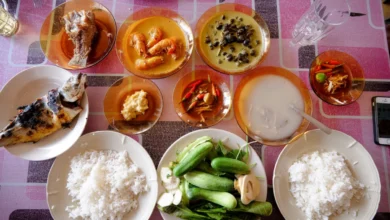
To understand the operational mechanics of a classic Malaysian nasi campur lunch, one must examine the strategy behind plate layout and portioning. At establishments like the Tugu View Cafe, the midday meal operates as a buffet-style selection where diners curate their plates from an expansive array of offerings. These typically include creamy and fiery coconut-based curries, rich broths, whole fried or braised fish, and massive quantities of locally sourced fresh and steamed vegetables, such as wild ferns, bitter melons, and okra. Culinary purists frequently employ a traditional technique: ladling an additional portion of concentrated curry sauce directly over the mound of steaming white rice prior to adding solid proteins and vegetables. When consuming the meal by hand—a common practice that enhances tactile engagement with the food—this method ensures maximum flavor distribution across every grain of rice. The resulting plate is a complex matrix of textures and heat profiles, balancing the acidity of tamarind, the earthiness of turmeric, the pungency of galangal, and the rich creaminess of coconut milk.

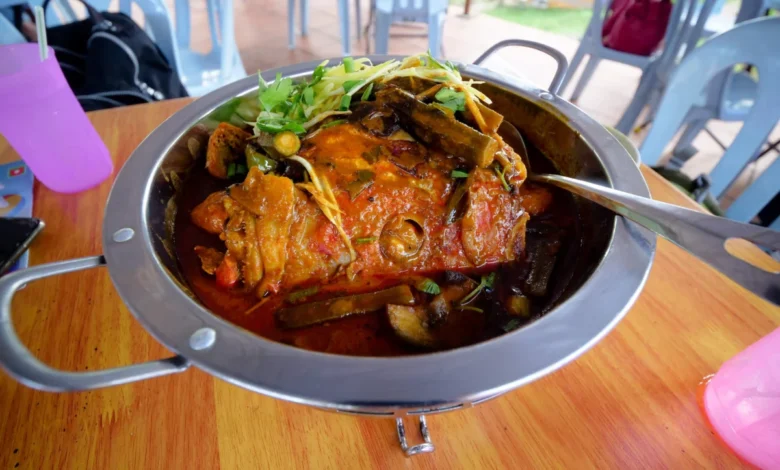
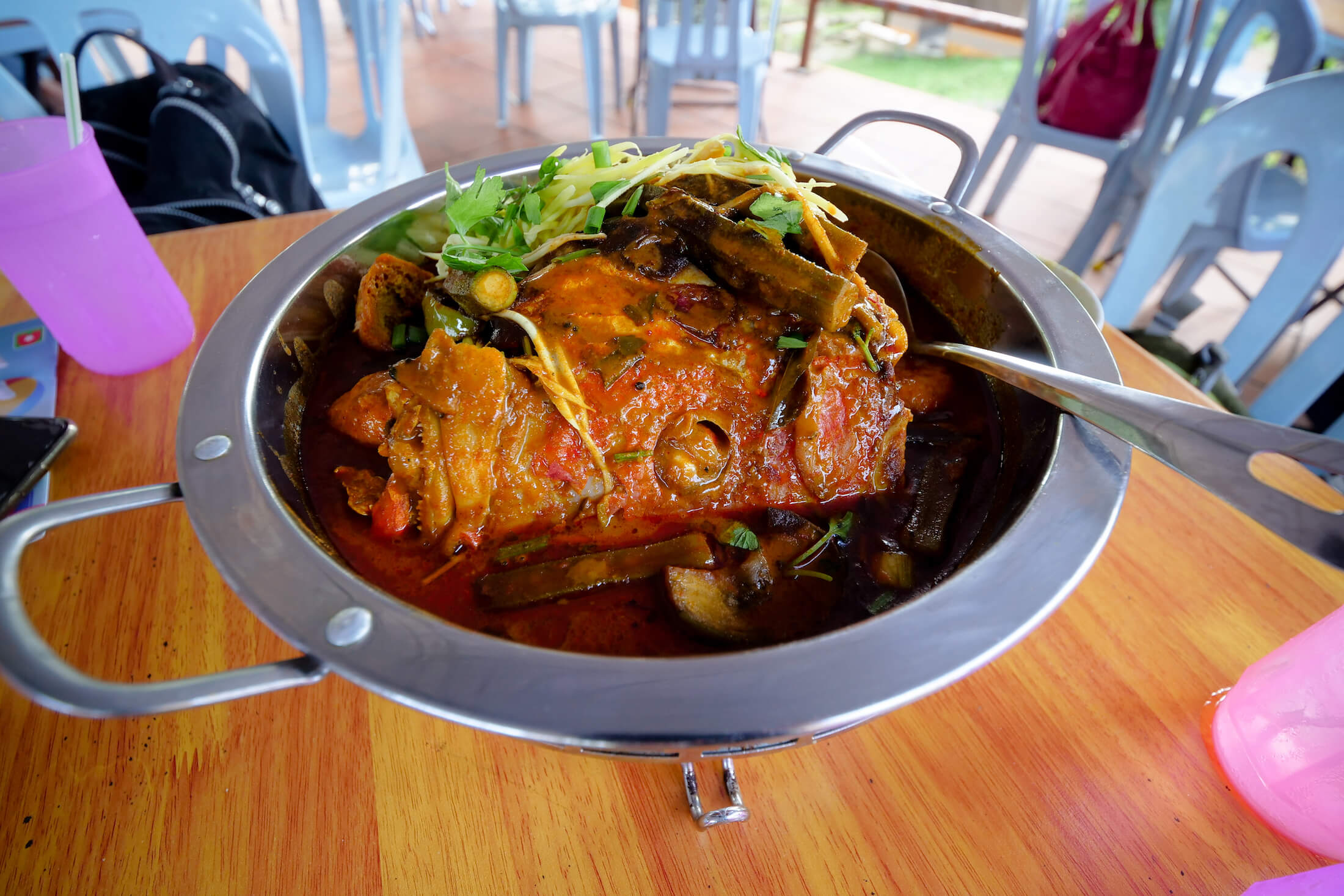
The crown jewel of the Tugu View Cafe’s menu is its signature Fish Head Curry, prepared utilizing the head of the red snapper, locally known as Ikan Merah. Red snapper is scientifically and gastronomically favored for this specific application due to its robust skeletal structure, which yields a high ratio of gelatinous and muscular tissue. Unlike lean fillets, a fish head contains a variety of distinct textural zones—including the cheeks, the flesh surrounding the eye sockets, the collar, and the lips—each offering a unique mouthfeel ranging from tender flakiness to rich, velvety gelatin. When submerged in a heavy, spiced curry broth enriched with tamarind juice (asam), fresh tomatoes, okra, and blocks of firm fried tofu, the fish head absorbs the complex flavor profile while releasing its natural collagen to thicken the sauce. This culinary approach transforms a part of the animal frequently discarded in Western culinary traditions into the centerpiece of a high-value, highly sought-after delicacy.
The cultural significance of fish head curry in Malaysia extends beyond its immediate sensory appeal; it represents a historical convergence of immigrant and indigenous cooking practices. The dish itself is widely attributed to the historical convergence of South Indian and Chinese culinary traditions within the British colonial Malaya of the 20th century. Indian restaurateurs, particularly those of Kerala descent, adapted their traditional fish curry recipes to incorporate fish heads—a cut favored by the local Chinese community, who viewed the head as a delicacy possessing superior flavor due to the bone marrow and fat content. Over decades, this hybrid dish evolved distinct regional variations across Malaysia and Singapore, incorporating local Malay elements such as lemongrass, kaffir lime leaves, and rempah (spice pastes). Today, fish head curry serves as a culinary metaphor for Malaysia’s broader societal integration, successfully bridging disparate cultural heritages into a unified national dish.

Geographically and chronologically, the Tugu View Cafe is situated within a historic enclave of Kuala Lumpur that adds significant context to the dining experience. Located on the periphery of the Lake Gardens, the cafe derives its name and proximity from the Tugu Negara, the national monument designed by Austrian sculptor Felix de Weldon and unveiled in 1966. The monument commemorates the fallen soldiers of Malaysia’s protracted struggle for independence, spanning the resistance against the Japanese occupation during World War II and the subsequent Malayan Emergency (1948–1960). The surrounding precinct, characterized by manicured lawns, water features, and dense tropical flora, provides a serene backdrop to the bustling energy of the capital city. Visitors navigating to the cafe must traverse this historical landscape, often encountering the understated entrance, which sits adjacent to complementary vendor stalls catering to regional tour groups. Despite the logistical idiosyncrasies of the venue—such as navigating multiple staircases and navigating past ancillary retail operations—the cafe maintains a steady flow of clientele seeking authentic, unpretentious local fare.
From an economic and consumer perspective, establishments specializing in communal dishes like fish head curry operate on a distinct pricing and sharing model. During a standard observation period, a comprehensive meal featuring a substantial red snapper head, multiple side dishes, and rice for a small group totaled approximately 144 Malaysian Ringgit (MYR), translating to roughly $35 USD. However, restaurant operators and local culinary guides note that portion scaling is highly flexible; smaller fish heads are readily available at reduced price points, making the dish accessible to couples or single diners. This scalability contributes to the broad socioeconomic demographic observed within such eateries, where office workers, government officials, tourists, and multi-generational families dine side by side. The economic impact of these micro-enterprises is vital to Kuala Lumpur’s urban food economy, supporting local supply chains that stretch from coastal fisheries and agricultural markets to independent spice grinders.

Broader implications of the culinary prominence enjoyed by venues like the Tugu View Cafe point directly toward the expanding sector of gastronomic tourism in Malaysia. Government bodies, including Tourism Malaysia, have increasingly recognized that food is not merely an auxiliary component of the travel experience, but a primary driver of international arrivals. Culinary diplomacy and destination marketing frequently leverage the multicultural identity of Malaysian cuisine to attract travelers from neighboring Southeast Asian nations, East Asia, and Western markets. Analysts within the hospitality sector observe that the appeal of dishes like fish head curry lies in their authenticity and the experiential nature of their consumption. Unlike standardized global dining formats, the communal layout of nasi campur and the interactive labor required to extract meat from a fish head offer tourists an immersive cultural engagement that satisfies a growing consumer demand for experiential travel.
In conclusion, the culinary landscape represented by the Tugu View Cafe offers a clear reflection of Malaysia’s complex socio-cultural fabric. By preserving traditional preparation methods for labor-intensive dishes such as red snapper fish head curry within the accessible format of a nasi campur buffet, the establishment contributes to the ongoing continuity of local foodways. As Kuala Lumpur continues to undergo rapid modernization and urban development, traditional food institutions serve as vital cultural anchors, preserving historical narratives through flavor, shared communal spaces, and culinary heritage. The enduring popularity of these dishes underscores the capacity of food to transcend linguistic and cultural barriers, cementing Malaysia’s status as an enduring epicenter of global gastronomy.