Ocean Rowing Roundup: Dave Bell Pushes Toward African Coastline as Monkey Fist Expedition Concludes in Rescue

The current landscape of trans-oceanic rowing remains dominated by a pair of high-stakes expeditions in the Indian Ocean, where the relentless volatility of the maritime environment has dictated the outcomes for two separate crews. While one rower continues a record-breaking multi-stage journey across the globe’s most treacherous waters, another group has been forced to abandon their mission due to critical equipment failure. These developments underscore the immense logistical and physical risks inherent in long-distance ocean rowing, where even the most meticulously planned expeditions remain subject to the unpredictable whims of weather and mechanical integrity.
The Epic Odyssey of Dave Bell
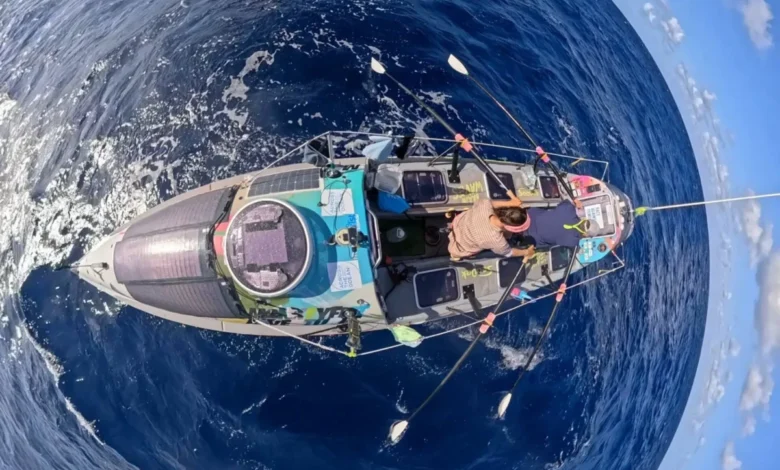
Dave "Dinger" Bell, a seasoned British adventurer, currently finds himself in the final chapter of a monumental journey that began in Peru. Bell’s project is not merely an Indian Ocean crossing but an expansive, continuous trek that first spanned the entirety of the Pacific Ocean. Having rowed from South America to Australia without setting foot on land, he successfully navigated the Torres Strait before entering the Indian Ocean. As of early September, his journey has extended beyond 305 days at sea, covering a staggering distance of more than 24,000 kilometers.
Bell’s objective is to complete the longest known unsupported single-stage row in history. His route, which involves reaching Mombasa, Kenya, represents the culmination of nearly a year of isolation, extreme physical exertion, and constant navigation. The sheer duration of the trip—exceeding ten months—places Bell in an elite, albeit small, category of endurance athletes who operate in complete autonomy.
A Timeline of Recent Challenges
The period between July and August proved to be the most taxing phase of Bell’s expedition. The Indian Ocean, often deceptively calm, unleashed a series of severe storms that forced the rower into a defensive posture. For much of August, Bell was compelled to rely on his para-anchor, a specialized piece of equipment designed to keep the bow pointed into the wind and waves, preventing the boat from being swamped or capsized in heavy seas.
The physical toll was exacerbated by a significant mechanical failure: the total loss of the autopilot control display. In the middle of the ocean, the autopilot is the rower’s primary defense against exhaustion, as it allows for the maintenance of a heading while the rower rests or focuses on navigation. Despite the loss of the electronic interface, Bell was able to maintain manual operation by interpreting the raw data still outputted by the system. This improvised solution allowed him to continue making progress, albeit with a significantly increased workload.
By late August, the conditions improved, allowing for daily mileage that reached up to 120 kilometers. To maximize this progress, Bell employed a technique involving a long, weighted line trailing off the stern. This drag provided the necessary directional stability to prevent potential knockdowns from following seas, a technique that allowed him to maintain momentum without the significant speed reduction associated with a full para-anchor deployment.
Strategic Adjustments to the Route
As of September 7, meteorological data and current patterns necessitated a fundamental change in Bell’s navigation. The influence of persistent southeasterly currents made his original intended landing in Mauritius logistically unfeasible. Rather than fighting the elements—a decision that could have jeopardized the structural integrity of his vessel or his own health—Bell opted to divert toward the African mainland.
This adjustment is not a failure but a strategic redirection. By targeting the Seychelles or Mombasa, Bell adds approximately 1,800 kilometers and three weeks to his total travel time. However, this route aligns with his ultimate goal of finishing on the African continent. The decision reflects the pragmatism required for long-distance rowing; the ocean rarely permits a perfectly straight line, and the ability to adapt to environmental constraints is a defining characteristic of successful long-distance maritime navigation.
The Monkey Fist Expedition: A Sudden Conclusion
While Bell continues his push toward the coast, the British crew of "Monkey Fist"—comprising Darren Taylor, Glyn Roberts, Lara Vafiadis, and Susannah Cass—has seen their journey cut short. The team had been executing an 8,200-kilometer crossing from Carnarvon, Australia, to Mombasa. Their expedition, which had been years in the planning, hit an insurmountable obstacle on August 13.
The failure was rooted in a critical mechanical component: the rudder pin. Upon the initial failure, the crew attempted to deploy a spare part, but the replacement pin bent under the strain of the ocean swells, rendering the steering mechanism non-functional. For an ocean-rowing vessel, the loss of a rudder is a critical emergency. Without the ability to steer, the boat becomes vulnerable to beam-on waves, which significantly increases the risk of a capsizing event.
Recognizing the gravity of the situation, the crew issued an SOS. The response was coordinated through maritime search and rescue channels, identifying an oil tanker in the vicinity that was en route to Cape Town. The rescue operation was successful, and all four crew members were safely transferred to the vessel.
In a statement following the rescue, the team expressed the profound emotional impact of the situation, noting, "This has been six years in the making. To have it end this way is gutting." Their experience highlights the precarious nature of ocean rowing, where years of preparation can be undone by a single, small component failure in a remote environment.
Analysis: Risk Management in Trans-Oceanic Rowing
The contrast between Bell’s progress and the Monkey Fist crew’s rescue offers a case study in the risks of the sport. Ocean rowing is characterized by a "failure-intolerant" environment. In the middle of the Indian Ocean, there is no possibility of a quick repair or a replacement of parts that are not carried on board.
Data from previous ocean crossings suggest that mechanical failures—specifically concerning steering, communication, and water desalination—are the leading causes of expedition termination. The Monkey Fist crew’s experience with a bent spare pin suggests that even carrying backups may not be sufficient if the underlying stress on the vessel exceeds the design specifications of the hardware.
Furthermore, the camaraderie displayed between the two expeditions is notable. Even while isolated, the crews maintained contact via satellite communications. Bell’s report of receiving a voice note from the Monkey Fist skipper, Billy Taylor, shortly before their emergency, provides a poignant reminder of the tight-knit community that exists within this extreme sport. The sharing of information regarding environmental hazards, such as the pod of orcas spotted by the Monkey Fist team, serves as a vital safety net for those currently on the water.
Broader Implications
The conclusion of the Monkey Fist expedition and the continued progress of Dave Bell serve as a reminder of the logistical complexity of modern human-powered exploration. As technology improves, the ability for rowers to monitor weather and communicate has increased, yet the fundamental physical challenge remains unchanged.
For the rowing community, the focus will now shift to the lessons learned from the Monkey Fist mechanical failure. Industry experts often look to such incidents to refine boat design, particularly regarding rudder assembly and the durability of steering components in high-load conditions. Meanwhile, the maritime community will be monitoring Bell’s final stretch. If he successfully reaches Mombasa, his achievement will stand as a benchmark in the history of unsupported, multi-stage ocean rowing, demonstrating that with consistent navigation and the ability to adapt to shifting environmental conditions, the crossing of an entire ocean remains within the realm of human possibility.
As of the latest reports, Bell continues his routine, focused on the final 1,800 kilometers. The weather, which previously hindered his progress, has settled into a more favorable pattern, providing a brief window of relative stability for the final push. The outcome of his journey will be a definitive moment in the 2026 rowing season, marking the end of a grueling, year-long test of human endurance.