Hope on the Wing: Maverick Biologists Guide Northern Bald Ibises Towards a New Future

In a critical battle against extinction, a pioneering group of biologists in southern Austria is employing an unconventional method to teach one of the world’s rarest birds a new migratory route, aiming to re-establish a self-sustaining wild population of the Northern Bald Ibis (Geronticus eremita) across its historical European range. This ambitious conservation project, spearheaded by the Waldrappteam, blends scientific rigor with profound personal commitment, as human "foster parents" meticulously raise ibis chicks and then guide them on their perilous first migration using ultralight aircraft. The initiative highlights both the dire state of many endangered species and the innovative, often extraordinary, measures required to prevent their complete disappearance.
The Genesis of a Groundbreaking Project
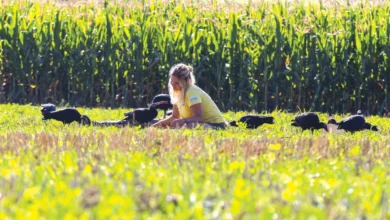
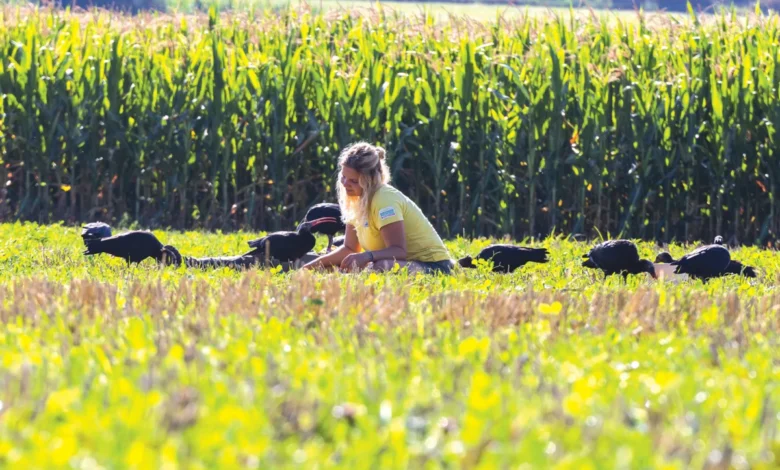
Just a few meters from an aviary nestled in the rugged mountains and lush, expansive valleys of southern Austria, a unique journey began in April 2023. Twenty-five-year-old Barbara Steininger, a dedicated biologist, found herself on the cusp of an unusual form of parenthood. "It’s not an everyday occurrence," she remarked, a hint of nervous excitement in her voice, "especially if your fosterlings are birds." Moments later, a zookeeper from Wildlife Park Rosegg carefully placed two delicate, featherless ibis chicks into Steininger’s warm, cupped hands. Her freckled face lit up with a mixture of awe and determination – a small, yet profoundly significant, step in a much larger undertaking to secure the future of a species teetering on the brink. Two down, thirty-three more chicks were waiting to join the cohort that year, each representing a fragile beacon of hope.
From that chilly spring day, Steininger and her colleague, twenty-eight-year-old Helena Wehner, assumed the roles of primary caregivers for these highly vulnerable chicks. Their devotion mirrored that of human parents: cuddles, constant words of encouragement, and adoration, often delivered in gentle baby talk, were deemed as essential as sustenance. Eight times a day, these "bird moms" meticulously hand-fed their charges a specialized diet—not breast milk or formula, as Wehner humorously noted, but a nutrient-rich mix of shredded beef hearts and mice, carefully formulated to mimic the natural diet of young ibises. This intensive, round-the-clock care is not merely for any bird; it is afforded to some of the last remaining Northern Bald Ibises, a species with a conservation status that underscores the urgency of their mission.
A Species on the Brink: The Plight of the Northern Bald Ibis
The Northern Bald Ibis, known for its distinctive bald, dark-red head, iridescent black plumage, and long, curved red beak, once thrived across Central Europe, North Africa, and the Middle East. Historical records indicate its presence in the Alps as late as the 17th century, nesting on cliff faces and foraging in open grasslands. However, centuries of human activity have decimated its populations. Unregulated hunting, habitat destruction, agricultural intensification leading to pesticide use, and climate change have all contributed to a catastrophic decline. By the early 20th century, the species was considered extinct in Europe. Today, only two truly wild populations persist: one in Morocco, which accounts for the vast majority of wild birds (estimated around 700-800 individuals), and a critically small, fragmented, and highly vulnerable population in Syria, whose existence is now precarious due to regional conflicts.
The species’ classification as Critically Endangered by the International Union for Conservation of Nature (IUCN) reflects its extreme vulnerability. The Waldrappteam, an Austrian-based conservation organization, was founded by Johannes Fritz with the explicit goal of reintroducing a migratory population of Northern Bald Ibises to Europe. Their work builds upon decades of research into avian behavior and the unique challenges of reintroducing species with complex migratory patterns that are typically learned from parents.
The Maverick Strategy: Imprinting and Guided Migration
The core of the Waldrappteam‘s reintroduction strategy is rooted in the phenomenon of imprinting. Northern Bald Ibises, like many migratory birds, learn their migratory routes from their parents during their first journey. With no wild parents left in Europe to teach new generations, the project ingeniously substitutes human caregivers for avian ones. From the moment the chicks hatch, they are exposed exclusively to their human "foster moms," creating an unbreakable bond. This allows the birds to imprint on their human surrogates, perceiving them as their parents and, crucially, as their guides.
As the chicks grow, their training intensifies. The initial weeks focus on feeding, socialisation, and health monitoring. Once they fledge and are capable of flight, the "bird moms" transition to teaching them how to fly in formation behind an ultralight aircraft piloted by Johannes Fritz himself or other trained pilots. This phase, often conducted over several months during the summer, is critical. The birds learn to follow the aircraft, associating it with their "parents" and the security of a flock. Daily practice flights gradually increase in duration and distance, preparing the young ibises for the arduous journey that lies ahead. The ultimate goal is to lead them from their breeding grounds in Austria and Germany (where other Waldrappteam sites are located) over the Alps to established wintering grounds, typically in Tuscany, Italy, a region chosen for its favorable climate and suitable foraging habitats.
A Detailed Chronology of the Reintroduction Effort
The 2023 cohort’s journey began, as detailed, in April with the arrival of the chicks at Wildlife Park Rosegg. This marked the start of the intensive hand-rearing phase. For weeks, Steininger and Wehner were inseparable from their charges, establishing the vital imprinting bond. This period, from April through June, was characterized by constant feeding, meticulous hygiene, and gentle interaction, ensuring the chicks developed physically and emotionally.
By late June and July, as the young ibises gained strength and their feathers fully developed, the focus shifted to flight training. This involved daily outings to open fields, where the birds would practice flying alongside their human guides and, eventually, behind the ultralight aircraft. Johannes Fritz, the scientific director of the Waldrappteam, plays a pivotal role here, piloting the aircraft and guiding the fledgling flock. He meticulously plans flight paths, taking into account weather conditions and the birds’ endurance. This summer training is crucial; it teaches the birds the rhythm of sustained flight, how to navigate, and how to maintain formation – skills essential for a successful migration.
The culmination of this intensive preparation occurs in late August or early September, when the first migration begins. The Waldrappteam embarks on a multi-week journey, leading the flock of young ibises from their northern breeding sites, across the formidable Alps, and down to their designated wintering grounds in Tuscany, Italy. This journey is carefully orchestrated, with ground crews providing support, monitoring the birds, and setting up temporary aviaries at pre-planned stopover sites. The migration itself is a spectacle, a testament to the dedication of the team and the innate migratory drive of the ibises. The birds, guided by the ultralight aircraft, learn the precise geographical features and landmarks of their new route. The hope is that, having completed this guided journey once, they will be able to remember the route and return independently in subsequent years to breed.
Challenges and Triumphs on the Migration Path
The path to re-establishing a wild Northern Bald Ibis population is fraught with challenges. Predation by eagles and other raptors, illegal hunting (despite stringent protections), and extreme weather conditions during migration pose constant threats. Power lines, a common hazard for large birds, also represent a significant danger. Human disturbance at stopover sites and the ever-present risk of disease are further concerns. The project is also incredibly resource-intensive, requiring substantial funding for aircraft maintenance, veterinary care, personnel, and public outreach.
Despite these hurdles, the Waldrappteam has achieved remarkable successes since its inception in the early 2000s. The project has successfully guided hundreds of ibises on their first migration, establishing multiple breeding colonies in Germany and Austria. Crucially, many of these birds have demonstrated the ability to return independently to their breeding grounds in spring, a vital indicator of the project’s long-term viability. The first independent breeding successes in the wild have been celebrated as monumental milestones, proving that the learned migratory route can be passed down and that a new generation of truly wild, migratory ibises is emerging. As of late 2023, the European migratory population fostered by the Waldrappteam has grown to over 200 individuals, a significant achievement from a handful of initial birds.
Voices from the Frontlines of Conservation
The personal investment of the team members is palpable. Barbara Steininger, reflecting on her role as a "bird mom," articulates the profound bond she forms: "It’s more than a job; it’s a profound connection you develop with these creatures. Seeing them take flight for the first time, knowing you’ve helped give them that chance, is an indescribable feeling." Helena Wehner echoes this sentiment, emphasizing the immense responsibility: "Every chick is precious. We’re not just feeding them; we’re teaching them how to survive, how to be ibises again in a world that almost forgot them."
Johannes Fritz, the visionary behind the Waldrappteam, provides the broader scientific context. "We are not just reintroducing a species; we are rebuilding a lost cultural heritage of migration," he states. "Our goal is to create a self-sustaining population that no longer needs human guidance, a population that can thrive independently. This project serves as a living laboratory, teaching us invaluable lessons about avian migration, imprinting, and the complexities of rewilding endangered species."
Conservation experts widely laud the Waldrappteam‘s approach as a groundbreaking model for species reintroduction. Dr. Maria Schmidt, an independent ornithologist specializing in endangered species, notes, "The intensive care and guided migration employed by the Waldrappteam is an extraordinary example of dedicated conservation. While resource-intensive, it demonstrates that with innovative strategies and unwavering commitment, even species facing imminent extinction can be given a second chance. It’s a blueprint that could inspire similar efforts for other migratory birds." Local communities in the vicinity of the breeding and wintering grounds have also shown increasing support, recognizing the ecological importance of the ibises and the potential for responsible eco-tourism and educational opportunities that the project brings.
Broader Impact and Implications for Global Conservation
The reintroduction of the Northern Bald Ibis carries significant implications beyond the survival of a single species. Firstly, it represents a crucial step in reversing biodiversity loss in Europe, restoring a native species to its historical range and contributing to ecological balance. The success of the Waldrappteam offers a compelling model for other conservation projects targeting migratory birds that have lost their learned routes due to population collapse. It demonstrates the potential of combining behavioral ecology with hands-on intervention.
Furthermore, the project raises public awareness about the fragility of ecosystems and the importance of conservation efforts. The highly visible, charismatic nature of the ibises and the dramatic story of their guided migration capture public imagination, fostering a greater understanding of environmental challenges. This heightened awareness can translate into increased support for conservation policies and initiatives.
Finally, the cross-border nature of the project—spanning Austria, Germany, and Italy—underscores the necessity of international cooperation in conserving migratory species. Birds do not recognize national boundaries, and their protection requires a concerted effort across multiple countries, involving diverse stakeholders from governments to local communities. The Waldrappteam‘s work exemplifies this collaborative spirit, forging partnerships that are essential for long-term ecological success. While the intensive human involvement raises ethical considerations about the ultimate goal of wild independence, the project’s sustained focus on equipping the birds with the skills to survive autonomously remains central.
The journey of the Northern Bald Ibis, guided by its human "foster moms" and the unwavering dedication of the Waldrappteam, is a powerful narrative of hope. It stands as a testament to what can be achieved when scientific innovation meets profound human commitment, offering a glimmer of light for a species once thought lost to the annals of European wildlife. As more ibises take to the skies, tracing ancient routes with new guidance, they carry not just their own species’ future, but the broader hope for biodiversity in a rapidly changing world.
Related posts: