The Mediterranean has long been synonymous with the sweltering heat of midsummer and the claustrophobic density of peak-season tourism. For decades, the coastal regions of Southern Europe have operated under a binary calendar: a frenzy of activity between June and August, followed by a dramatic, almost eerie, quietude. However, a significant shift in global travel patterns is currently underway. Disillusioned by record-breaking heatwaves and the logistical nightmares of overcrowded ports and historic centers, affluent travelers are increasingly opting for the "off-season"—a period that offers a return to the authentic, quieter roots of the region. This trend is so pronounced that luxury transit providers are shifting their operational models; for instance, the all-business-class airline La Compagnie has recently extended its New York-to-Nice service to a year-round schedule, acknowledging a permanent shift in demand.
A Return to the Historical Norm
The current "summer-only" obsession with the Côte d’Azur and the broader Mediterranean is, historically speaking, a relatively modern phenomenon. Before the mid-20th-century cultural revolution spurred by figures like Zelda and F. Scott Fitzgerald, the Mediterranean was primarily a winter sanctuary for the European aristocracy and the intellectual elite. These travelers sought the temperate climate of the coast to escape the harsh, damp winters of Northern Europe.

Modern infrastructure is now racing to accommodate this "return to form." Resorts and hospitality groups are investing heavily in climate-resilient architecture, such as the newly installed indoor pool at Passalacqua on Lake Como, designed to ensure that luxury experiences remain viable regardless of the season. This transition reflects a broader economic pivot: hospitality groups are moving away from seasonal, high-burnout staffing models in favor of year-round, sustainable employment, which in turn fosters better service quality and deeper community integration.
November: The Cultural Resurgence of the French Riviera
As the summer crowds dissipate, the French Riviera undergoes a metamorphosis. November in Monaco, in particular, offers a sophisticated alternative to the beach-club culture of July. The centerpiece of this period is the Monte-Carlo Jazz Festival, a twelve-day event that draws world-class musicians to the Principality.
Logistical experts, such as Jack Ezon of the travel firm Embark Beyond, suggest that the off-season provides a distinct advantage in transit. "The extra benefit is you can do security in Monaco with literally no lines," Ezon notes, recommending that travelers bypass the coastal road traffic by utilizing helicopter transfers from Nice, while sending luggage ahead by private car. For accommodation, the Hotel Hermitage offers a more refined, understated elegance compared to the high-profile Hotel de Paris. The social scene remains vibrant, with venues like Amazónico on the Place du Casino serving as a hub for both refined dining and late-night social engagement, proving that the Mediterranean’s nightlife is not strictly a summer commodity.

December: The Sicilian Citrus Harvest and Culinary Heritage
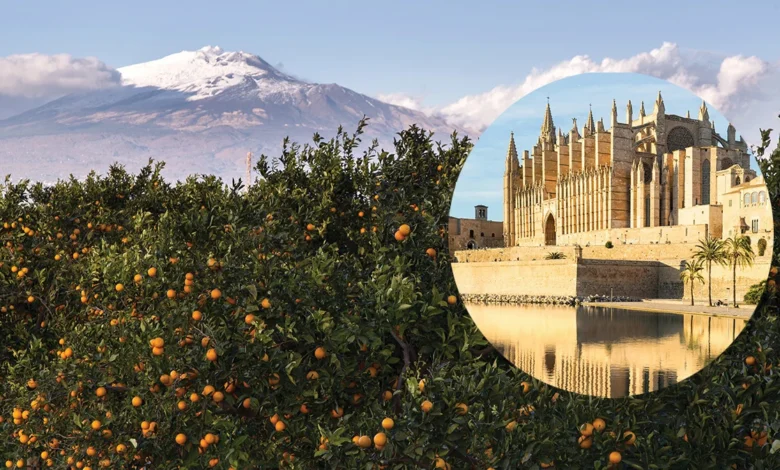
By December, the focus shifts toward the island of Sicily, which enters a period of agricultural significance during the citrus harvest. This is arguably the most authentic time to experience Sicilian culture, as the island’s economy pivots back to its traditional roots. Beyond the culinary bounty, the physical landscape offers a rare juxtaposition: the sight of snow-capped Mount Etna looming over warm, citrus-laden valleys.
For the modern traveler, the northern slopes of the volcano offer accessible, family-oriented skiing—a niche but growing segment of the Mediterranean tourism market. Luxury property groups, such as The Thinking Traveller, have seen an uptick in requests for high-end villa rentals like the 12-bedroom Rocca delle Tre Contrade. These properties provide a base for exploring regional gastronomy, with local experts like Andrea Grisdale of IC Bellagio highlighting the importance of the Michelin-starred I Pupi. Chef Tony Lo Coco’s approach to Sicilian staples, such as arancini, represents a wider trend of elevating regional peasant food into the realm of fine dining. Furthermore, contemporary institutions like the restaurant Kalos in Agrigento underscore the potential for dining that centers on historical context, offering views that encompass the Valley of the Temples without the obstruction of thousands of day-trippers.
January: The Rise of Specialized Sports Tourism
January in the Mediterranean has historically been a dead zone for tourism, but the region is finding new life through specialized sports, most notably professional-grade cycling. Mallorca has quietly become the primary training ground for international cycling teams, thanks to its rolling terrain and mild winter climate.

The annual Challenge Ciclista, held in late January, serves as a high-profile anchor for this market. The event, consisting of five distinct one-day races, attracts both elite competitors and amateur enthusiasts. The infrastructure now supports this transition, with luxury properties like Cap Rocat—a converted fortress overlooking the Bay of Palma—providing the necessary upscale amenities for high-performance athletes. The presence of Michelin-recognized chefs like Maca de Castro, who operates the restaurant Andana, ensures that the athletic focus is matched by high-level nutrition and gastronomy, further cementing the island’s status as a year-round destination.
February and March: The Authentic Mediterranean and Orthodox Traditions
The final stretch of the off-season, February and March, offers the most profound cultural immersion. During this time, the Mediterranean is largely reclaimed by local residents, allowing for a more genuine interaction with the landscape. Ileana von Hirsch of Five Star Greece points to Crete as the quintessential destination for this period.
"It has the best weather in late winter," von Hirsch notes, emphasizing that the absence of mass tourism allows the island to reclaim its authentic identity. The city of Chania serves as the hub for this experience, providing a lively atmosphere that remains active even when the beaches are empty. The cultural calendar is dominated by the build-up to Orthodox Lent, culminating in events like Tsiknopempti, or "Smoky Thursday." On March 4, 2027, this tradition of open-air barbecue and communal feasting will once again highlight the regional dedication to local, meat-centric cuisine. It is a period defined by intimacy, as evidenced by venues like the Fagotto Jazz Bar, which provides a dark, atmospheric refuge from the late-winter breeze.

Economic Implications and Future Outlook
The strategic move toward year-round Mediterranean tourism has significant economic implications for the region. For years, the "seasonal trap"—where businesses were forced to generate an entire year’s worth of profit in three months—led to inflated prices, poor service quality, and infrastructure strain. By distributing tourist demand across twelve months, the Mediterranean economy is becoming more resilient.
Data from hospitality consultancy groups suggests that the "shoulder" and "off-season" travelers tend to have a higher average daily spend than their mid-summer counterparts. These travelers are often interested in cultural experiences, private tours, and high-end gastronomy rather than mass-market coastal activities. Consequently, the shift is incentivizing local governments to keep museums, historic sites, and transport links open for longer durations.
Furthermore, the environmental impact of this transition cannot be ignored. The extreme density of summer tourism often places a severe strain on water supplies, waste management, and energy grids in historic Mediterranean towns. By spreading the load, these regions can better manage their resources. The adoption of year-round travel is not merely a convenience for the traveler; it is a vital strategy for the long-term preservation of the Mediterranean’s cultural and natural heritage. As more airlines like La Compagnie solidify these routes, the "off-season" will likely cease to be a niche travel strategy and instead become the standard for the discerning international traveler.