The Intersection of Culture and Clicks: How Social Media is Reshaping Indigenous Tourism and Cultural Exchange

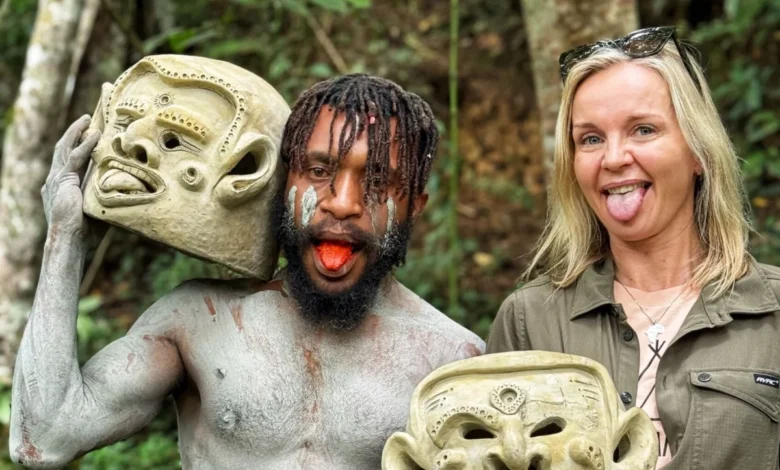
In an era defined by hyper-connectivity, budget airlines, and the relentless pursuit of digital engagement, the boundary between documenting a journey and exploiting a culture has grown increasingly porous. As smartphones and high-speed mobile data penetrate even the most remote regions of the planet, travelers now possess the unprecedented ability to broadcast their experiences to global audiences in real time. Yet, this digital democratization of travel has birthed a complex ethical dilemma: when human lives and ancient traditions are packaged into short-form videos and grid posts for public consumption, where does meaningful cultural exchange end and digital commodification begin?
This pressing question sits at the heart of contemporary debates surrounding Indigenous-led tourism. For cultural anthropologist and Visit Natives founder Anniina Sandberg, the issue is no longer just theoretical—it is an urgent crisis unfolding daily across social media platforms. Drawing from more than two decades of fieldwork and collaborative work with Indigenous populations worldwide—including the Maasai and Hadzabe of Tanzania, the Sámi families of Norway, the Berber communities of Morocco, and diverse Indigenous groups in the Papua New Guinea Highlands—Sandberg has witnessed firsthand how the digital age is fundamentally transforming traditional ways of life.
The Evolution of Indigenous Tourism: From Anthropological Fieldwork to Global Itineraries
To understand the current friction between travelers and host communities, it is necessary to examine how Indigenous tourism has evolved over the past thirty years. Historically, visiting remote Indigenous groups was the domain of anthropologists, documentary film crews, or specialized adventure travelers willing to endure logistical hardships for educational purposes. These interactions, while still susceptible to outsider biases, generally operated under structured guidelines dictated by academic protocols or long-term community relationships.
By the early 2000s, the rise of ethical tourism frameworks began to shift the paradigm. Organizations and community leaders sought to ensure that Indigenous groups retained economic agency over their cultural assets. Rather than serving as passive spectacles for outsiders, communities began establishing community-based tourism enterprises. These initiatives aimed to generate sustainable revenue streams, support land rights, and foster cross-cultural education on terms established by the Indigenous populations themselves.
However, the proliferation of social media platforms over the past decade disrupted this delicate balance. The incentive structures of digital platforms—which reward sensationalism, exoticism, and high-frequency posting—introduced a powerful new variable. Today, travelers can bypass traditional tour operators that emphasize community consent and cultural preparation, heading straight into sensitive regions equipped with cameras, ring lights, and an audience hungry for viral content.

The Digital Panopticon: Sensationalism and the Flattening of Culture
The core issue, according to Sandberg, lies in the way social media algorithms dictate human representation. When she recently shared her experiences visiting the Hadzabe hunter-gatherer community in Tanzania, the digital response laid bare the underlying vulnerabilities of modern tourism. While many users engaged thoughtfully, a significant portion of the feedback treated the Hadzabe not as sovereign individuals with complex social structures, but as amusing spectacles or living relics designed for entertainment.
This reduction of rich cultural heritages into bite-sized, digestible content poses significant risks. When complex spiritual beliefs, subsistence strategies, and social histories are flattened into 15-second videos aimed at maximizing clicks and views, cultural nuance is inevitably lost. More critically, it reinforces outdated colonial tropes and exotic stereotypes that picture Indigenous peoples as primitive or frozen in time, rather than as modern citizens navigating contemporary socio-economic challenges.
Industry analysts note that this trend creates a dangerous feedback loop. As digital creators compete for algorithmic visibility, they are financially incentivized to seek out and highlight the most visually striking or culturally distinct practices, often exaggerating or staging scenarios to generate higher engagement. This performance of culture for the camera sidelines authentic daily life, replacing genuine human interaction with a transactional spectacle.
Redefining the Encounter: Tourism Versus Authentic Cultural Exchange
The distinction between a standard tourist encounter and a genuine cultural exchange is stark, yet frequently blurred in commercial itineraries. Conventional tourism is typically built around convenience and efficiency: visitors arrive on a fixed schedule, consume a pre-packaged performance or tour, capture photographic evidence of their presence, and depart. These interactions are carefully insulated from the community’s actual rhythm of life, occurring in spaces designed specifically for outsiders.
In contrast, sustainable and respectful Indigenous tourism demands a fundamental restructuring of the traveler-host dynamic. Sandberg likens true cultural exchange to the intimacy of inviting a stranger into one’s home. It requires shedding the detachment of the spectator role and embracing active participation in the shared human experience.
Organizations like Visit Natives operationalize this philosophy by eliminating rigid day-trip itineraries in favor of multi-day, immersive stays within families and communities. By sharing meals, engaging in daily conversations, and participating in routine domestic or communal tasks, travelers step away from the role of consumer and enter into a reciprocal relationship. This immersion fosters empathy, dismantling preconceived notions and replacing them with nuanced, real-world understanding.

The Complexities of Informed Consent in the Digital Age
A central pillar of ethical travel is informed consent. In standard photography and media production, consent is often treated as a transactional binary: a verbal "yes" or "no" secured prior to pressing the shutter button. However, in the context of remote Indigenous communities, the reality of consent is profoundly more complex.
Many Indigenous populations, particularly those living in remote regions with limited infrastructure, possess little to no understanding of the vast, decentralized architecture of global social media. A community member may readily grant permission for a photograph to be taken, assuming the image will remain within a private family album or local slideshow. They cannot reasonably anticipate that the same image might be uploaded to a public profile with millions of followers, repurposed for commercial advertisements, or subjected to insensitive public commentary by anonymous users halfway across the globe.
Sandberg emphasizes that true informed consent requires far more than a casual request. It necessitates comprehensive transparency regarding how images and stories will be disseminated, who will profit from them, and what long-term digital footprint they will leave behind. Achieving this standard requires educational initiatives that bridge the gap between digital literacy and traditional community values, ensuring that Indigenous individuals maintain total agency over their digital representation.
Industry Responsibility and the Need for Global Standards
While individual travelers bear personal responsibility for their conduct, experts stress that the broader tourism industry shares an equal, if not greater, burden of accountability. Tour operators, booking platforms, and content monetization networks currently operate within a regulatory gray area regarding the ethical marketing and execution of Indigenous tourism.
Economic pressures further exacerbate these vulnerabilities. Many Indigenous communities face severe systemic challenges—including land dispossession, climate change impacts, and economic marginalization—that threaten their traditional livelihoods. These pressures can leave communities uniquely vulnerable to accepting exploitative tourism arrangements simply to secure short-term financial survival.
To combat this, Sandberg and other cultural advocates are calling for the establishment of universal codes of conduct within the travel sector. Such standards would require tour operators to actively vet their itineraries, educate clients on digital ethics, ensure fair economic compensation directly to host families, and enforce strict boundaries regarding photography and social media posting in sensitive cultural zones.

Fact-Based Analysis: Economic Benefits Versus Social Costs
Evaluating the impact of Indigenous tourism requires balancing significant economic benefits against profound social and cultural costs. Proponents of community-based tourism argue that when managed correctly, visitor programs provide vital financial lifelines that fund community infrastructure, support educational initiatives, and incentivize the preservation of ancestral lands and languages. For marginalized groups facing economic exclusion, regulated tourism can serve as a powerful tool for self-determination and financial independence.
Conversely, unmitigated or poorly managed tourism—exacerbated by social media exposure—fosters a host of negative externalities. Cultural commodification can lead to the erosion of traditional values, internal community conflicts over tourism revenue distribution, and the psychological toll of being treated as a perpetual public exhibit. Furthermore, the environmental footprint of increased visitor traffic can strain fragile local ecosystems upon which hunter-gatherer and pastoralist communities depend.
Economic analysts suggest that the long-term viability of Indigenous tourism hinges on moving away from volume-based models toward value-based, low-impact frameworks. By prioritizing community autonomy and sustainable growth over rapid scaling and viral marketing, the industry can mitigate social harms while maintaining vital economic linkages.
A Path Forward: Dignity, Reciprocity, and Human Connection
Ultimately, the discourse surrounding Indigenous tourism is not an argument for isolationism. It does not suggest that travelers should cease visiting remote communities or that cross-cultural sharing has no value in the modern world. Rather, it is a call for a paradigm shift—a movement away from extraction and toward reciprocity.
As global mobility continues to expand, the ethical imperative facing travelers and industry professionals alike is to ensure that interactions are grounded in fundamental human dignity. Whether sharing a meal in a Maasai boma, sleeping under the same roof in a Norwegian Sámi settlement, or observing daily life in the Papua New Guinea Highlands, the core of meaningful travel remains unchanged.
True cultural exchange transcends the digital metrics of likes, shares, and algorithmic reach. It is found in the quiet, unrecorded moments of shared humanity—recognizing that behind every culture, tradition, and face captured on a screen lies a vibrant, sovereign people whose lives exist entirely independent of our desire to consume them.