15 Prettiest and Best Areas in Cornwall to Visit Iconic Spots, Views, and Beaches

Cornwall, a ceremonial county located on the southwestern tip of the United Kingdom, has solidified its position as one of the country’s most significant tourism hubs. Spanning approximately 1,376 square miles with a coastline extending over 400 miles, the region offers a diverse array of geological features, historical landmarks, and cultural assets that attract millions of visitors annually. As the UK tourism sector continues to emphasize domestic travel, the strategic management of Cornwall’s infrastructure and heritage sites has become a focal point for regional economic planning.

Economic and Geographic Significance
The Cornish economy is heavily reliant on the visitor industry, which accounts for a substantial percentage of regional employment. According to recent data from Visit Cornwall, the tourism sector contributes roughly £2 billion annually to the local economy. The geography of the region—defined by its unique peninsular status and exposure to the Atlantic Ocean—creates a distinct micro-climate that supports varied ecosystems, such as those found at the Eden Project, and facilitates maritime activities that have historically shaped the local villages and towns.

St. Michael’s Mount and Historical Preservation
Located off the coast of Marazion, St. Michael’s Mount serves as a critical example of historical integration with natural landscapes. The site is a tidal island accessible via a granite causeway at low tide, or by boat during high tide. The castle and priory, which date back to the 12th century, exhibit architectural influences shared with Mont Saint-Michel in Normandy, France, reflecting the historical cross-channel cultural exchanges of the medieval period. The site is currently managed by the National Trust in partnership with the St. Aubyn family, ensuring that the structural integrity of the medieval buildings is maintained alongside the conservation of the island’s unique gardens.

Cultural and Architectural Heritage: The Minack Theatre
The Minack Theatre, located near Porthcurno, represents a significant achievement in 20th-century open-air architecture. Conceived by Rowena Cade in the 1930s, the theater was carved directly into the granite cliffs overlooking the Atlantic. Its construction timeline spans nearly a century of continuous development, evolving from a private project to a globally recognized performance venue. The theater’s operations from May to September highlight the seasonal nature of Cornish tourism, requiring sophisticated logistics to manage visitor flow in a sensitive cliff-top environment.

The Evolution of Coastal Hubs: Newquay and St. Ives
Newquay and St. Ives have undergone distinct developmental paths that reflect broader trends in UK coastal urban planning. Newquay, historically a fishing port, transitioned in the mid-20th century to become the epicenter of British surfing culture. This shift has necessitated significant investment in public infrastructure to support the influx of seasonal visitors to beaches such as Fistral and Watergate Bay.

Conversely, St. Ives has maintained a focus on cultural tourism. The presence of the Tate St Ives, established in 1993, highlights the town’s long-standing relationship with the modern art movement. The facility acts as an anchor for the town’s year-round economy, mitigating the risks associated with pure seasonal dependency.

Industrial Heritage and Landscape Management
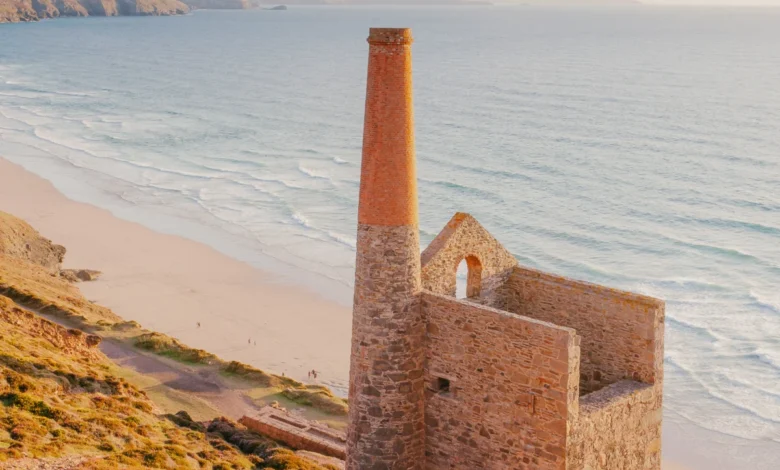
The heritage of Cornwall is inextricably linked to its industrial past, particularly in mining. Sites such as the Towanroath engine house at Wheal Coates near St. Agnes Head stand as remnants of the 18th and 19th-century copper and tin mining boom. These structures are now part of the Cornwall and West Devon Mining Landscape, a UNESCO World Heritage site. The management of these ruins requires a delicate balance between public safety and the preservation of historical artifacts. Similar efforts are visible at Tintagel Castle, where English Heritage has implemented modern structural interventions, including a footbridge, to improve accessibility while protecting the archaeological layers associated with the legend of King Arthur.

Natural Ecosystems and Conservation
The Eden Project, located near St. Austell, serves as an educational and scientific facility that demonstrates the viability of large-scale environmental reclamation. Built on the site of a disused china clay pit, the project uses a series of geodesic domes—or biomes—to house diverse plant species from tropical and Mediterranean climates. The facility’s ability to host year-round events, including music festivals and educational workshops, provides a model for sustainable tourism that reduces the pressure on coastal areas by diverting visitors toward inland sites.

Maritime Infrastructure and Regional Connectivity
The development of towns such as Fowey, Falmouth, and Looe highlights the importance of maritime connectivity in the regional transport network. Fowey’s harbor serves as a hub for both commercial and recreational vessels, while the ferry connections between Fowey and Polruan are essential for local mobility. Similarly, Falmouth has leveraged its deep-water harbor to host the National Maritime Museum Cornwall, further diversifying the town’s economic base beyond traditional maritime commerce.

Geographical Extremes: Lizard Point and Land’s End
Land’s End and the Lizard Peninsula represent the southernmost and westernmost reaches of the UK mainland. These sites are subject to intense coastal erosion, necessitating ongoing geological monitoring. Land’s End, in particular, functions as a primary tourism milestone. The management of these areas involves balancing the high volume of foot traffic on coastal paths with the need to protect fragile cliff-side habitats. The South West Coast Path, which traverses these areas, is a critical component of regional infrastructure, attracting long-distance hikers and contributing to the local service economy.

Strategic Implications for Future Tourism
The data regarding visitor numbers in Cornwall suggests a need for continued focus on "de-seasonalization"—the process of spreading tourism demand throughout the year. The success of indoor attractions like the Eden Project and the Tate St Ives, alongside the growing popularity of off-season coastal walking, indicates a shift in consumer behavior.

However, this growth presents challenges, particularly regarding transport and housing. The reliance on road networks in a rural, peninsular region often leads to congestion during peak summer months. Local authorities are increasingly looking toward improved public transport links, such as the Great Western Railway line that terminates in Penzance, to distribute the economic benefits of tourism more evenly across the county rather than concentrating them in coastal hotspots.

Summary of Regional Assets
Cornwall’s attractiveness as a destination is sustained by the synergy between its natural landscapes and its preserved historical narrative. From the medieval fortifications of St. Michael’s Mount to the modern scientific endeavors at the Eden Project, the region provides a multifaceted experience. As the industry faces the dual challenge of environmental sustainability and economic viability, the collaborative efforts between heritage organizations, local councils, and private stakeholders remain the primary drivers of Cornwall’s ongoing relevance as a premier UK destination. The ongoing investment in these 15 key areas serves to not only maintain the status quo but to enhance the visitor experience while ensuring the long-term preservation of Cornwall’s unique geographic and cultural identity.