Unearthing Culinary Heritage at Nasi Lemak Tanglin: Kuala Lumpur’s Enduring Breakfast Institution

The gastronomic landscape of Southeast Asia is anchored by dishes that reflect deep-seated cultural histories, and few preparations hold as prominent a place in the regional consciousness as nasi lemak. Widely recognized as Malaysia’s national dish, this seemingly modest composition of coconut-infused rice and accompaniments is a daily staple for millions across Malaysia, Singapore, and southern Thailand. Among the myriad establishments dedicated to this culinary tradition, Nasi Lemak Tanglin in Kuala Lumpur occupies a distinguished position. Operating continuously since 1948, the institution offers a lens into both the historical evolution of Malaysian street food and the contemporary challenges facing traditional food vendors in an evolving urban economy.
Main Facts of the Operation and Daily Logistics
Situated within the Kompleks Makan Tanglin food complex in Malaysia’s capital, Nasi Lemak Tanglin functions as part of a collective of food stalls catering primarily to breakfast and early lunch patrons. Despite operating in a crowded marketplace where individual vendors specialize in distinct regional dishes, Tanglin maintains a reputation that draws crowds capable of overwhelming the surrounding infrastructure.
On a typical operating day, the venue experiences peak congestion well before midday. Vehicular access to the facility is constrained, often requiring patrons to navigate multiple rotations of the parking lot to secure a space. The operational tempo inside the complex is rapid; seating areas, protected by retractable awnings against equatorial downpours, fill to capacity by 10:00 AM.
A defining characteristic of Nasi Lemak Tanglin is its strict production cycle. Unlike establishments that maintain continuous cooking schedules throughout the day, Tanglin prepares a finite quantity of rice, curries, and proteins. Once these provisions are exhausted—frequently by 11:30 AM—the stall ceases operations for the day. This high turnover rate ensures that ingredients are served fresh, but it necessitates strict adherence to early arrival times by clientele.
Chronology and Historical Context
The establishment of Nasi Lemak Tanglin in 1948 places its origins in the immediate post-World War II era, a period when Kuala Lumpur was experiencing rapid urbanization and demographic shifts. Street food vendors and communal food complexes during this time served as vital nutritional and social hubs for the city’s working class. Over the subsequent seven decades, the stall has transitioned from a modest roadside operation to a recognized culinary landmark, maintaining its core recipes through successive generations of management.

The sensory environment of the complex reflects a blend of historical continuity and modern urban culture. Background entertainment is frequently provided by live musical acts performing "Pop Yeh Yeh," a localized genre of Malay pop and psychedelic rock that emerged during the 1960s. This integration of mid-century popular culture with traditional dining reinforces the establishment’s identity as a repository of Malaysian heritage.
Anatomizing the Dish: Culinary Composition and Preparation
The fundamental mechanics of nasi lemak—translating literally to "fat rice"—rely on precise culinary techniques. The preparation begins with rice soaked and cooked in coconut milk, infused with pandan leaves (Pandanus amaryllifolius) to impart a distinct, gentle aroma.
The traditional accompaniment structure includes elements designed to balance texture and flavor profiles:

- Salty and crunchy components, typically comprising fried anchovies (ikan bilis) and roasted peanuts.
- Fresh produce, most commonly sliced cucumbers to provide a cooling contrast to rich spices.
- Sambal, a complex chili paste that serves as the unifying element of the dish.
According to culinary historians and local chefs, the production of authentic sambal is resource-intensive, requiring the prolonged reduction of chili varieties, aromatics, and often tamarind or sugar to achieve a balance of heat, tangibility, and sweetness. At Tanglin, this foundational base is supplemented by an array of heavy curries and protein options ladled directly onto the plate upon customer selection.
Patron Selections and Specialized Offerings
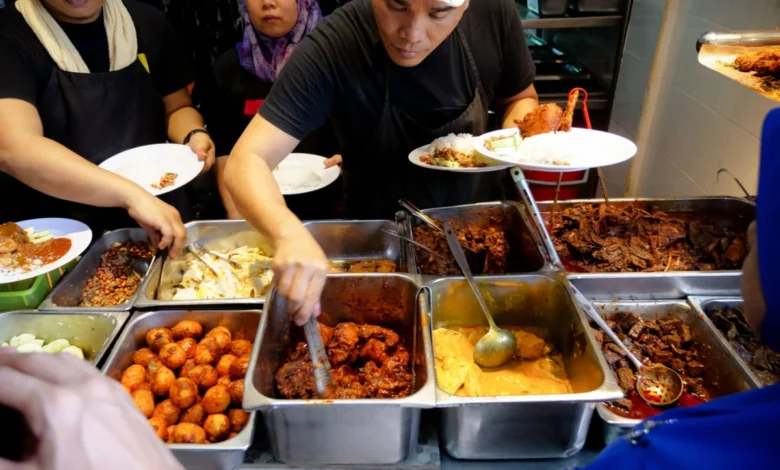
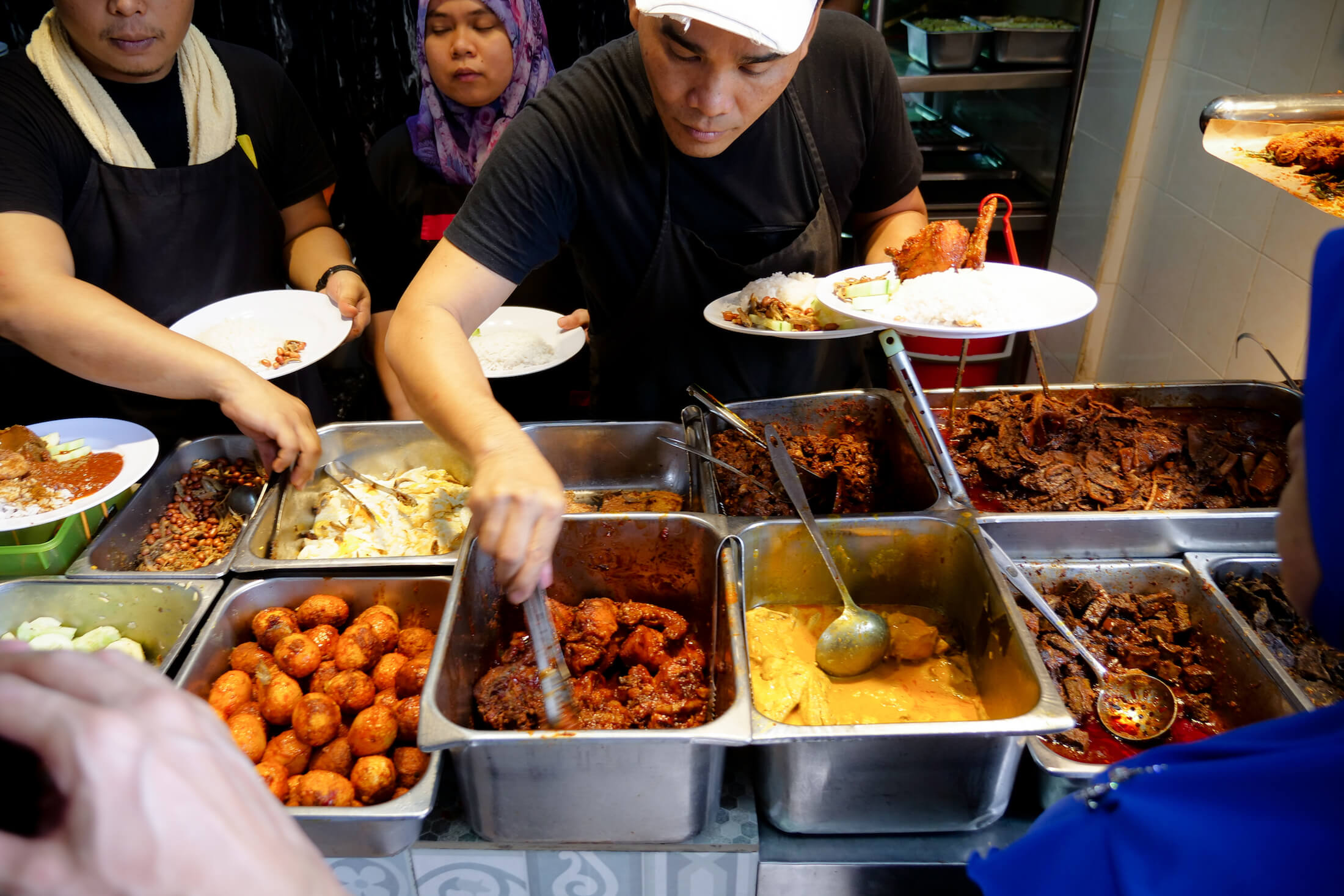
The ordering process at Nasi Lemak Tanglin requires patrons to queue at a central counter, where staff portion white rice and administer requested toppings. The menu extends beyond standard iterations of the dish to include specialized regional proteins and offal preparations.
Prominent among these is beef rendang, a slow-cooked dry curry characterized by caramelized coconut milk and spices, and specialized offal dishes such as beef spleen (locally referenced alongside beef intestines). Culinary reviews and local patrons frequently highlight the rich, dense texture of the spleen, which absorbs the dark brown curry gravies characteristic of the stall’s production style. Additional proteins, including fried chicken, cockles, and hard-boiled or fried eggs, are integrated into the meal to customize the flavor profile.

Cultural and Environmental Implications of Service Methods
An operational shift of note within Malaysian food complexes involves the transition away from traditional serving vessels. Historically, nasi lemak was wrapped in banana leaves, a practice that imparted a subtle organic fragrance to the rice and served as a biodegradable packaging solution.
In contemporary settings such as Kompleks Makan Tanglin, reusable ceramic or melamine plates have largely replaced leaf wrappings. From a logistical perspective, this adaptation accelerates service times and reduces waste accumulation. Furthermore, this shift aligns with broader national policy initiatives in Malaysia aimed at curtailing the consumption of single-use plastics and mitigating the environmental degradation associated with the over-harvesting of banana foliage in protected jungle regions.
Economic Impact and Accessibility

From an economic standpoint, Nasi Lemak Tanglin exemplifies the accessibility of Malaysian street and hawker food. Base pricing for a standard plate of nasi lemak remains economical, often priced at approximately 2 Malaysian Ringgit (MYR), with supplementary proteins and eggs scaling the total cost incrementally. Comprehensive meals for multiple diners frequently total under 40 MYR (approximately $10 USD), maintaining the affordability that historically positioned hawker centers as egalitarian dining spaces across social strata.
Broader Industry Analysis and Outlook
The enduring popularity of establishments like Nasi Lemak Tanglin underscores the resilience of traditional food systems within rapidly modernizing Southeast Asian metropolises. While commercial dining formats and international franchises expand across Kuala Lumpur, legacy hawker operations continue to drive domestic tourism and cultural preservation efforts.
Analysts specializing in regional tourism note that culinary destinations of this scale contribute significantly to the local economy by attracting both domestic consumers and international travelers seeking authentic gastronomic experiences. However, vendors face ongoing challenges related to urban real estate development, generational succession of culinary knowledge, and compliance with tightening municipal hygiene and environmental regulations.

Despite these pressures, Nasi Lemak Tanglin remains an active participant in Kuala Lumpur’s daily routine. Operating daily from 7:00 AM to 1:00 PM at Kompleks Makan Tanglin, the stall continues to serve as both a functional provider of morning sustenance and an institutional archive of Malaysia’s culinary history.
Related posts: