Unlocking the Flavors of Kuala Lumpur: Inside the Culinary Phenomenon of Fish Head Curry at Tugu View Cafe


Malaysia continues to cement its reputation as a premier global gastronomic destination, driven by centuries of culinary cross-pollination between indigenous Malay traditions, Chinese migration, and Indian spice heritage. Among the thousands of dishes that populate the nation’s bustling food landscape, Fish Head Curry stands out as a definitive cultural artifact. This dish encapsulates the complex interplay of flavors, historical trade routes, and the rich biodiversity of the region. Culinary tourism experts frequently cite Malaysia’s open-air food courts and neighborhood cafes as essential stops for international travelers seeking authentic cultural immersion through food.
At the center of this culinary tradition in the capital city of Kuala Lumpur is the Tugu View Cafe, a prominent establishment renowned for its mastery of traditional Malaysian mixed rice, locally known as nasi campur. Situated near the historic Tugu Negara (National Monument) and the expansive Perdana Botanical Garden, the cafe serves as both a neighborhood staple and a destination for dedicated food enthusiasts. The establishment operates daily from 7:00 AM to 6:00 PM, remaining closed on Sundays, and has grown to become a case study in how traditional street-level eateries sustain cultural heritage through specialized regional recipes.
The Historical and Cultural Roots of Malaysian Curry
The genesis of Malaysian Fish Head Curry is a testament to the country’s multicultural fabric. Culinary historians trace the dish’s modern evolution to the early 20th century, heavily influenced by South Indian immigrant communities—particularly Malayalees and Tamils—who adapted traditional Keralan fish curry preparations to local tastes by incorporating Chinese cooking elements and native Southeast Asian ingredients such as tamarind, lemongrass, and okra.
Unlike standard fish curries where delicate fillets are used, the use of the fish head is rooted in both resourcefulness and gastronomic appreciation. The skull, cheeks, eye sockets, and fleshy membranes surrounding the bone structure of large marine species—predominantly the Red Snapper, locally designated as Ikan Merah—yield a gelatinous texture and rich flavor profile that dissolves into the surrounding gravy during the simmering process. Nutritional data indicates that fish heads and collars are rich in omega-3 fatty acids, collagen, and micronutrients, making the dish both a cultural delicacy and a nutrient-dense meal.

The Mechanics of Nasi Campur and Specialty Curries
The operational model of Tugu View Cafe relies on the traditional nasi campur format, a buffet-style dining experience where patrons select various proteins, vegetables, and condiments to accompany a base of steamed white rice. This dining style is ubiquitous across maritime Southeast Asia, reflecting a communal approach to food consumption that prioritizes variety and personalization.
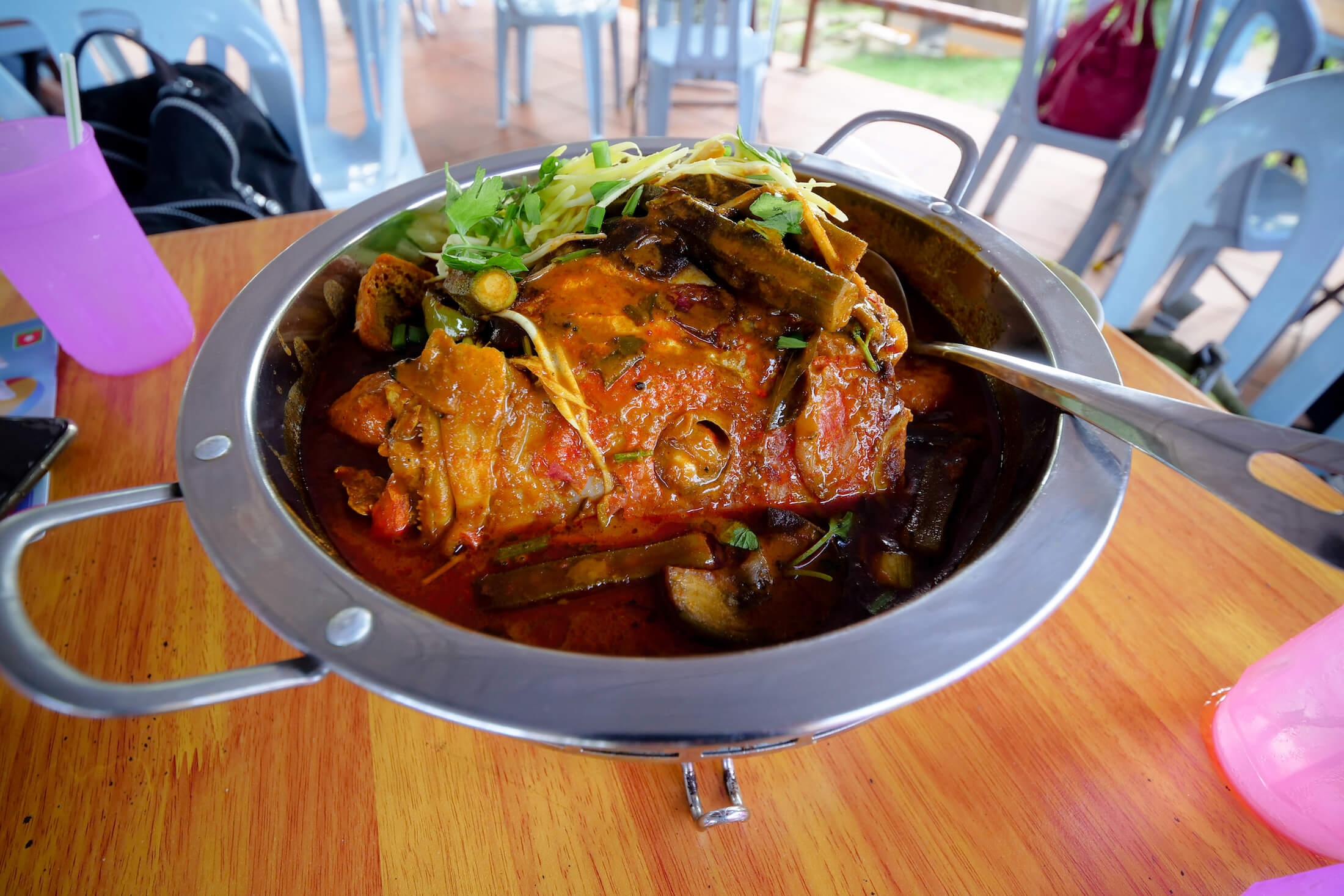
During peak lunch hours, the counter at Tugu View Cafe features an extensive array of offerings, ranging from slow-cooked beef rendang and crispy fried chicken to seasonal vegetables stir-fried with sambal. However, the undisputed centerpiece of the kitchen’s output is the ala minute preparation of Fish Head Curry. Prepared in heavy-bottomed woks, the curry base combines a robust paste of chili, turmeric, garlic, ginger, and shallots sautéed in oil until fragrant, followed by the addition of coconut milk, tamarind juice for acidity, and spices like fenugreek and mustard seeds.

Whole red snapper heads are submerged into this simmering, spiced coconut broth alongside dense squares of fried tau kwa (firm tofu) and tender pods of lady’s finger (okra). The resulting dish is characterized by its complex flavor profile: the initial sharpness of the tamarind cuts through the rich, creamy coconut fat, while the heat from the chilies provides a sustained warmth that lingers on the palate.
Economic and Tourism Implications for Kuala Lumpur
Gastronomy tourism represents a significant and growing sector of Malaysia’s broader tourism economy. According to data from the Ministry of Tourism, Arts and Culture Malaysia, food and beverage expenditures account for a substantial percentage of total visitor spending, highlighting the economic importance of culinary landmarks like Tugu View Cafe.

Establishments positioned near major civic and historical zones—such as the Tugu Monument district—benefit from a steady influx of both domestic workers from Kuala Lumpur’s central business district and international tourists exploring the nearby Lake Gardens. The operational dynamics of these cafes reflect the broader urban food economy of the Klang Valley, where affordability and quality intersect. While specialty dishes like a large Red Snapper head curry can elevate the check total—with some elaborate meals reaching approximately 144 Malaysian Ringgit (approx. $35 USD)—smaller portions remain accessible to a wide demographic, ensuring that traditional dining remains egalitarian.
Logistics and Visitor Navigation
Accessing Tugu View Cafe presents a minor navigational challenge for first-time visitors arriving on foot from the surrounding botanical gardens. The primary physical entrance is integrated into a multi-tiered structural layout, requiring patrons to ascend several flights of stairs that are occasionally adjacent to small retail kiosks offering regional refreshments to tour groups.

Despite these spatial quirks, the restaurant maintains a reputation for efficient service and a relaxed, unpretentious atmosphere that mirrors the broader social ethos of urban Malaysia. The juxtaposition of a high-intensity, deeply spiced culinary product within the serene, leafy surrounds of the national monument hill creates an environment that appeals to both fast-paced city dwellers and unhurried travelers.
As Kuala Lumpur continues to develop its modern infrastructure, traditional food hubs like Tugu View Cafe play a critical role in preserving intangible cultural heritage. Through the meticulous preparation of dishes such as Fish Head Curry, these kitchens offer a tangible link to Malaysia’s multicultural history, ensuring that ancient culinary techniques remain vibrant, accessible, and economically viable in the twenty-first century.
Related posts: