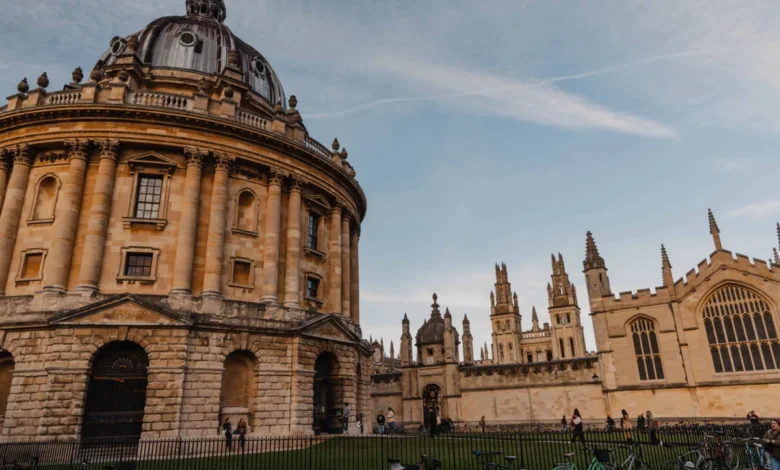
Oxford, widely recognized as the oldest university city in the English-speaking world, serves as more than just a bastion of academic history; it is a living, breathing cinematic landscape that provided the foundational inspiration for the world-renowned Harry Potter film franchise. While Warner Bros. Studios in Leavesden famously housed the massive, intricate sets for the films, the architecture of Oxford—with its sprawling medieval quadrangles, vaulted cloisters, and gothic spires—offered the authentic atmosphere necessary to ground the wizarding world in reality. For fans and cultural tourists alike, the city functions as an unofficial “Ox-warts,” where the line between historical reality and cinematic fantasy remains perpetually blurred.

The integration of Oxford into the Harry Potter universe began during the early production stages of the film adaptations. Filmmakers sought locations that could convey the weight of centuries-old tradition, a requirement easily met by the University of Oxford’s 39 constituent colleges. This choice was not merely aesthetic; it was pragmatic. The complex, multi-layered architecture of the university provided a sense of depth that would have been cost-prohibitive to construct entirely from scratch. Consequently, several iconic scenes were filmed on location, while others were meticulously replicated based on the precise dimensions and designs of these historic sites.

Christ Church College stands at the center of this cinematic connection. Most notably, the college’s Great Hall served as the primary visual reference for the Hogwarts Great Hall. While the actual film set was constructed at the studios, the production team utilized the architecture of the Christ Church dining hall to replicate the grand, cavernous scale and the high-vaulted ceilings essential to the films. Visitors to Christ Church can also view the Bodley Staircase, a 16th-century stone structure that appears in Harry Potter and the Sorcerer’s Stone as the grand entryway where Professor McGonagall first greets the incoming students. This staircase also served as a backdrop in Harry Potter and the Chamber of Secrets, specifically during the scenes involving the mysterious diary of Tom Riddle.

Beyond the collegiate halls, the Bodleian Library—one of the oldest libraries in Europe—provided essential filming environments. The Divinity School, a 15th-century building featuring intricate fan-vaulted ceilings, was transformed into the Hogwarts Infirmary. This site was frequently used for scenes requiring a sterile, yet gothic, medical environment, such as when Harry recovers from injuries or when Ron Weasley is treated after being poisoned in The Half-Blood Prince. Additionally, the Divinity School served as the setting for the Yule Ball dance rehearsals in The Goblet of Fire. Nearby, Duke Humfrey’s Library, the oldest reading room in the Bodleian, stood in for the restricted section of the Hogwarts Library, cementing the site’s reputation as a pilgrimage point for literary enthusiasts.

The production of the films also extended into the surrounding Oxfordshire countryside. Blenheim Palace, a UNESCO World Heritage site located just a short distance from the city center, was utilized for significant flashback sequences. The palace grounds feature a prominent tree that served as the location for “Snape’s Worst Memory” in The Order of the Phoenix. In this scene, a young Severus Snape is bullied by James Potter and his peers. This location is significant for its role in character development, providing viewers with critical context regarding the complex relationship between Snape and Harry’s father.

Logistical planning for visitors is essential, as the university colleges are active academic institutions with restricted access. Unlike standard tourist attractions, these sites prioritize the needs of students and faculty. Many colleges impose entrance fees—ranging significantly based on the season—and require advanced booking. The influx of tourism has led the university to implement strict visitor management policies to ensure the preservation of the buildings and the continuity of academic activities. Guided tours, often led by current students, have become the preferred method for visitors to navigate these locations. These tours offer not only access to the filming sites but also a deeper understanding of the university’s history, providing a dual educational experience.

The cultural impact of these filming locations has been substantial. Since the release of the films, Oxford has seen a sustained increase in tourism linked specifically to “potter-tourism.” Local businesses, including traditional bookshops like Blackwell’s and various independent retailers on Broad Street, have leaned into this association, often stocking merchandise that mirrors the aesthetic of the wizarding world. This intersection of high academia and popular culture has forced the city to manage the dual identity of a world-class research institution and a global film destination.

From a broader perspective, the use of heritage sites in film production has sparked ongoing debates regarding the preservation of historic architecture. The wear and tear associated with high-volume tourism can pose risks to the structural integrity of ancient stonework. Consequently, the University of Oxford’s administration remains cautious, balancing the economic benefits of tourism with the necessity of maintaining a quiet, functional environment for its scholars. This balance is reflected in the scheduling of visits; for instance, the practice of Choral Evensong at various college chapels allows the public to enter the historic grounds for free, provided they attend the service, thus preserving the spiritual and academic character of the buildings.

For those traveling from London, the transit infrastructure is robust. High-speed rail services from London Paddington and London Marylebone provide consistent access to Oxford station, with travel times typically under one hour. This connectivity has made Oxford one of the most accessible day-trip destinations for visitors to the United Kingdom, further driving the popularity of the film-location tours.

As the Harry Potter franchise continues to maintain a significant presence in global pop culture, the role of Oxford as a silent partner in the series’ success remains unchallenged. While the sets at Warner Bros. Studio Tour provide a curated experience, the streets of Oxford offer a tangible, historical connection to the world of J.K. Rowling. Whether it is the mason’s mark outside the Sheldonian Theatre—often cited as an inspiration for the lightning bolt scar—or the star-patterned ceilings of St. Mary’s Church, the city remains a testament to how real-world history can inform and elevate fictional storytelling. Visitors are encouraged to plan their itinerary with respect for the university’s academic mission, ensuring that the magic of these locations can be preserved for future generations of students and fans alike.