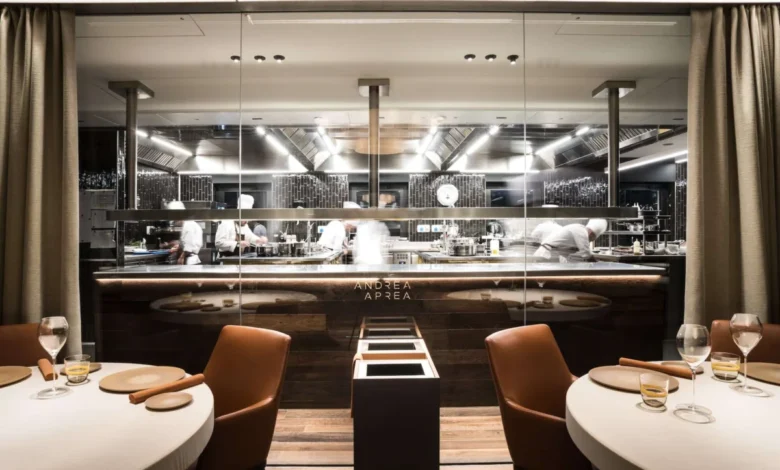
All products featured on Elite Traveler are independently selected by our editors. We may receive a commission from products or services purchased through these links. Often unfairly relegated to the shadow of Rome’s ancient grandeur or the Renaissance allure of Florence, Milan—or Milano, as it is known to those familiar with its sophisticated rhythm—stands as the definitive powerhouse of contemporary Italy. As the nation’s financial capital and the global epicenter of fashion and design, the city balances a relentless drive for innovation with a profound respect for its deep-seated architectural and culinary heritage. From the masterful strokes of Leonardo da Vinci’s The Last Supper at Santa Maria delle Grazie to the sleek, glass-clad skyscrapers of the Porta Nuova district, Milan is a city of dualities. This duality is perhaps most visible in its gastronomic landscape, where the rustic, comforting traditions of Lombardy meet the avant-garde precision of modern Michelin-starred excellence.
The Evolution of Milanese Gastronomy
To understand the current state of Milanese fine dining, one must first appreciate the historical bedrock upon which it stands. Unlike the coastal Mediterranean focus of the south or the tomato-heavy foundations of central Italy, Milanese cuisine is inextricably linked to the geography of the Po Valley. Historically, the region relied on butter rather than olive oil, and rice—specifically the short-grain Carnaroli and Arborio varieties—rather than wheat pasta.
The canonical dishes of the city tell a story of regional wealth and resourcefulness. Risotto alla Milanese, dyed a vibrant, regal gold by the inclusion of saffron, emerged during the construction of the Duomo di Milano in the 16th century, according to local legend. Ossobuco, a cross-cut veal shank braised with vegetables and white wine, reflects the city’s historic reliance on veal. Finally, the cotoletta alla milanese, a breaded veal cutlet fried in clarified butter, remains a point of intense regional pride. While small, family-run trattorias continue to preserve these recipes, the city has undergone a dramatic transformation over the last three decades, pivoting from traditional heavy fare toward a refined, globally-conscious fine dining scene.
A Chronology of Culinary Excellence
The rise of Milan as a premier gastronomic destination is not a recent phenomenon but the result of a deliberate, decades-long shift in the city’s cultural branding.
- 1980s–1990s: The "Milano da Bere" (Milan to drink) era saw the city solidify its status as a fashion hub. As international designers flocked to the city, the demand for elevated dining experiences surged, leading to the first wave of high-end restaurant openings that sought to modernize traditional Lombard recipes.
- 2000s: The city began to attract world-class talent, with chefs like Gualtiero Marchesi—often cited as the father of modern Italian cuisine—setting the benchmark for technical rigor. His influence catalyzed a movement that favored seasonal purity over historical complexity.
- 2015: The hosting of the Universal Exposition (Expo 2015) in Milan served as a definitive turning point. The theme "Feeding the Planet, Energy for Life" drew international focus to the city, leading to a massive infrastructure investment in the culinary sector and a permanent increase in the number of high-end eateries.
- 2020–Present: Despite the global disruptions caused by the pandemic, the city’s dining scene has shown remarkable resilience. The current Michelin Guide identifies 23 starred restaurants in Milan, a testament to the sector’s recovery and its ability to attract luxury tourism.
Statistical Overview: The Business of Dining
The significance of the restaurant industry to the Milanese economy cannot be overstated. According to data from the Milan Chamber of Commerce, the hospitality sector contributes significantly to the city’s GDP, bolstered by a post-pandemic surge in international tourism. As of the most recent reporting period, the concentration of high-end restaurants in the Brera, Quadrilatero della Moda, and Navigli districts has mirrored the growth of luxury retail.
Market analysis indicates that the average expenditure per guest at a Michelin-starred establishment in Milan ranges from €150 to over €400, excluding wine pairings. This pricing reflects not only the cost of premium, locally sourced ingredients—such as white truffles from the nearby Piedmont region or artisanal cheeses from the Alpine foothills—but also the high operational costs associated with labor and the prestige of the city’s most exclusive real estate.

Official Perspectives and Industry Reaction
Industry analysts often point to the "Milan Model" of dining as a template for other European cities. "Milan has mastered the art of the ‘controlled fusion’," notes a senior analyst at a European hospitality research group. "They have managed to incorporate international influences—such as Japanese precision or Nordic fermentation techniques—without diluting the fundamental identity of the Lombard palate. It is a calculated, professional approach that appeals to the global business traveler and the luxury leisure visitor alike."
The chefs currently leading these kitchens emphasize the importance of provenance. In recent interviews, leading culinary figures in Milan have highlighted the shift toward "kilometer-zero" sourcing, where restaurants partner directly with farms in the Lombardy countryside. This not only mitigates supply chain risks but also enhances the narrative of sustainability that is increasingly expected by the modern, environmentally conscious patron.
The Impact of Michelin Recognition
The awarding of Michelin stars has a profound impact on the local economy. Beyond the immediate increase in revenue, a star acts as a magnet for global talent, attracting sous-chefs and sommeliers from across the globe. This influx of expertise has created a competitive environment that forces even the most traditional establishments to innovate.
However, the pressure to maintain these standards is immense. Industry insiders observe that the high turnover of reservations is not merely a sign of popularity but a reflection of the intense, time-sensitive nature of these dining experiences. A restaurant that fails to iterate its menu or modernize its service model can quickly fall out of favor with a discerning, well-traveled clientele.
Broader Implications for Milanese Tourism
The maturation of Milan’s fine dining sector has had a ripple effect on the city’s tourism strategy. No longer is Milan solely a transit point for the lakes or a weekend trip for fashion shopping; it has become a destination in its own right for gastronomic tourism. This has encouraged the development of luxury boutique hotels that integrate their own high-end dining concepts, effectively creating a self-contained ecosystem for the affluent traveler.
The implications for the future are clear: Milan is doubling down on its identity as a city of sophistication. By leveraging its unique position as a nexus of commerce and creativity, the city is set to maintain its lead in the competitive landscape of European fine dining. For the traveler, this means that the window for securing a table at the city’s most revered establishments is narrowing, as demand continues to outpace supply.
As the city moves forward, the challenge for its culinary elite will be to continue balancing the weight of history with the relentless pace of contemporary change. Whether one is sampling the delicate, gold-leafed risotto at a storied institution or experiencing the experimental tasting menu of a rising star, the dining scene in Milan remains a reflection of the city itself: polished, ambitious, and undeniably essential. The 23 starred restaurants of Milan are not merely places of sustenance; they are the architects of the city’s modern reputation, proving that beneath the sleek exterior of Italy’s financial capital lies a heart that beats for the art of the table.