When Christopher Wilmot-Sitwell first navigated the Indonesian archipelago in the late 1980s, the nation’s tourism footprint was defined almost exclusively by a burgeoning backpacker culture. At the time, Western interest was concentrated heavily on Bali, with the remainder of the country’s 17,000 islands largely inaccessible to those seeking comfort, reliability, and bespoke experiences. Today, as a Robb Report Travel Master and co-owner of the London-based agency Cazenove & Loyd, Wilmot-Sitwell oversees a drastically different landscape, one where high-net-worth individuals commit to three-week itineraries that span from traditional water-blessing ceremonies in remote villages to private, high-security access at UNESCO World Heritage sites. This shift reflects a broader maturation of the Indonesian travel sector, which has transitioned from a budget-friendly backpacker circuit into an increasingly sophisticated, albeit logistically complex, destination for ultra-luxury travelers.

The historical pivot for Indonesian luxury travel began in the late 1980s and early 1990s, catalyzed by the visionary hotelier Adrian Zecha. Zecha’s introduction of the Aman resorts brand—specifically the opening of Amanpuri-inspired concepts in Indonesia—marked the first time international travelers could access remote, pristine locations without sacrificing the standards of five-star hospitality. By establishing footholds in areas that were previously off-limits to luxury operators, Zecha effectively created a blueprint for what would eventually become the archipelago’s high-end infrastructure. However, despite this early intervention, Indonesia remains a fragmented geography. Unlike the interconnected, high-density luxury hubs found in the Greek Islands or the French Riviera, Indonesia’s tourism infrastructure requires significant navigational expertise to bridge the gaps between disparate islands.
The Logistics of the Indonesian Odyssey
For travelers arriving from North America, the journey is not merely a matter of a long-haul flight; it is a complex transition into a different operational reality. With transit times often reaching 30 hours, the necessity for ground-level orchestration has never been higher. Edita Sgovio, a veteran in the luxury travel space and head of the newly launched Ultraluxe division at Kensington Tours, emphasizes that the primary barrier to entry for the modern traveler is the lack of "seamlessness."

"It’s not as seamless as the Greek Islands," Sgovio notes, identifying the primary pain point that luxury agencies are currently solving. By integrating land tours, private villas, deep-sea expeditions, and dedicated yacht charters, firms like Kensington are creating "frictionless" itineraries that insulate the guest from the inherent logistical hurdles of island-hopping. The firm’s "Indonesia Odyssey"—a nine-day journey priced at approximately $70,000 per person—serves as a case study in this model. By prioritizing vetted, private, and high-touch logistics, the itinerary bypasses the unpredictability of regional commercial travel, utilizing private aviation and chartered vessels to maintain a premium standard of comfort.
A Chronology of Infrastructure Development
The development of Indonesia’s luxury sector can be viewed through several distinct phases:

- 1989–1992: The "Aman Era." Adrian Zecha establishes the first ultra-luxury resorts, setting the gold standard for site selection and privacy.
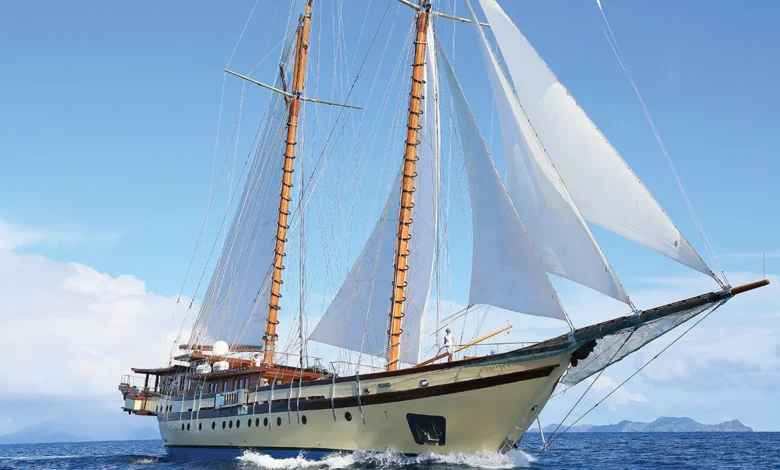
- 2000s: The rise of niche adventure-luxury. Operators begin to offer "phinisi" yacht charters, utilizing traditional Indonesian wooden boats updated with modern amenities to explore the Lesser Sunda Islands and Raja Ampat.
- 2015–2020: Expansion of branded luxury. Large global chains, including Ritz-Carlton, begin to aggressively expand into non-traditional areas, such as the Mandapa Reserve in Ubud.
- 2024–Present: The "Ultraluxe" integration. Travel agencies move toward fully integrated, multi-modal, end-to-end luxury management, shifting the focus from individual hotel stays to comprehensive regional expeditions.
The Role of Cultural Preservation and Environment
The appeal of Indonesia for the luxury market is rooted in the country’s unique combination of biodiversity and cultural heritage. Locations such as Misool island, renowned for its marine biodiversity and unique, stingless jellyfish lakes, represent the frontier of high-end ecotourism. Simultaneously, the inclusion of cultural touchpoints—such as the boisterous, song-filled hospitality of the crews on traditional phinisi yachts like the Lamima—adds an layer of authenticity that is difficult to replicate in more sanitized luxury environments.
Reed Krakoff, creative chairman of the jewelry house John Hardy, which maintains a deep connection to Bali, underscores that the appeal lies in the rapid transition between "differentiated environments." The ability to move from high-altitude forests to coastal cliffside villas within a single day’s travel is a rare asset. "There are the beaches and the forest. It’s really rare that you have these kinds of differentiated environments so close together," Krakoff notes. This geographic density, when navigated with the assistance of a seasoned curator, allows for a multifaceted travel experience that few other nations can claim.

Future Projections and Economic Impact
Looking ahead, the Indonesian government’s commitment to tourism infrastructure is accelerating. Plans for a new international airport on the north side of Bali are currently in development, a project designed to alleviate the congestion that has historically plagued the island’s southern regions. As these projects come to fruition over the next several years, the capacity for high-end tourism will increase, likely leading to a new wave of luxury developments in regions that remain relatively quiet today.
However, the growth of the luxury sector is not without its challenges. The delicate balance between attracting high-net-worth tourism and maintaining the integrity of local cultures and ecosystems remains a primary concern for the Indonesian Ministry of Tourism. Data suggests that while mass tourism continues to drive volume, the focus on "quality over quantity" is the explicit strategy for the next decade. By promoting high-touch, low-impact itineraries, agencies are helping to funnel economic benefits into remote local communities while minimizing the environmental degradation often associated with rapid development.

Analysis: The Shift Toward "Zigging While Others Zag"
The strategic advice offered by industry leaders—to "zig when people zag"—is increasingly relevant as traditional destinations in Europe and the Caribbean face issues of over-tourism and decreasing exclusivity. Indonesia, with its vast, unpopulated island chains, offers a natural defense against the crowding that is currently impacting more accessible global destinations.
The success of the current luxury model depends on a departure from standard, pre-packaged vacations. As Sgovio highlights, the value proposition has shifted from the booking of the room itself to the "vetting" of the experience. In a post-pandemic travel market, the consumer expectation is no longer just for luxury, but for safety, privacy, and an assurance that their time will not be wasted on the logistical friction that has historically plagued Indonesian travel.

Conclusion
As the Indonesian tourism sector moves into its next iteration, the integration of bespoke, high-touch services will likely remain the defining characteristic of its luxury market. With significant investment in both transport infrastructure and the preservation of the unique cultural and natural assets that make the archipelago a destination of choice, Indonesia is well-positioned to maintain its status as a premier global destination. For the discerning traveler, the challenge is no longer finding a reason to visit, but finding the right guide to navigate the vast, complex, and rewarding landscape that awaits between the islands. Whether it is a massage overlooking the Indian Ocean at Nihi Sumba or a private expedition to witness the endemic wildlife of Komodo, the evolution of Indonesia’s tourism sector ensures that the experience is as seamless as it is unforgettable.